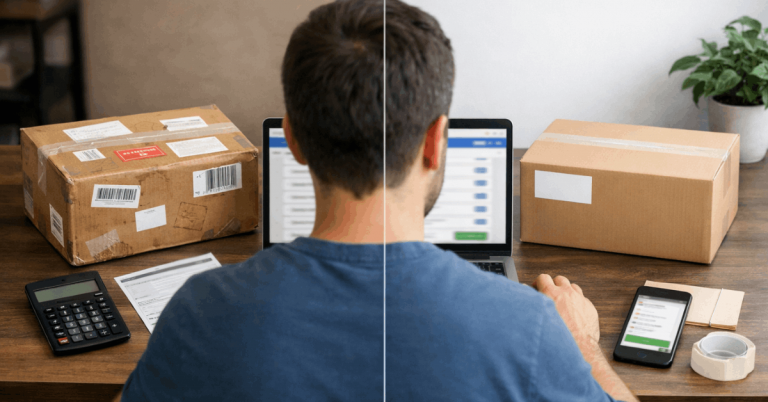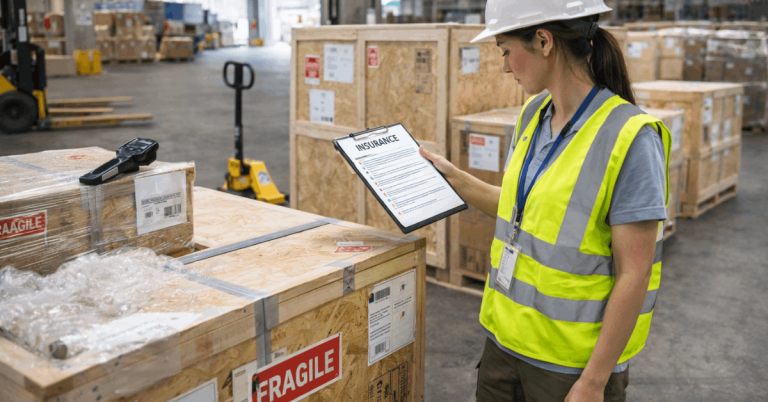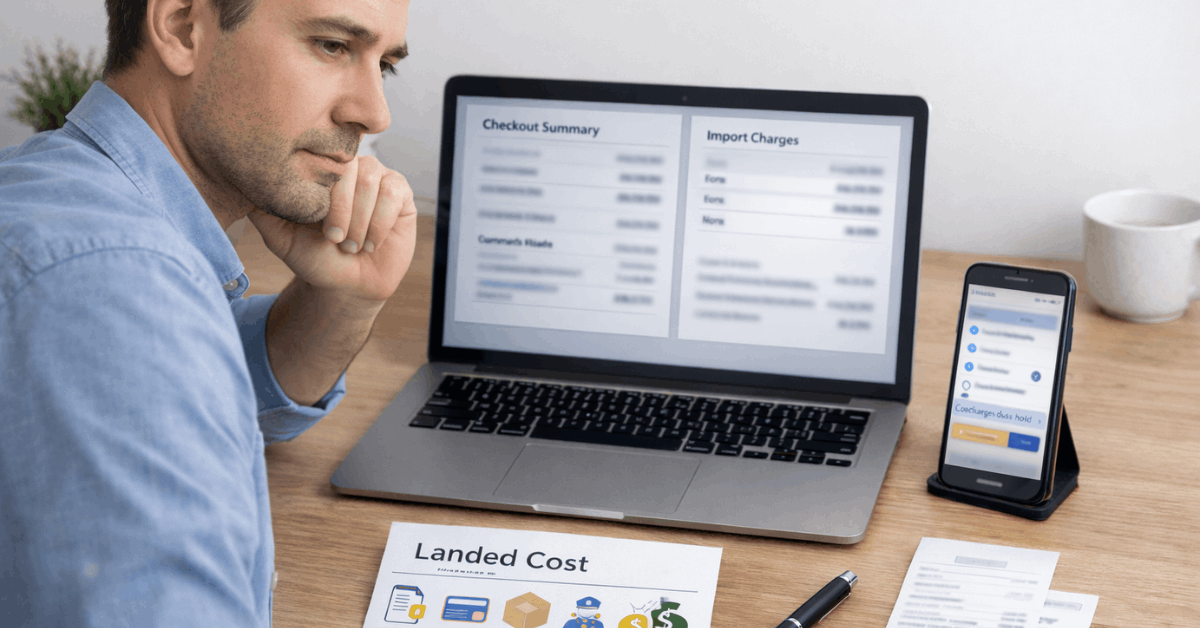
Import taxes can change the final price of an online order and delay delivery when payment or documents are needed at customs.
If you know what charges to expect, when you might be asked to pay, and what proof to save, you avoid most last-minute surprises.
Use the checklist in this guide to estimate your total cost before checkout and keep your purchase protected after it ships.
What “Import Taxes” Usually Include
Import charges are not always a single “tax.” You usually see a mix of government taxes and carrier-admin fees added at different points in the delivery process.
- Customs duty: A charge based on the product type and its declared value.
- VAT/GST/sales tax: A consumption tax applied to the item value, and sometimes shipping and insurance.
- Customs clearance/processing fee: A fee for handling the customs entry and paperwork.
- Brokerage fee: A courier fee for preparing and submitting documents to customs on your behalf.
- Disbursement/advancement fee: A fee charged when the carrier pays customs first and collects it from you later.
- Storage or late-payment fees: Extra charges if payment or documents are delayed after the parcel arrives.
When You Pay and How You’re Notified
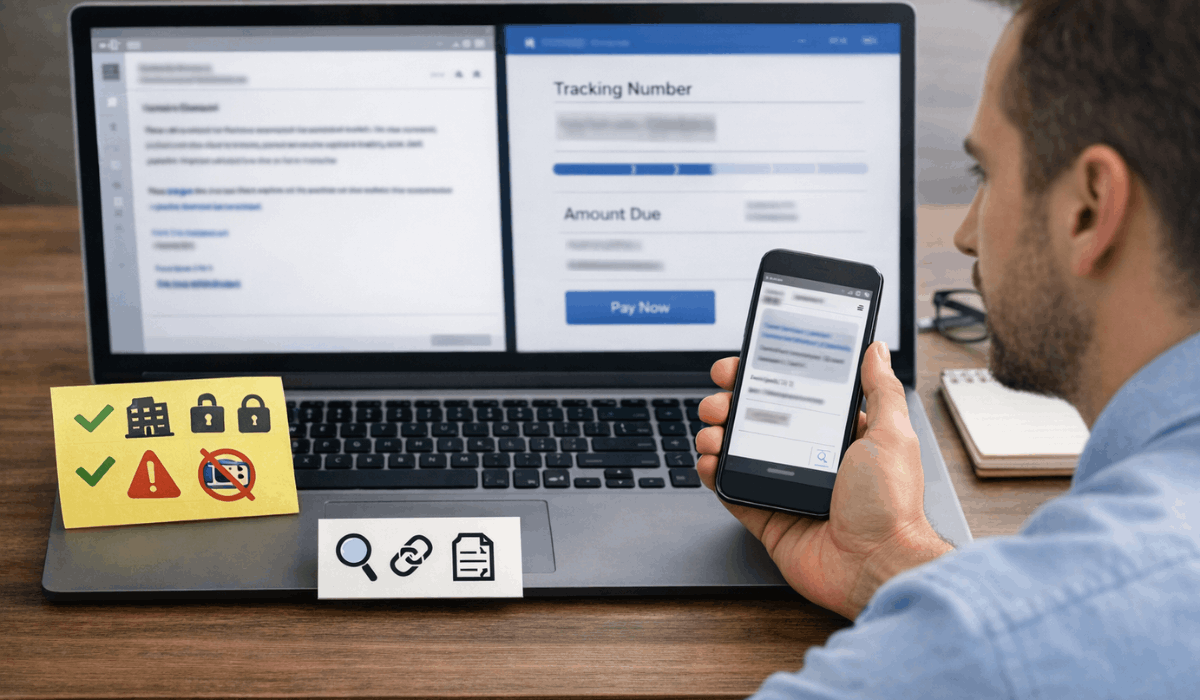
You may pay at checkout or after the parcel arrives. Match every notice to your tracking details.
- Pay at checkout (tax-inclusive): Taxes and duties are included or estimated before you place the order.
- Pay after arrival (due on delivery): You get a payment request once customs or the local carrier processes the parcel.
- Carrier payment link/portal: The courier or postal operator sends a link to pay before release or delivery.
- Cash/card at delivery: Some drivers collect fees at the door, depending on local practice.
- Tracking status updates: Tracking can show holds, charges due, or pending clearance steps.
- Email/SMS notices: Legit notices usually reference your tracking number and shipment details.
- Document request notice: You may need to send an invoice, payment proof, or ID for clearance.
Why Two Similar Orders Can Be Taxed Differently
Small differences can change the tax result. Customs decisions depend on value, classification, and paperwork.
- Declared value vs price paid: Customs may reassess if your proof shows a different paid amount.
- Shipping included in the tax base: Some systems tax item plus shipping (and insurance).
- Product category/classification: Category codes and item descriptions can change duty rates.
- Country of origin: Origin can affect duty treatment under trade rules.
- Materials and components: Material or battery details can shift classification.
- Quantity and bundling: Multiple units can trigger different treatment than one unit.
- Shipping method (courier vs postal): Couriers often add brokerage or disbursement fees.
How Import Taxes Affect Delivery Time
Taxes add clearance steps that can pause movement. Most delays happen in the same few places.
- Customs assessment hold: The parcel pauses while duties and taxes are calculated.
- Document request: Clearance stops until you provide invoice and payment proof.
- Payment pending: Delivery waits until taxes and handling fees are paid.
- Courier brokerage processing: Filing and payment confirmation can add extra time.
- Re-valuation or re-classification: Reviews take longer if customs questions the details.
- Random inspection: Some parcels are checked even when paperwork is complete.
- Backlogs and peak periods: Volume spikes can slow customs queues.
What to Check Before You Buy
Do a quick cost and risk check before paying. You want price clarity and dispute readiness.
- Total landed cost estimate: Item + shipping + taxes + likely handling/brokerage fees.
- Tax collection method: Confirm if taxes are included at checkout or charged on arrival.
- Invoice readiness: Check if the seller can provide a proper invoice.
- Accurate product details: Materials, model, and included parts for correct classification.
- Shipping method choice: Postal vs courier, plus typical fee patterns and payment steps.
- Delivery timeline realism: Make sure the range matches transit and customs processing.
- Return terms for taxes: Check who pays return shipping and what happens to duties/fees.
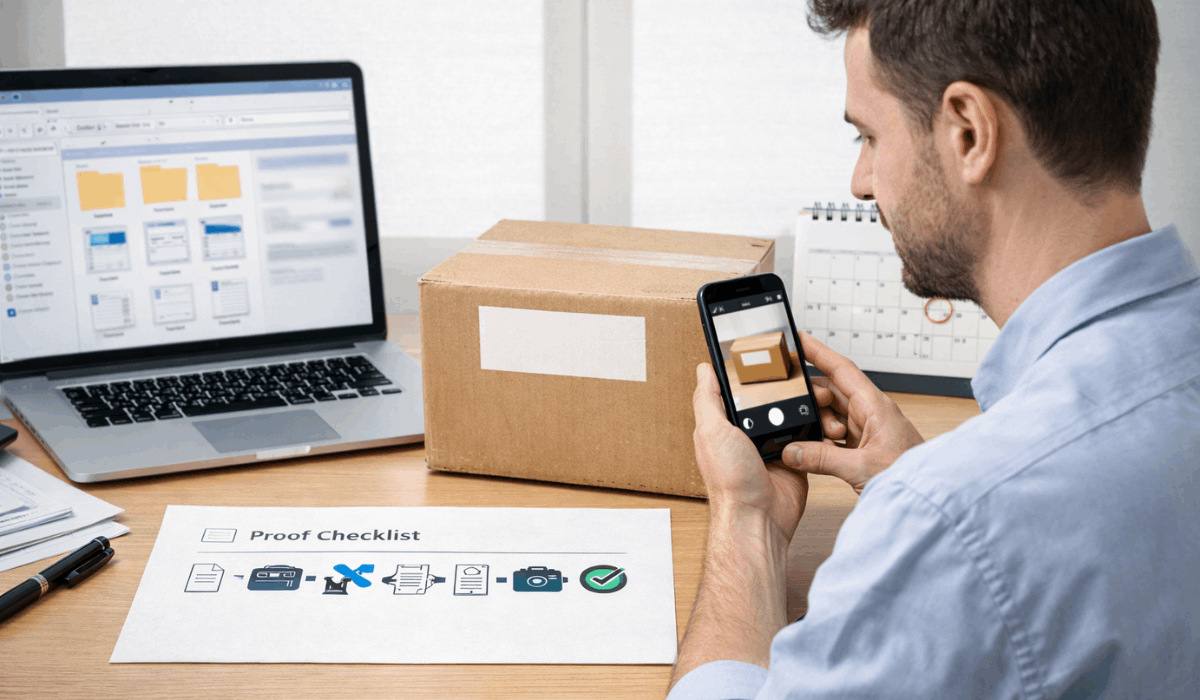
What to Save as Proof (So You Can Dispute Correctly)
Proof is what supports corrections and disputes. Save it early and keep it until everything is settled.
- Order confirmation: Item name, quantity, price, shipping option, and dates.
- Listing screenshots: Specs, photos, variations, and stated condition.
- Seller invoice/receipt: The document customs and carriers often request first.
- Payment proof: Receipt showing exact amount and currency paid.
- Shipping cost proof: Any record of shipping and insurance charges.
- Tracking history screenshots: Holds, timestamps, and clearance updates.
- Tax and fee notices: Payment requests and fee breakdowns from the carrier.
How to Lower Surprise Costs Without Breaking Rules
You cannot change customs rules. You can reduce avoidable fees and delays with better prep.
- Estimate landed cost before checkout: Price + shipping + expected taxes + likely fees.
- Pick shipping with predictable fees: Compare postal vs courier, including brokerage patterns.
- Choose listings with clear specs: Better details reduce misclassification and re-checks.
- Use sellers that provide clean invoices: Accurate paperwork reduces reassessment risk.
- Avoid undervaluation or “gift” labeling: These can trigger scrutiny and delays.
- Keep your proof folder ready: Receipt, invoice, and payment proof in one place.
- Pay quickly when notified: Fast action helps avoid storage fees and missed windows.
Returns, Refunds, and Taxes
Returns can still leave you with extra costs. Separate item refunds from taxes and carrier fees.
- Item refund vs total refund: The item price may be refunded while fees stay yours.
- Carrier service fees may stay: Brokerage, clearance, and disbursement fees are often not returned.
- Tax refunds depend on local rules: Some places allow refunds, but requirements can be strict.
- Return/export proof may be required: Tracking and proof the item left the country may be needed.
- Return shipping is usually extra: International return labels can be costly.
- Refusing delivery can backfire: It can trigger charges and delay refunds.
- Deadlines can differ: Seller return windows and customs refund windows may not match.
Fast Checklist — Before Checkout and After Arrival
Use this to move fast and stay organized. Run it before you pay and when the parcel hits customs.
- Before checkout: landed cost math: Item + shipping + estimated taxes + likely fees.
- Before checkout: tax timing: Included at checkout or payable after arrival.
- Before checkout: product details: Materials, model, specs, included parts.
- Before checkout: invoice readiness: Seller can provide a proper invoice on request.
- After arrival: watch tracking holds: Customs review, charges due, document requests.
- After arrival: pay only via verified channels: Match carrier name and tracking number.
- After arrival: save receipts and photos: Fee receipts plus box/label photos for disputes.
To Conclude
Import taxes can raise your total cost and delay delivery if customs requires payment or documents before release.
When you estimate landed cost, choose shipping with clear fee handling, and save proof from day one, you reduce surprises and protect your dispute position.
Use the fast checklist now to review your next order before checkout and again when tracking shows it has arrived.