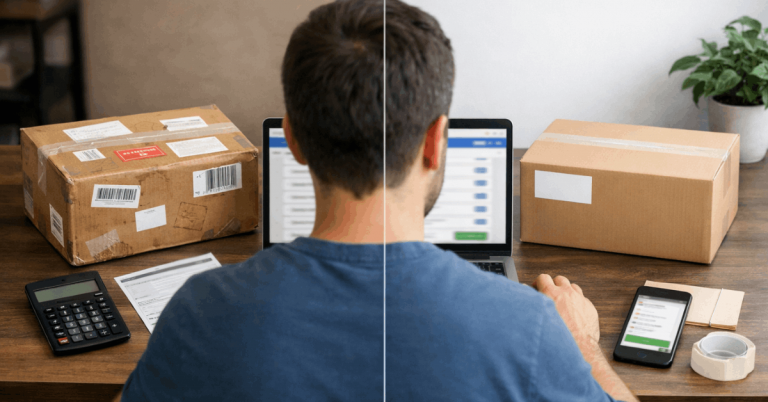
When you Communicate With Overseas Sellers, you deal with time zones, language barriers, and platform rules that can slow down the solution process.
You get better results when you keep messages short, attach clear proof, and stay on-platform to protect deadlines.
This guide shows you what to say, what to send, and when to escalate.
Why Overseas Seller Communication Works Differently
Overseas communication works differently because distance adds delays and misunderstandings.
Account for platform rules, shipping steps, and time zones to resolve issues faster.
- Time zones slow replies because the seller may be asleep or offline when you message.
- Language gaps change meaning, so short, simple sentences reduce mistakes.
- Platform rules control outcomes because refunds and returns must follow specific steps.
- International shipping adds uncertainty since tracking updates can pause between countries.
- Customs can create delays that the seller may not fully control or explain clearly.
- Return shipping is riskier and more expensive, so sellers may offer alternatives like partial refunds.
- Deadlines matter more because delays can run down dispute windows if you wait too long.
Before You Message, Gather the Basics
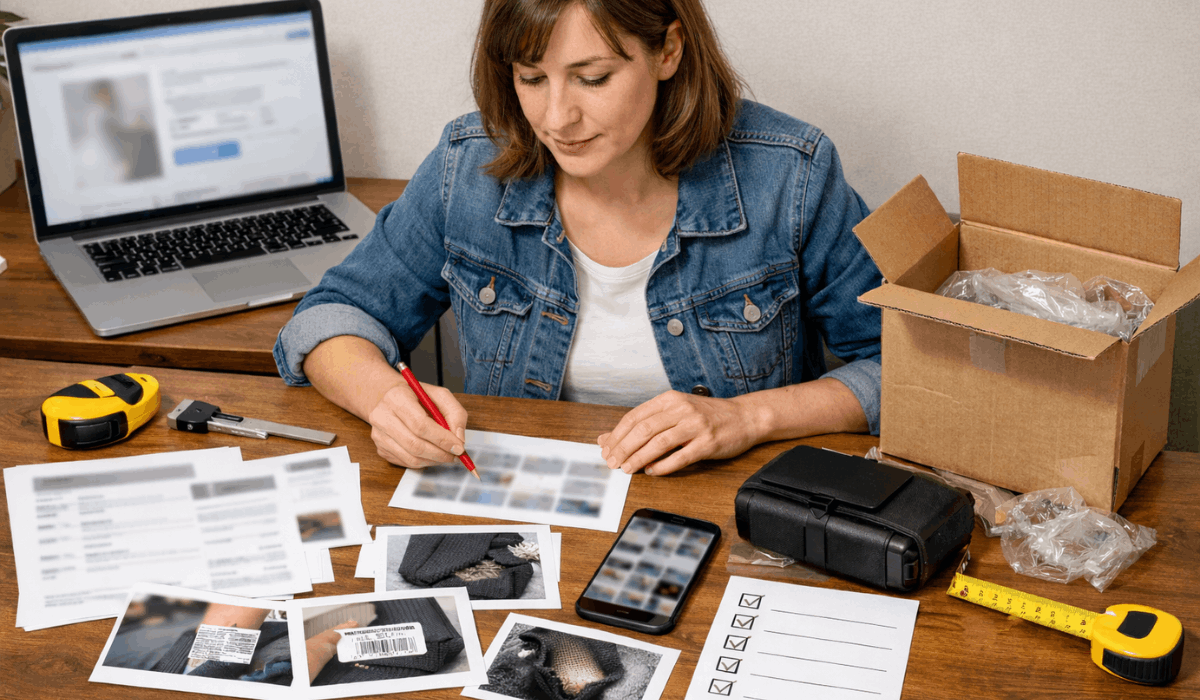
You get faster results when you message with complete details and clear proof.
Gather these basics first so the seller can verify the issue quickly, and you can escalate on time if needed.
- Order details: Order ID, purchase date, item name, selected variant, and total paid.
- Listing proof: Screenshots of the product page showing specs, photos, and the exact option you chose.
- Tracking proof: Carrier name, tracking screenshot, and the last update date if shipping is delayed.
- Item condition photos: Clear, wide shots and close-ups of damage, defects, or labels in good lighting.
- Mismatch comparison: Side-by-side proof of what was listed vs what arrived, labeled “Photo 1,” “Photo 2.”
- Missing parts checklist: A simple list of what’s missing plus a photo of everything you received.
- Your requested outcome + deadline: Decide refund/replacement/return and note the dispute deadline with a follow-up date.
Choose the Right Channel and Keep It On-Platform
You protect your case by keeping communication within the marketplace.
Use these main words with short descriptions to stay organized and dispute-ready.
- On-platform chat — Keeps a verifiable record that support can review.
- Off-platform request — Messages outside the marketplace may not count as proof.
- Written confirmation — Get refund terms, amounts, and promises stated in chat.
- Evidence upload — Send photos, videos, and screenshots through platform tools.
- Link caution — Avoid unknown links asking for personal or payment details.
- Deadline tracking — Message early so you still have time to dispute.
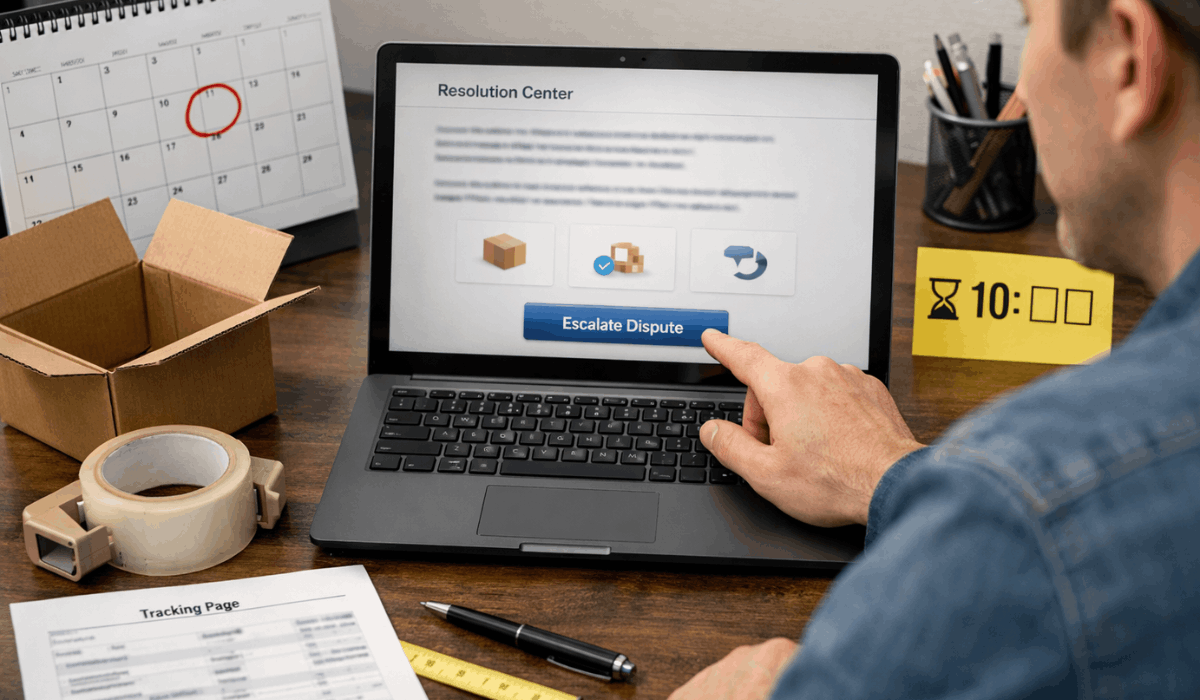
- Escalation — Open a dispute when replies stall or tactics appear.
Write Messages That Are Easy to Understand
Clear messages get faster answers because sellers can translate them and act right away. Use a simple structure so your request is understood and easy to verify.
- Keep it short — Use 2–4 sentences and avoid long explanations.
- One issue per message — Focus on one problem at a time to prevent confusion.
- Use simple words — Avoid slang, idioms, and emotional phrasing that translates poorly.
- State the facts first — Order ID, item name, date received, and what is wrong.
- Label your proof — Use “Photo 1,” “Photo 2,” “Video 1” and reference them in the text.
- Ask for one clear action — Refund, replacement, partial refund, or return instructions.
- Add a time limit — Give a polite deadline that fits the platform’s dispute window.
Message Templates You Can Copy
Templates help you stay clear and consistent, especially when language barriers slow things down.
Copy one message, add your details, and attach the proof you referenced.
- Not as described — “Hi. Order #[ID]. Item doesn’t match listing: [issue]. See Photo 1–2. I want [refund/replacement] by [date].”
- Damaged on arrival — “Hi. Order #[ID] arrived damaged. See Photo 1–3. I want [replacement/refund] by [date].”
- Missing parts — “Hi. Order #[ID]. Missing: [list]. Photo 1 shows everything received. Send parts or [refund] by [date].”
- Shipping delay — “Hi. Order #[ID]. Tracking hasn’t updated since [date] (Screenshot 1). Please update or resolve by [date].”
- Wrong size/color — “Hi. Order #[ID]. Ordered [size/color], received [size/color]. Photo 1 shows the label. I want [replacement/refund] by [date].”
- Return address check — “Hi. Order #[ID]. Confirm return address, method, and who pays shipping on-platform before I send it.”
- Partial refund option — “Hi. Order #[ID]. I can accept [amount] partial refund for [reason]. Confirm on-platform by [date], or I’ll dispute.”
Set Clear Expectations
Clear expectations keep the conversation focused and stop time-wasting replies.
You make it easier for the seller to respond and easier for you to escalate if they don’t.
- Ask for one outcome — Request refund, replacement, or return instructions, not all at once.
- Use a simple deadline — “Please confirm by [date]” to protect dispute windows.
- Be specific with numbers — Include order ID, amount, and dates to avoid vague replies.
- Request direct answers — Use yes/no and “What date will you ship?” questions.
- State what proof you have — Reference Photo 1–2 or Video 1 so they can verify fast.
- Confirm the process — Ask how they will handle it on-platform (refund method, reship tracking).
- Set your next step — “If there’s no solution by [date], I will open a dispute.”
Decide Between Replacement, Partial Refund, or Return
You choose the best solution by weighing cost, time, and risk, not just what the seller offers first.
Use these points to pick an option that protects your money and avoids return shipping problems.
- Replacement — Best when you still want the item, and the seller can ship fast with valid tracking.
- Partial refund — Works when the item is usable but has a clear issue, like minor damage or a missing accessory.
- Return for full refund — Makes sense when the item is wrong, unsafe, or unusable, and the platform confirms refund rules.
- Return shipping cost — Check who pays, because international returns can cost more than the item.
- Return address risk — Confirm the exact address on-platform to avoid “wrong address” disputes.
- Customs and tracking risk — Use tracked shipping, since lost returns can block your refund.
- Timing and deadlines — Pick the option you can complete before the dispute window closes.
After Resolution, Protect Future Purchases
Once the issue is resolved, you can turn the experience into a better process for your next order.
Use these steps to keep records, spot reliable sellers, and reduce repeat problems.
- Save the final proof — Screenshot the resolution message, refund confirmation, or replacement tracking.
- Archive key details — Keep the order ID, seller name, item link, and dates in one note.
- Leave an accurate review — Match your rating to the final outcome and reliability, not just the first problem.
- Track seller reliability — Note response speed, honesty, and whether they followed through.
- Update your buying checklist — Add the warning signs you saw and what you’ll verify next time.
- Use safer product checks — Re-check specs, sizing, compatibility, and photos before you repurchase.
- Choose better listings next time — Prefer clear photos, detailed descriptions, strong ratings, and tracked shipping.
The Bottomline
Clear overseas communication works when you stay on-platform, share proof, and set deadlines that protect your dispute options.
You get better outcomes when you choose the right resolution path and avoid delays that can run down the clock.
Use the templates and checklist in this guide today to Communicate With Overseas Sellers and resolve your next issue faster.