Ordering something from another country feels simple until a holiday you didn’t know existed freezes your package at a sorting hub for two weeks.
The delay rarely comes from one place. Sellers pause, carriers reduce routes, and customs offices close, sometimes all at once, during holiday international delivery delays.
Plenty of guides tell buyers to “just order early.” I think that advice backfires during periods like the Chinese New Year, when factories shut down for one to two weeks and early orders just sit in a queue.
This is about knowing which holidays cause delays, what happens at each stage, and when waiting is smarter than rushing.
Why Holidays Break the International Shipping Chain
Every international delivery passes through multiple hands: seller, warehouse, carrier, customs, last-mile courier. A holiday that hits any single link slows everything downstream. But the real chaos starts when holidays hit two or three links simultaneously.
Take Christmas and New Year as an example. Order volume spikes on the buyer side. Carrier schedules shrink at the same time.
Customs offices operate on reduced hours. Three bottlenecks stacking on top of each other create delays far longer than any one of those problems would cause alone.
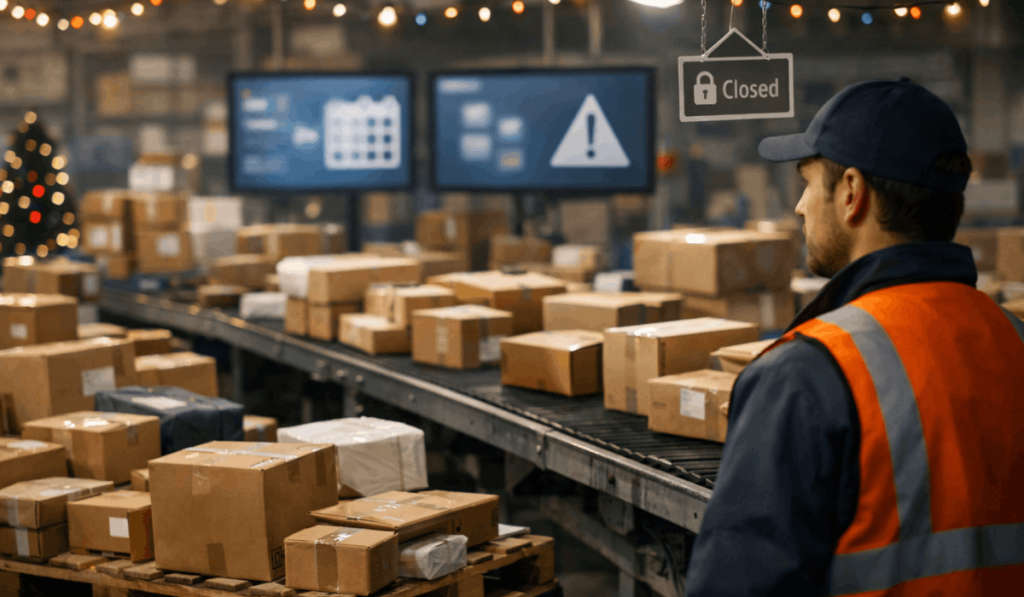
High Order Volume vs. Reduced Staffing
Warehouses and sorting centers get flooded during peak holiday periods like Black Friday and Cyber Monday. Carrier pickups happen less frequently. Fewer workers process a higher number of packages, and the math is brutal.
A package that normally clears a transit hub in 24 hours might sit there for three to five days during a holiday surge. That delay compounds at every stop along the route.
Customs Office Closures and Backlogs
Customs slowdowns are the most frustrating part because they happen after the seller has already shipped. The order is out of everyone’s hands except a government office running a skeleton crew.
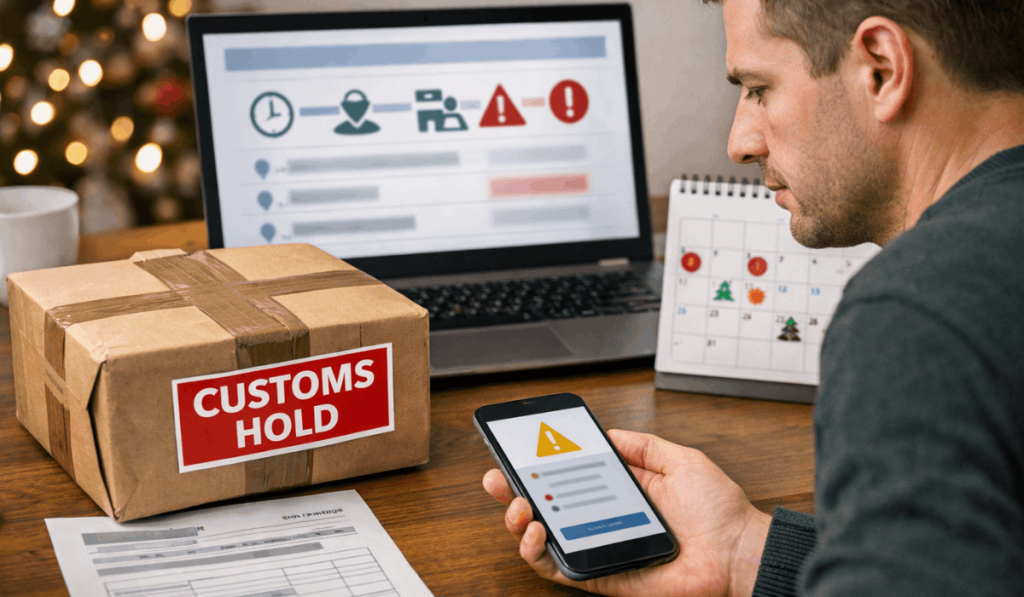
National holidays close border offices entirely. Regional holidays reduce operating hours. Packages pile up waiting for security checks and tax processing.
And when offices reopen, the backlog doesn’t clear overnight. Clearance speeds increase gradually, sometimes taking a full week to return to normal processing times.
The Holiday Calendar That Catches Buyers Off Guard
Everybody knows about Christmas shipping delays. That part is predictable. The holidays that wreck international deliveries are the ones buyers in Western countries often don’t track at all.
Chinese New Year: The Biggest Disruption Period
Chinese New Year shuts down factories, warehouses, and sellers across Asia for one to two weeks. Sellers on platforms like AliExpress and Temu stop fulfilling orders entirely. Some extend the break even longer.
I would avoid ordering from Asian sellers during the two weeks before Chinese New Year starts, because orders placed during that window often don’t ship until two to three weeks after the holiday ends.
The commonly repeated advice to “order early before the shutdown” ignores a basic problem: if the product hasn’t been manufactured yet, placing the order early doesn’t speed anything up. The order just sits.
Golden Week and Regional Asian Holidays
Golden Week in Japan (late April to early May) and China (early October) creates another regional shutdown. Production and export processing slow down across both countries during these periods.
The problem compounds when Golden Week overlaps with local national holidays in the destination country. A package leaving Asia during Golden Week that arrives at European customs during a local bank holiday faces delays on both ends.
Back-to-Back Holiday Stacking
The trickiest delivery periods happen when multiple holidays stack across different regions. November through January is a prime example:
- Black Friday and Cyber Monday flood carriers with orders in late November
- Christmas and New Year reduce carrier schedules through early January
- Chinese New Year (late January or February) shuts down Asian production right after Western holidays clear
A buyer ordering from China in late November might not receive their package until March if it gets caught in this cascade. That three-month window is the single worst period for international deliveries, and tracking updates during it become almost meaningless.
How Carriers and Sellers Behave During Holiday Periods
The way carriers and sellers adjust operations during holidays directly determines whether a package moves or sits idle. Knowing their patterns helps set realistic expectations.
Carrier Adjustments During Peak Seasons
Shipping carriers make several changes during holidays that affect delivery speed:
- Reduced pickup schedules mean fewer collection days and slower dispatch times
- Delivery cutoff dates push orders received after certain deadlines to the next shipping cycle
- Express shipments get priority, bumping economy packages further down the queue
- Some routes suspend entirely, rerouting packages through longer transit paths
Express shipping costs spike during peak periods, sometimes doubling in price. But economy shipping delays can stretch from days into weeks.
| Shipping Type | Typical Holiday Delay | Tracking Reliability | Cost Change During Holidays |
|---|---|---|---|
| Express/Priority | 1-3 extra days | Stays consistent | Prices often double |
| Standard Tracked | 5-10 extra days | Updates less frequently | Minor increase |
| Economy/Untracked | 2-4 extra weeks | Stops updating entirely | No change |
Express shipping is the only option that maintains somewhat predictable delivery during major holiday periods.
Also read: How to Avoid Surprise Fees When Buying Abroad
Seller Downtime and Misleading Stock Status
Sellers reduce activity or pause work entirely during holidays. This creates a gap between what the store page shows and what’s happening behind the scenes.
Orders remain unhandled for days. Items appear available but are not actively shipping. Automated replies replace real customer support. And dispatch starts late even when payment goes through immediately.
The sneaky part: some sellers accept orders during their holiday break without disclosing the delay. The order confirmation arrives instantly, but the package doesn’t move for a week or more.
Checking seller holiday notices and store announcements before buying during known holiday windows can save a lot of frustration.
What Happens to Tracking and Buyer Protection During Holidays
Tracking information becomes unreliable during peak holiday periods. Updates may not match the real location of a package, and gaps between scans stretch from hours to days.
Tracking Freezes and Misleading Delivery Estimates
A common experience during holiday shipping: tracking shows the same status message for five or more days. The package hasn’t disappeared. It’s sitting at a transit hub or customs checkpoint, waiting in line behind thousands of other parcels.
Delivery estimates generated during holiday periods are essentially guesses. Platforms auto-extend estimated dates, but even those extended windows can be wrong. The best approach is treating any delivery estimate during a holiday period as a rough range, not a promise.
Returns, Refunds, and Dispute Timelines
Returns move slowly during and after holidays. Sellers respond later to return requests. Carriers process return shipments on reduced schedules. Refund processing backlogs mean money takes longer to appear back in buyer accounts.
Marketplace platforms like AliExpress and eBay often adjust their dispute windows during major holidays, extending buyer protection deadlines. But those extensions aren’t always automatic.
Checking the platform’s current holiday policy before opening a dispute prevents missed deadlines. Universal Postal Union shipping guidelines has general information on international mail service interruptions during holidays.
When to Order and When to Wait
The standard advice for holiday international delivery delays is to order early. I think that advice only works for about half the calendar. During certain windows, ordering early just means your money leaves your account sooner while the package sits in exactly the same backlog.
The smarter approach depends on which holiday is causing the delay:
- Christmas/New Year: ordering early (mid-November) works because sellers and carriers are still operating, just overwhelmed
- Chinese New Year: waiting until 7-10 days after the holiday ends gives sellers time to clear their backlog before your order enters the queue
- Black Friday surge: ordering before the sale starts avoids the carrier overload entirely
- Golden Week: placing orders at least two weeks before the holiday begins gives packages enough transit buffer
Time-sensitive purchases and last-minute gifts should avoid international shipping during any major holiday window entirely.
Domestic alternatives, even at higher prices, are more reliable when delivery deadlines matter. 17track.net is a free tool for monitoring international package tracking across multiple carriers during holiday delays.
Questions People Ask About Holiday International Delivery Delays
Q: How long do Chinese New Year shipping delays usually last?
Expect two to four weeks of disruption. Factories close for one to two weeks, but the backlog takes an additional one to two weeks to clear after operations resume.
Q: Do express shipping services also get delayed during holidays?
Express services face shorter delays, typically one to three extra days. They get priority at sorting hubs, but customs closures affect all shipment types equally regardless of speed tier.
Q: Can I get a refund if my holiday order arrives too late?
Platform policies vary. Check your marketplace’s buyer protection timeline and file disputes before the window closes. Some platforms extend deadlines during holidays, but that extension isn’t always automatic.
Q: Does tracking stop updating because my package is lost?
Almost never. Tracking freezes during holidays happen because scanning stations are backed up or operating on reduced schedules. Packages sitting at hubs without movement don’t generate new scan events until they physically move.
Q: Are January orders affected by holiday delays too?
January is still a recovery month for carriers working through December backlogs. Chinese New Year, which falls in late January or February, adds a second wave of delays for orders shipping from Asia.
Conclusion
Holidays disrupt international deliveries at every stage, from seller fulfillment to customs processing to final carrier routes. Planning around specific holiday calendars matters more than generic “order early” advice for international buyers.
The worst delays happen when holidays in the origin country and destination country overlap within the same shipping window. Treating each holiday period as its own shipping season, rather than one big rush, gives orders the best chance of arriving on time.