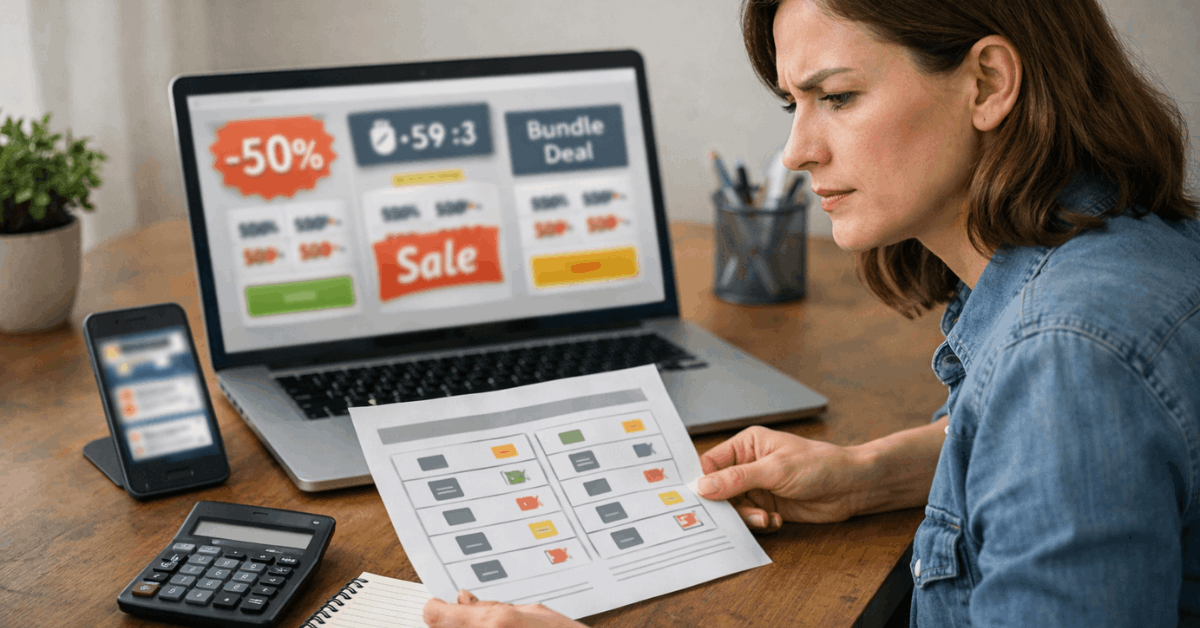
Marketplace promotions look like easy savings, but they don’t work the way you expect.
Prices, discounts, and urgency cues are often designed to push faster decisions, not better value.
This guide shows you how marketplace promotions really work so you can judge deals clearly before you buy.
What Counts as a Marketplace Promotion
Marketplace promotions go beyond big sales events. They include pricing and incentive tools used to influence your buying decisions.
Knowing what counts helps you spot real discounts and avoid misleading offers.
- Platform-wide sales events – Site-wide campaigns where many products are discounted at the same time, often with shared rules and timelines.
- Seller-funded discounts – Price cuts set by individual sellers to boost visibility or clear inventory.
- Coupons and voucher offers – Extra discounts applied at checkout, usually with minimum spend conditions.
- Flash deals and limited-time offers – Short-duration discounts designed to create urgency and fast decisions.
- Free or discounted shipping promotions – Shipping incentives are used to increase conversion, often offset in the item price.
- Loyalty rewards, coins, or credits – Platform reward systems that reduce price only under specific usage rules.

Who Really Pays for the Discount
Discounts are rarely free and always paid for by someone in the transaction.
Understanding who absorbs the cost helps you judge whether a deal affects product quality, delivery, or service.
Most promotions shift costs rather than remove them.
- The seller – Sellers reduce their margins to gain visibility, clear stock, or compete on price.
- The marketplace platform – Platforms may subsidize exposure or fees, but rarely the full product price.
- The buyer – Costs can reappear through lower quality, slower shipping, or stricter return terms.
List Price vs. Real Price
The price you see before a discount is not always the price the item normally sells for.
Marketplaces often use reference pricing to make promotions look larger than they are. Knowing the difference helps you judge real value instead of visual savings.
- Inflated list prices – The “original” price may be raised shortly before a sale to create a bigger discount.
- Short-term price anchoring – Temporary higher prices are used as a reference, even if few buyers paid them.
- Frequent price cycling – Prices move up and down regularly, making discounts part of the normal price pattern.
- Regional price differences – The same item may have different list prices across countries or shipping regions.
Flash Sales and Urgency Triggers
Flash sales are designed to push fast decisions, not careful evaluation. Urgency signals are often automated and repeated across many products.
Understanding these triggers helps you slow down and avoid impulse buying.
- Countdown timers – Timers reset or repeat, even when stock is not limited.
- Low-stock alerts – Messages suggest scarcity without confirming real inventory levels.
- Limited-time labels – Short windows create pressure, even when similar deals return often.
- Social activity cues – Notifications about recent purchases are used to reinforce urgency.
Coupons, Coins, and Credits
Coupons and reward credits look flexible, but they come with strict rules. These tools are designed to increase order size and repeat purchases.
Knowing the limits helps you avoid discounts that only work on paper.
- Minimum spend requirements – Discounts apply only after you reach a set purchase amount.
- Expiration limits – Coins and credits often expire quickly if not used.
- Stacking restrictions – Not all coupons can be combined, even during major sales.
- Product or seller exclusions – Some items are blocked from reward use without clear notice.
Free Shipping Promotions
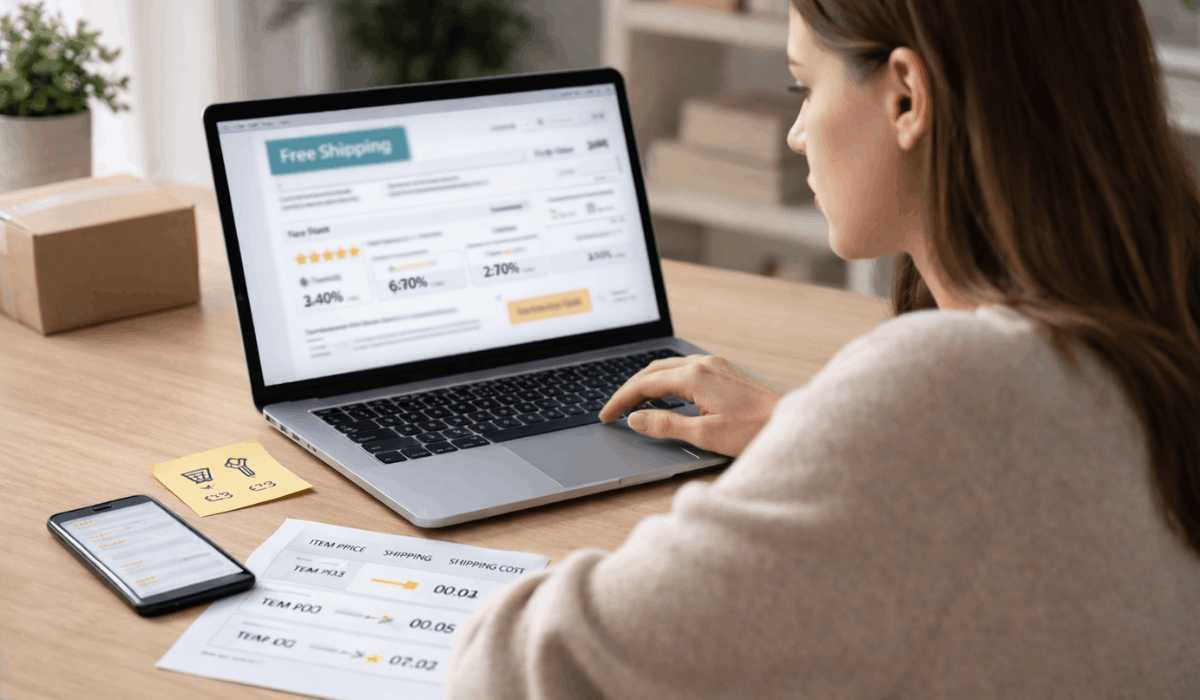
Free shipping does not always mean lower total cost. Shipping fees are often shifted rather than removed.
Understanding how this works helps you judge the real value of the offer.
- Shipping cost built into the item price – Sellers raise the product price to cover delivery.
- Slower delivery options – Free shipping often uses longer transit methods.
- Order minimum thresholds – Free shipping applies only after you spend a set amount.
- Regional and address exclusions – Certain locations are excluded or downgraded without clear notice.
Seller Quality During Promotions
Promotions change how sellers operate, especially in terms of price and volume. Lower margins and higher order volume can affect consistency.
You should expect more variation during large sales periods.
- Reduced quality control – Sellers may use cheaper materials or skip checks to protect margins.
- Inconsistent product batches – Items shipped during promotions may differ from earlier listings or reviews.
- Overloaded fulfillment – High order volume increases the risk of packing and labeling mistakes.
- Limited customer support – Response times often slow down during major promotional events.
Delivery Times During Sales Events
Sales events put pressure on warehouses, carriers, and sellers simultaneously.
Delivery estimates often become less reliable during these periods. Knowing what changes helps you set realistic expectations.
- Dispatch delays – Orders may sit longer before being shipped by the seller or from the warehouse.
- Carrier backlogs – Shipping partners handle higher volume, slowing transit scans and updates.
- Tracking gaps – Tracking may pause for days, especially during international handoffs.
- Priority handling differences – Some sellers or shipping tiers move faster than others.
Returns and Refunds on Discounted Items
Discounted items often come with stricter return conditions. Sellers and platforms protect themselves during high-volume sales.
You need to check refund rules before you buy, not after.
- Shorter return windows – Sale items may have shorter return windows.
- Return shipping costs – You may be responsible for shipping, even if the item is faulty.
- Restocking or handling fees – Extra fees can reduce or cancel out the refund value.
- Slower refund processing – High sales volume increases review and approval time.
How to Judge If a Promotion Is Worth It
Not every discount represents real value. A promotion is only worth it if the final outcome meets your expectations.
You should evaluate the deal beyond the price shown on the screen.
- Check price history – Compare current pricing with past averages, not the listed “original” price.
- Review seller reliability – Look at recent feedback, not just overall ratings.
- Separate price from quality – A bigger discount does not guarantee acceptable quality.
- Factor in delivery and returns – Delays and refund limits can erase any savings.
The Bottomline
Marketplace promotions are designed to influence how quickly you buy, not how well you evaluate.
Real value comes from understanding pricing tactics, seller behavior, and delivery trade-offs.
Use this guide to review promotions carefully and make informed buying decisions before placing your next order.