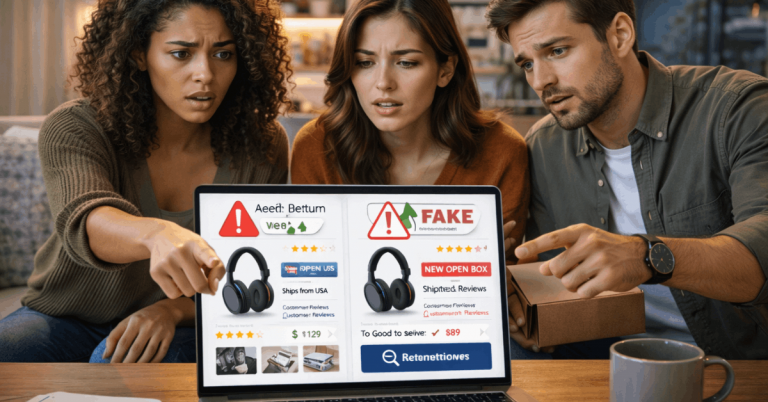
Shopping on AliExpress, Temu, or Wish can save money, but the store behind a listing still shapes the result.
Marketplace Seller Verification means checking the evidence that affects your exact order: store history, listing accuracy, delivery terms, and support options.
It is useful for any purchase, but matters most when an item is fragile, costly, fitted, or difficult to return internationally.
A few checks before payment can expose weak listings without exhaustive research or unnecessary guesswork online.
What Marketplace Verification Can Really Tell You?
Platforms provide ratings, order counts, badges, and reviews, but none can promise that a specific order will arrive perfectly.
Treat seller signals as useful evidence, then compare them with recent buyer feedback and the product page itself.
Badges Show Activity, Not A Personal Guarantee
A badge may show that a seller met platform criteria at a certain point, but it cannot confirm the current production batch, packaging, or support response.
Read it alongside recent comments, product photos, and the return details for the exact listing.
Be cautious when official-looking graphics appear beside vague materials, missing measurements, or no clear delivery information. Use platform labels to narrow your search, not as automatic proof that the offer is safe.
Store History Matters More Than A Single Score
A high rating has more value when recent buyers describe what arrived, how it was packed, and whether the seller resolved mistakes.
Open the store page and check for repeated reports of late dispatch, missing parts, weak packaging, or unanswered messages.
A new store may be legitimate, but it has less evidence to show how it handles problems during a busy period. For expensive goods, favor detailed feedback and current activity over a very small saving.

Check The Listing And The Seller’s Daily Habits
Good seller verification continues after you open the store page. Look for specific information and useful communication, since both reveal whether the seller understands the item and can support it after payment.
Compare The Exact Variant, Not The Lowest Price
The lowest price may refer to a spare piece, smaller size, or accessory instead of the product shown in the main image.
Check the selected color, measurements, bundle, plug type, and included parts in the cart before comparing offers. This matters for clothing, electronics, tools, and multi-option listings.
Confirming the chosen variation and total price can prevent a dispute over an item that technically matches the selection but not your expectation.
Ask One Useful Question Before Checkout
Ask about a measurement, material, compatibility detail, or the item included in a bundle. A useful response answers the question directly instead of sending a copied line that could fit any listing.
No reply does not automatically indicate a scam, but it is a warning when the purchase needs careful sizing or technical support.
This small test gives you a response signal and a written record if the delivered item differs from the answer.
Treat Delivery And Protection As Part Of The Seller Check
A dependable seller does more than display attractive photos; they give buyers a realistic route from payment to delivery.
Review shipping terms and return conditions before you need them, because they shape the cost of a mistake after the parcel arrives.
Check Handling Time And Delivery Evidence
Read the delivery estimate for your address, then check whether the listing names a carrier, tracking level, or local warehouse.
A fast-shipping label cannot solve slow handling when stock is unavailable or the package has not reached the carrier.
Recent reviews from your country can offer context, but they cannot guarantee that today’s route will move the same way.
For gifts, repairs, or fixed-date purchases, choose tracked delivery and realistic timing rather than a broad speed claim.
Also Read: How Marketplace Algorithms Affect Product Quality

Read The Terms Attached To The Exact Order
On AliExpress, the Free Return terms apply only when the relevant label appears on the selected item.
Temu’s return and refund policy also shows that eligibility, exceptions, and refund timing can depend on the item and payment route.
Read the listed conditions before removing tags, using the item, or accepting a seller’s request to handle the issue privately.
This protects your return options and gives you a clearer support path if the parcel is wrong, damaged, or late.
Build Trust Through A Small First Order
A first purchase should test whether the seller’s description, packing, and delivery process match your expectations.
Start with low-risk items and use the result as personal evidence before ordering a more important product.
Choose A Product That Is Easy To Judge
A simple accessory or household item can show how the seller communicates, packs goods, and handles tracking without putting much money at risk.
Avoid a first order involving a deadline, branded product, expensive electronics, or clothing that is hard to fit.
Inspect the package soon after arrival and compare the product against the saved listing before confirming that everything is acceptable. This gives you firsthand experience and more useful future judgment than a store score alone.
Keep A Short Evidence File Until The Window Ends
Save the few records that explain what you bought and what happened after payment. This makes a request easier to write and avoids searching through old tabs when a deadline is close. Before checkout, keep these key details and support dates together:
- Listing: selected option, specifications, and seller promises
- Order: payment confirmation, delivery estimate, and tracking
- Arrival: parcel photos and any visible problem
Conclusion: Verify The Seller, Then Verify The Order
Marketplace Seller Verification works best when you combine store history, current review evidence, and the details of the exact listing.
Use ratings and badges to narrow choices, but let photos, specifications, delivery terms, and the seller’s response decide whether the offer is worth the risk.
Keep payment and messages on the platform, then preserve a small record until the return period has passed.
These habits cannot remove every problem, but they make weak sellers and poor listings easier to spot before checkout.