A new marketplace can make its first offer hard to refuse. Low prices, unfamiliar products, and welcome coupons may distract buyers from important questions after payment.
The safest approach is not avoiding every new platform, but testing whether its policies, sellers, and delivery process hold up.
This guide explains how to assess a new shopping site before sharing payment details or trusting a long international delivery promise.
Attractive Prices Need a Second Look
New platforms often use promotions to attract users. Those offers may be worthwhile, but discounts should never replace basic checks.
Welcome Deals Do Not Prove Reliability
A marketplace may fund coupons, free shipping, or introductory bonuses while it builds traffic. That does not prove the site is unsafe, but it may have limited experience handling refunds, fraud, and delivery failures.
Compare the full total, including shipping, taxes, and currency fees, against two similar listings. A price that seems unusually low deserves a closer look at the seller, product details, and support rules.

Exclusive Products Need Clear Specifications
A hard-to-find item may justify exploring a new platform. Before ordering, check the material, dimensions, included parts, shipping origin, and local compatibility limits.
Product photos cannot show how an item performs or holds up in normal use. Treat novelty as a reason for careful research, not evidence of better quality or a safer purchase.
Check the Platform Before You Trust Its Sellers
A legitimate marketplace should show who operates it and how customers get help. Look for company details and written policies before you spend time comparing products.
Business Information Should Be Easy to Find
Read the footer, terms page, and contact section for a legal business name, support address, physical address where available, and working communication channel.
A new company can be genuine, but vague ownership makes a lost payment or missing parcel harder to resolve.
Search its name with “refund,” “complaint,” and “review” to spot repeated concerns. Matching information across the site is a useful trust signal and a sign of basic accountability.
Refund Rules Should Explain the Process
Read the buyer protection policy before placing an order. It should state reporting deadlines, required evidence, and whether the platform can step in when a seller refuses to help.
A promise of secure shopping offers little help when a seller stops replying. Check the privacy policy as well, especially when a site asks for identity documents, location data, or unfamiliar verification details.
Read Seller Feedback With the Listing Beside It
Seller ratings matter only when they match the actual product page. Review recent feedback and listing details together, because either one can hide a problem.
Reviews Need Evidence Rather Than Empty Praise
A high star average tells you less than recent comments about size, materials, packaging, and condition.
Look for buyer photos, follow-up notes, and specific explanations of whether the seller fixed a mistake after delivery.
Be cautious when reviews use identical phrases, appear suddenly, or praise unrelated products in the same vague tone. Mixed feedback with clear details is often a more credible sign of real purchases.
Also Read: Which Marketplaces Offer Buyer Protection?
Listings Should Answer Everyday Questions
Reliable pages explain included parts, compatible models, item size, and limits that affect use. Missing specifications, copied descriptions, and photos without scale can lead to misunderstandings.
Ask a short question when something is unclear, then notice whether the seller answers directly or sends a generic response.
For products involving power, skin contact, food, or children, vague information is a serious warning and a good reason to leave.
Treat Checkout and Delivery as the First Real Test
A marketplace can look polished until an order moves. Review payment protection and shipping clarity before relying on a special offer.
Use a Payment Method With a Dispute Route
Pay through a recognized card, wallet, or checkout service that offers a documented dispute route and familiar security checks.
Avoid sellers who request private transfers, cryptocurrency, or separate invoices after checkout.
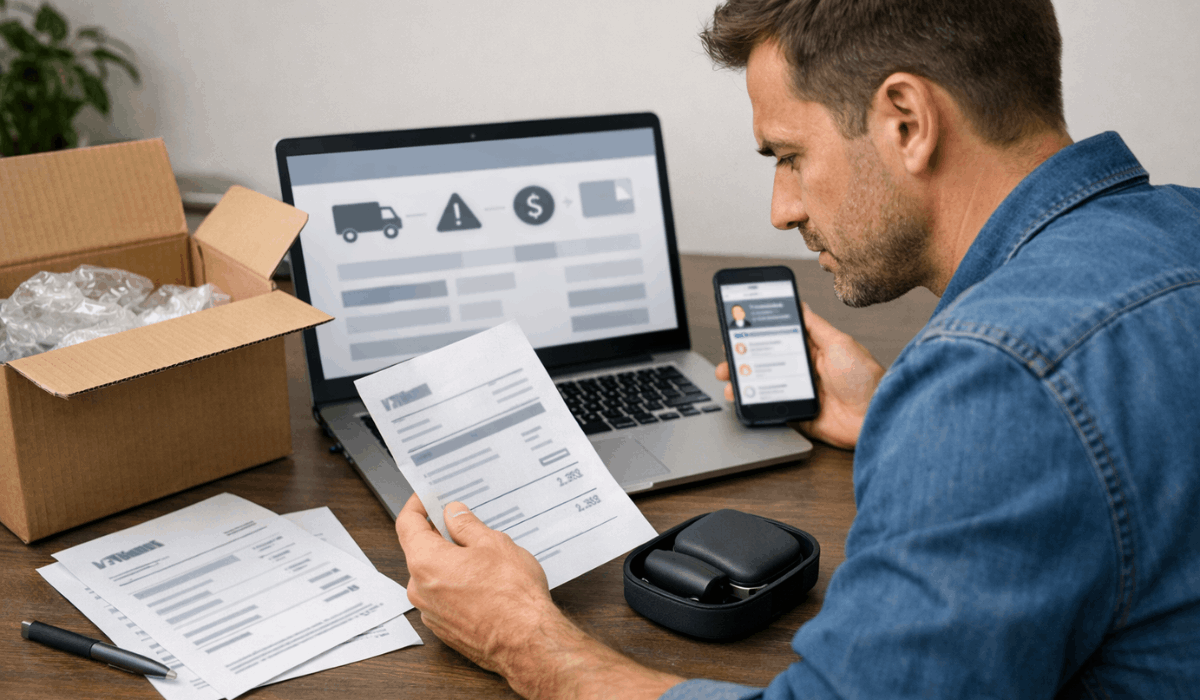
Save receipts, product screenshots, messages, and payment confirmation until delivery. Those order records make a problem easier to explain and protect your right to challenge a charge.
Delivery Details Should Name Responsibilities
A wide delivery estimate is not always dishonest, but it should include a shipping method, tracking option, and origin.
Check who takes over after export, whether duties apply, and where to ask for help when tracking stops.
A marketplace that cannot explain carrier responsibility is not ready for a high-value or urgent order. Begin with something non-urgent and easy to replace until the route proves dependable.
Test the Experience Before Spending More
A first order should reveal how the marketplace works without risking your budget or deadline. Choose a small purchase and leave enough time buffer for a delay, refund request, or support issue.
A Trial Order Reveals More Than a Large Cart
Choose a simple product that needs no safety certification, precise fit, or specific delivery day. Save the listing, seller name, delivery range, refund terms, and selected variation before paying.
When it arrives, compare condition, packaging, tracking, and support with the original promise.
This gives you a practical record of performance and an actual outcome, rather than an impression based only on a first-time discount.
Review the Whole Experience Before Returning
Do not judge a platform only because the item arrived. Check whether checkout details were clear, tracking worked, the support response helped, and the final cost matched expectations. Use this short review after the order is complete:
- Payment: Was checkout clear and protected?
- Delivery: Did tracking and timing match?
- Support: Did someone answer a real question?
Conclusion
A new marketplace can be worth trying when its policies, sellers, payments, and delivery process stand up to basic checks.
Start with small orders, protected payment, and saved evidence instead of assuming a low price means low risk.
Stop using a platform when its rules are unclear, support disappears, or charges change without explanation. Careful testing lets you judge the real experience before you spend more.