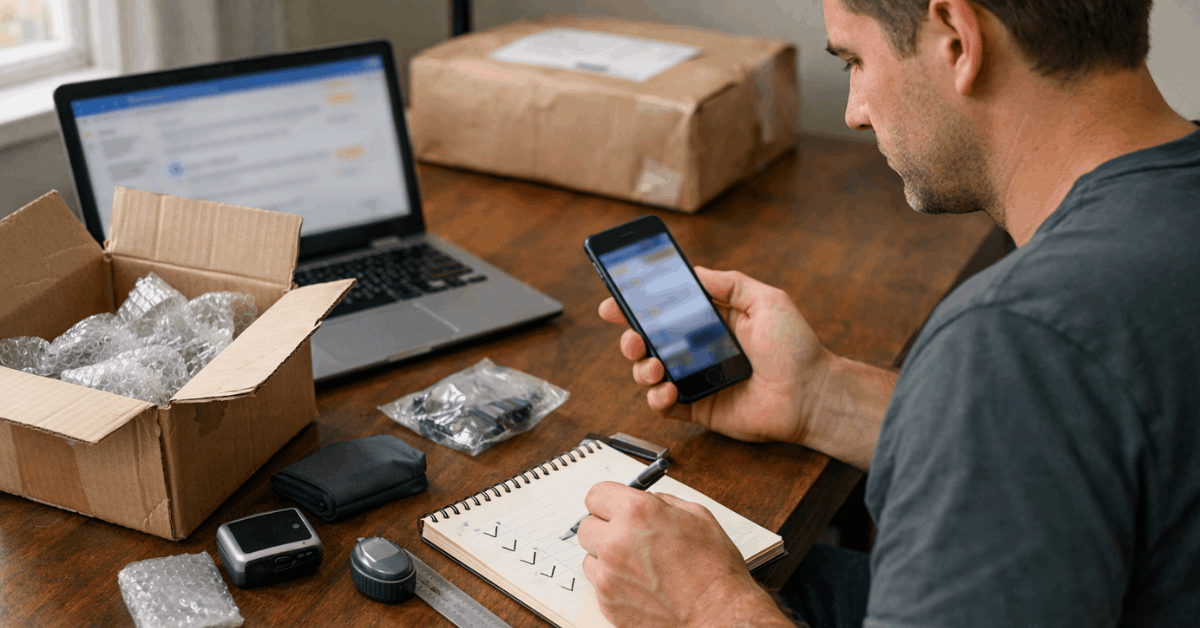
This Banggood review focuses on what happens after checkout, based on a real buyer experience.
The article breaks down product quality, delivery time, and seller reliability from order placement to delivery and support.
Clear checks are included so buyers can spot risks before placing an international order.
Quick Verdict for Busy Buyers
Busy buyers need a decision fast. The verdict should show who Banggood fits, who should avoid it, and the biggest risks to watch out for before checkout.
- Best for: Buyers who prioritize price and can accept longer delivery windows.
- Not for: Buyers who need fast shipping, easy returns, or consistent quality control.
- Biggest upside: Broad selection and frequent deals across multiple categories.
- Main risk: Listing accuracy and product consistency can vary by seller and batch.
- Delivery reality: Dispatch speed, carrier handoffs, and customs can extend timelines.
- Safer approach: Start with a low-cost order and document tracking, unboxing, and defects.

What Banggood Is and How It Works
Banggood is an international marketplace with a mix of fulfillment sources. Knowing the basics helps you avoid quality and delivery surprises.
- Mixed fulfillment: Some items ship from platform stock, others from third-party sellers.
- Warehouse location: Delivery speed changes by region and in-stock status.
- Listing dependence: Specs, photos, and page variants drive expectations.
- Seller/batch variation: Similar items can arrive with different materials or accessories.
- Shipping + customs: Method, handoffs, and customs checks can add delays and tracking gaps.
Real Buyer Experience Overview
This overview summarizes the purchase from start to finish. It shows what was expected versus what arrived.
- What was ordered: Category, item type, and exact variant selected.
- Why it was chosen: Price, specs, availability, and any promo.
- Listing promise: Key claims, photos, and what was said to be included.
- Arrival reality: Condition, build quality, and spec/variant match.
- Outcome: Kept, partial refund, return, or full refund, with the reason.
Order Timeline and Delivery Reality
This timeline shows how the parcel moved from checkout to delivery. It highlights where delays happened.
- Order + dispatch: Handling time before the carrier received the parcel.
- Tracking start: First scan timing and update consistency.
- Export transit: Origin processing and outbound movement.
- Handoffs + customs: Carrier switches, tracking gaps, and customs holds.
- Last mile: Local courier transfer, delivery attempts, and “delivered” mismatches.
Packaging and Condition on Arrival
Packaging checks are quick and should be recorded immediately. They help confirm damage, missing parts, or repacking.
- Box condition: Crushing, punctures, tears, and weak sealing.
- Protection quality: Padding level and whether the item moved inside.
- Moisture/tamper signs: Wet marks, re-tape, broken seals, and opened packaging.
- Accessories secured: Small parts bagged and protected to avoid loss or scratches.
- Proof captured: Photos + short unboxing video before discarding packaging.
Product Quality Check (What You Should Test First)
Early tests should confirm the basics fast. They also protect you if you need to dispute.
- Unbox on camera: Seal, contents, and first condition.
- Included items check: Accessories, cables, manuals, and promised extras.
- Build + material check: Seams, ports, buttons, finish, and claimed materials.
- Spec + compatibility check: Size, model, capacity, and fit with your device/use case.
- Core function test: Run the main feature long enough to catch failures or overheating.
Listing Accuracy and Photo vs Reality
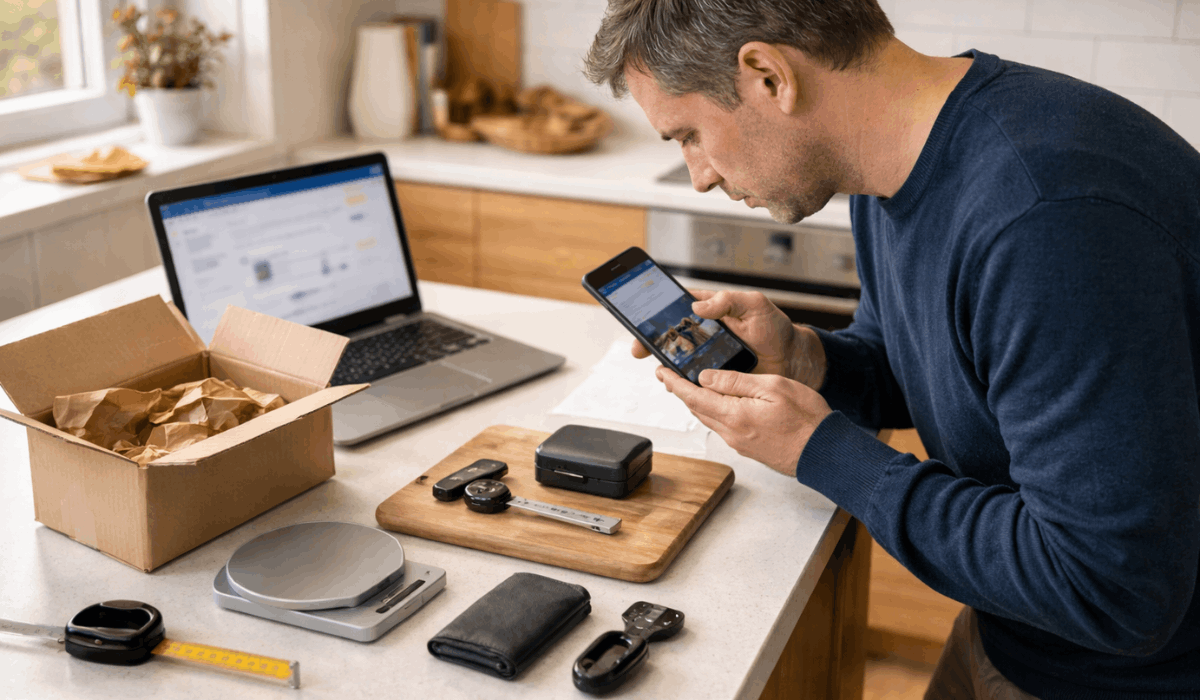
Most “not as described” issues start on the product page. These checks help confirm the match.
- Spec completeness: Exact measurements, materials, weight, and compatibility.
- Variant accuracy: The dropdown option must match the photos, title, and delivered model.
- What’s included: In-the-box items, adapters, cables, and accessories.
- Close-up proof: Ports, seams, labels, edges, and texture visibility.
- Buyer photo confirmation: Recent review photos showing the same variant you chose.
Price Value and Hidden Costs
The price on the listing is only the starting point. These checks help you assess the true value after costs and risks are added.
- True total cost: Item price + shipping + taxes/fees + any currency conversion charges.
- Shipping trade-off: Cheaper methods often mean slower delivery and weaker tracking.
- Defect/variant risk: Savings disappear if you need to reorder because of faults or incorrect versions.
- Return friction: Return shipping and slow refunds can wipe out the deal.
- Local comparison: Compare against local sellers, including delivery speed and return convenience.
Seller Reliability Signals You Should Check Before Buying
Seller reliability determines whether the listing matches reality and whether problems are resolved quickly. These signals help you judge risk before you place the order.
- Recent feedback trend: Steady ratings matter more than old reviews, especially for the last 30–90 days.
- Repeat issue patterns: Look for recurring complaints such as “not as described,” defects, missing parts, or incorrect variants.
- Listing quality consistency: Reliable sellers provide clear specs, close-up photos, and consistent variant images.
- Response quality test: Send one simple question and judge speed, clarity, and whether they answer specifics.
- Dispute behavior clues: Watch for reviews mentioning delays, excuses, partial refunds, or pressure to settle without proof.
Refunds, Returns, and Disputes (What Happened in Your Case)
Refunds and disputes depend on timing and proof. In your case, the write-up should show the exact issue, the evidence you submitted, and the final outcome.
- Trigger: What went wrong (damage, missing parts, wrong variant, not as described) and when you noticed it.
- First action: When you contacted the seller/support, what you asked for (refund, replacement, partial refund).
- Proof submitted: Unboxing video, close-up photos, label shots, screenshots of the listing, and tracking history.
- Response pattern: How fast they replied and whether the replies were specific, helpful, or generic/delaying.
- Resolution path: What you accepted (return, replacement, partial refund, full refund) and what conditions were required.
- Final result: Amount refunded, how long it took, and what you would do differently next time.
Buyer Protection and Payment Safety
Buyer protection is strongest when payment and proof remain within the platform’s process.
These steps reduce fraud risk and improve your chance of a fair resolution.
- Use protected payments: Pay with methods that support disputes and avoid direct transfers.
- Stay on-platform: Keep all messages, photos, and agreements inside the order chat.
- Document everything: Save screenshots of the listing, order details, tracking, and unboxing proof.
- Avoid risky requests: Do not accept off-platform links, extra “fees,” or seller-only refund promises.
- Limit exposure: Start with smaller orders, use spending limits, and keep account security strong.
Customer Support Experience
Support interactions can shape the outcome of an order problem. The points below cover what to document and how to describe the interaction clearly.
- Contact channel used: Order chat, help center ticket, email, or app support.
- Response time: Time to first reply and time between follow-ups.
- Reply quality: Specific answers versus generic templates, and whether they addressed the exact problem.
- Evidence requests: What proof did they ask for (photos, video, labels, tracking, screenshots)?
- Escalation path: How the case moved forward when replies stalled (reopen ticket, dispute step, deadlines).
- Outcome impact: Whether support helped reach refund/replacement, and how long the process took.
A Simple “Before You Buy” Checklist
A checklist keeps you focused on proof, not promises. Use it before checkout to reduce “not as described” issues and delivery surprises.
- Listing proof: Clear specs, close-up photos, and a confirmed variant selection.
- Seller signals: Recent reviews, repeat complaints, and a fast, specific reply to one question.
- Cost reality: Total price with shipping, taxes/fees, and conversion costs, not just the item price.
- Delivery reality: Dispatch window, shipping method, tracking quality, and customs risk for the item type.
- Refund readiness: Return rules, dispute timelines, and your plan to record unboxing and defects.
Final Takeaway
This Banggood Review shows that the best outcomes come from clear listings, reliable sellers, and realistic delivery expectations.
The real buyer experience highlights common risks like variant mix-ups, listing gaps, and inconsistent quality, so keeping proof from checkout through unboxing matters.
Use the “Before You Buy” checklist before checkout to reduce surprises and make your next order smarter.