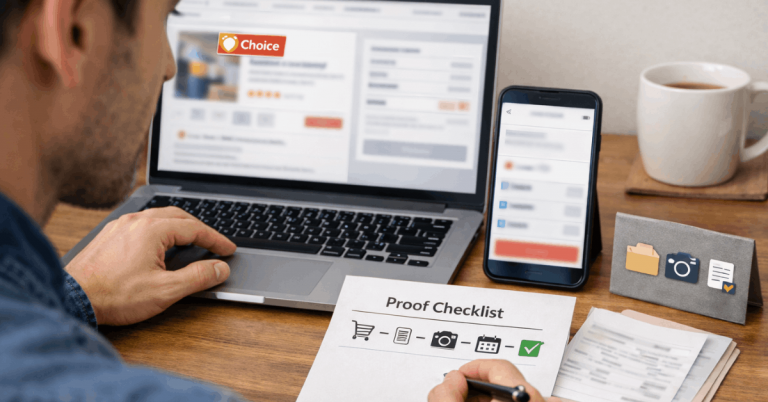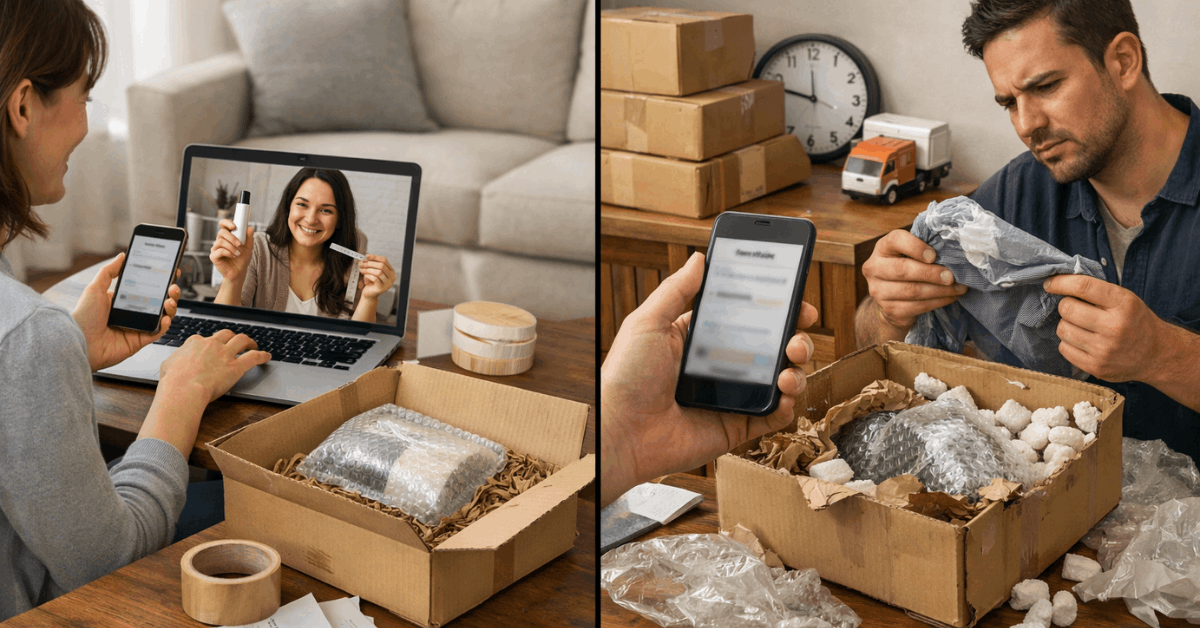
Buying direct from sellers on international marketplaces can save money and unlock listings you will not find in local stores.
The trade-off is that product quality, delivery time, and refund outcomes depend heavily on the seller and the platform’s protection.
This guide breaks down the real pros and cons, plus the checks that help you buy with fewer surprises.
What “Buying Direct From Sellers” Means on International Marketplaces
Buying direct means the platform lists the item, but the seller handles packing, shipping, and support.
Your results depend on the seller’s standards for product accuracy, quality control, and shipping speed, not just the marketplace name.
If you use platform checkout, you typically have stronger dispute and refund options than with off-platform payments.

Why Buyers Choose Direct Sellers in Marketplace Reviews
Buying direct explains the trade-offs buyers accept in real orders. Most reasons connect to price, access, and seller flexibility.
- Lower price — Coupons, bundles, and bulk deals can beat retail pricing.
- More variety — More styles, variants, and niche items than local stores.
- Direct proof — Request real photos, measurements, and packaging details.
- Customization — Adjust color, size, add-ons, or order details when available.
- Packaging control — Ask for extra padding or double boxing for long shipping routes.
Pros in Real Marketplace Buying Experience
Direct buying can work well when the seller is consistent. These are the benefits buyers report most often.
- Lower total cost — Discounts and bundles can reduce your final price.
- Wider selection — More variants, niche items, and regional stock options.
- Direct communication — Faster answers and clearer order confirmation.
- Proof on request — Photos and measurements help confirm what ships.
- Packaging upgrades — Extra protection can reduce the risk of damage.
Cons in Real Marketplace Buying Experience
Savings can come with problems when seller standards vary. These issues often appear in buyer reports.
- Quality inconsistency — Materials and finishing may not match expectations.
- Listing mismatch — The variant received may differ from the photos or descriptions.
- Delivery uncertainty — Delays from dispatch, handoffs, or customs are common.
- Refund friction — Disputes can require strict proof and deadlines.
- Costly returns — Return shipping may be slow and not worth the cost.
Platform Protection vs Seller Control
Platform rules affect how protected you are. Seller control affects how the order is packed and shipped.
- Checkout protection — Platform checkout supports disputes and refund timelines.
- Seller fulfillment — The seller controls packing quality and dispatch speed.
- Tracking evidence — Platform tracking helps prove delays and missing scans.
- Policy limits — Return windows and evidence rules can restrict coverage.
- Off-platform risk — Paying outside the platform usually reduces protection.
Seller Reliability Signals to Include in Your Review
Seller signals show who ships accurately and resolves issues fairly. They matter because they reveal repeat patterns.
- Recent review quality — Focus on recent notes about accuracy and delivery timing.
- Photo proof — Buyer photos confirm materials, sizing, and real condition.
- Repeat complaints — Patterns like missing parts matter more than one bad review.
- Order history — Steady completed orders can signal consistent performance.
- Problem handling — Refund and replacement stories show how issues are resolved.
Quality and Listing Accuracy Checks Before You Buy
Most quality problems start with unclear listings. These checks help confirm what you will receive.
- Match photos to options — Ensure your selected variant matches the images shown.
- Read full specs — Confirm material, measurements, and included accessories.
- Use buyer photos — Compare real photos to listing images for details.
- Check sizing by measurements—Use charts and numbers, not just S/M/L labels.
- Scan repeat accuracy complaints — Look for patterns about wrong items or missing parts.
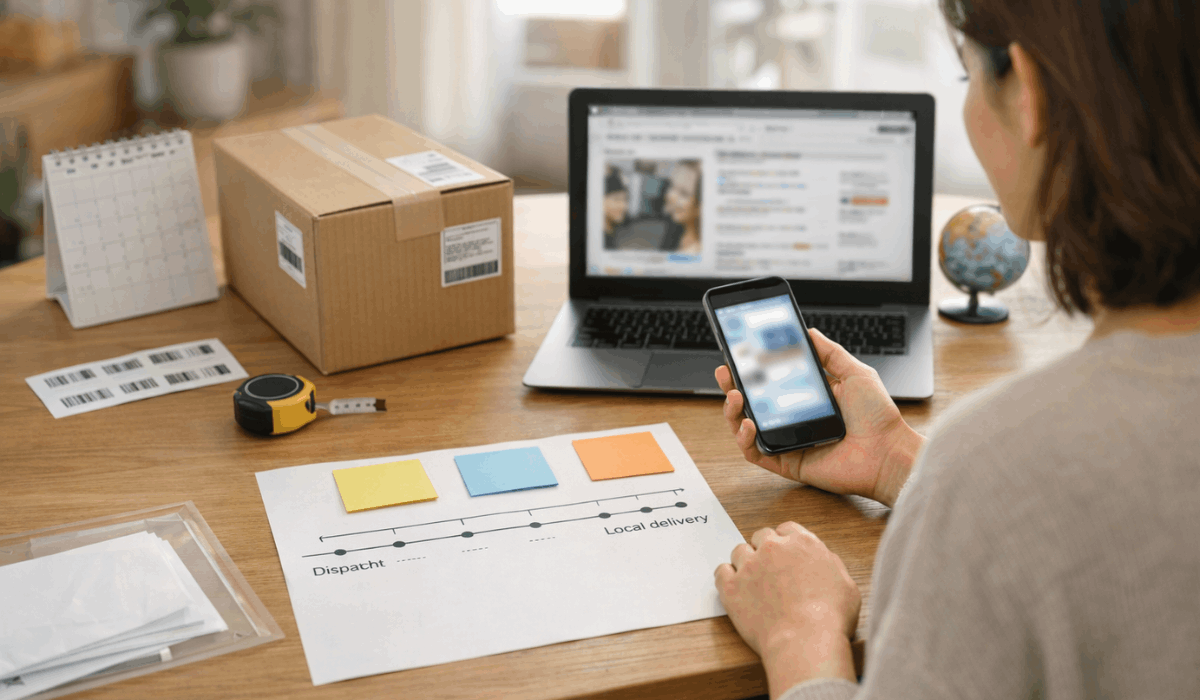
Delivery Time Checks That Matter for International Orders
Delivery time in international orders depends on dispatch speed, carrier handoffs, and customs processing.
These checks help you estimate timelines more accurately before you buy.
- Dispatch window — Confirm how many days the seller needs before the package is handed to the carrier.
- Recent delivery reviews — Use recent buyer feedback that mentions the actual arrival time, not old reviews.
- Tracking quality — Prefer listings with clear, consistent tracking updates from start to finish.
- Shipping method — Compare standard vs expedited options and watch for “economy” routes with long gaps.
- Customs risk — Expect delays for restricted items, high declared value, or incomplete paperwork.
- Local handoff stage — Check if delivery slows when the parcel transfers to your local courier.
- Peak congestion — Sales events and holidays often add delays across sorting centers and borders.
Smart Buying Strategy for Marketplace Shoppers
A smart buying strategy helps you balance price, quality, and delivery time without relying on luck.
These five steps keep risk low while you shop on international marketplaces.
- Test order first — Start small to verify quality and dispatch speed.
- Proof threshold — Require recent photo reviews or clear seller proof before paying.
- Protected checkout — Stay on-platform and use payment methods with dispute options.
- Shipping by urgency — Pay for faster shipping only when timing truly matters.
- Risk-tier choices — Use direct sellers for low-risk items and avoid them for high-value or safety items.
Quick Pros and Cons Summary Box
This quick summary box outlines the main trade-offs of buying directly from sellers on international marketplaces.
Use it to decide if the savings are worth the risk for your specific order.
Pros:
- Lower cost — Discounts, bundles, and seller promos can reduce total spend.
- More options — Wider variety, niche listings, and more variants than local stores.
- More control — You can request proof, confirm details, and ask for packaging upgrades.
Cons:
- Quality risk — Materials and finishing can be inconsistent across sellers or batches.
- Delivery risk — Dispatch delays, tracking gaps, and customs holds can extend timelines.
- Refund and returns friction — Disputes need strict proof, and return shipping can be costly.
Decision Checklist Before You Buy Direct
This decision checklist helps you confirm whether buying direct is worth it for your order.
If you cannot check most of these, the safer move is to choose a more protected option.
- Protected checkout — Can you pay inside the marketplace with dispute and refund tools?
- Recent proof — Do recent photo reviews confirm the exact variant and real condition?
- Clear specs — Are materials, measurements, and included accessories clearly stated and consistent?
- Delivery confidence — Does the seller show a realistic dispatch window and reliable tracking history?
- Return plan — Are return terms clear, and can you accept the return shipping cost if needed?
- Seller track record — Does the seller have steady order volume and repeat positive outcomes?
- Risk fit — Is the item low-risk, low-value, and not time-sensitive for you?
To Conclude
Buying direct from sellers can save money and expand your options, but your results depend on seller reliability, listing accuracy, and delivery predictability.
Use platform checkout, verify the recent proof, and choose a shipping method that aligns with your timeline before you pay.
Apply the decision checklist now and place a small test order first to shop with fewer surprises.