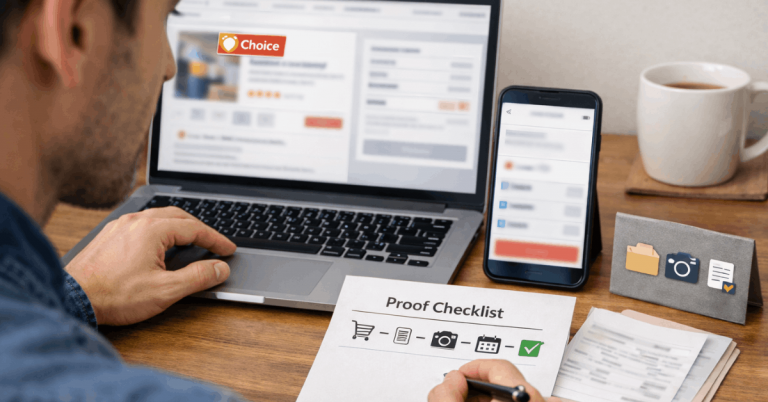
Buying on international marketplaces offers more choice and lower prices, but also higher risks to product quality, delivery time, and seller reliability.
Many of these problems do not appear to be scams at first and often stem from misleading listings, unreliable sellers, or platform-level gaps.
This guide explains the most common marketplace scams buyers should know and how they appear in real shopping situations.
Why International Marketplaces Are Higher Risk
International marketplaces introduce extra layers that increase buyer risk. These factors often affect product accuracy, delivery speed, and seller accountability.
- Cross-border shipping — Longer routes, customs checks, and carrier handoffs increase delays and risk of loss.
- Language and translation — Auto-translated listings can change specs, conditions, or included items.
- Platform automation — Inventory pooling and auto-routing can disconnect the item from the original seller.
- Seller verification gaps — Standards differ by region, making some sellers harder to assess.
- Returns and refunds — International returns take longer and are harder to enforce.
Common Marketplace Scams Buyers Encounter
Most marketplace scams are designed to look like normal shopping issues, not obvious fraud.
They usually involve misleading listings, seller behavior, or delivery tactics that only become clear after you pay.
- Fake “new” items — Used, returned, or refurbished products sold as new.
- Listing manipulation — Photos, specs, or options that do not match the item shipped.
- Seller impersonation — New or hijacked accounts copying trusted listings.
- Shipping deception — Fake tracking numbers or intentional delivery delays.
- Refund and return traps — Tactics that push buyers off-platform or close disputes early.
- Accessory stripping — Core items ship, but required parts or accessories are missing.
- Region-lock mismatches — Products arrive locked, incompatible, or restricted in your country.

Scams That Look Legit at First
Some scams blend into normal marketplace operations and only show problems after delivery or during returns.
These cases often appear safe because they use trusted platform features or familiar seller signals.
- Platform-fulfilled orders — Items ship from shared warehouses, not the original seller, increasing mix-up risk.
- High ratings with low-value history — Strong feedback built from cheap or unrelated products.
- “Verified” seller badges — Trust markers that do not guarantee consistent quality or fulfillment.
- Duplicate listings — Identical pages run by different sellers with different standards.
- Time-based trust traps — Sellers rely on long shipping times to delay disputes.
Red Flags Inside Marketplace Listings
Many scams can be spotted before you pay if you know where to look on the listing page.
These warning signs usually appear as small inconsistencies rather than obvious errors.
- Vague specifications — Missing measurements, model numbers, or technical details.
- Inconsistent photos — Images that show different versions or conditions of the product.
- Unclear condition labels — Terms like “new” are used without explanation or limits.
- Missing inclusions — Accessories implied by photos but not listed in the description.
- Weak return information — No clear process, timelines, or return address details.
How Scams Affect Product Quality
Product quality issues are among the most common outcomes of marketplace scams. These problems often appear only after unboxing or first use.
- Hidden wear and damage — Scratches, marks, or internal use not disclosed in the listing.
- Missing components — Required accessories, cables, or parts left out.
- Lower-grade substitutes — Cheaper materials or components than advertised.
- Refurbished parts — Repaired or reused components sold as new.
- Region-specific limitations — Features are reduced or disabled outside the seller’s market.
- Quality control failures — Items ship without individual inspection or testing.
- Mixed-condition inventory — New and returned units stored and shipped together.
- Incomplete refurbishment — Cosmetic fixes without proper internal repair.
- Outdated versions — Older models sold under current product listings.
- Packaging downgrades — Original packaging replaced with generic or damaged boxes.
How Scams Impact Delivery Time
Delivery delays are often intentional and used as part of scam tactics. Long shipping times make it harder for buyers to track problems and act within protection windows.
- Delayed dispatch — Sellers wait days or weeks before actually shipping the item.
- Recycled tracking numbers — Old or unrelated tracking updates create false progress.
- Endless transit status — Packages stay marked “in transit” with no real movement.
- Cross-border handoff delays — Items stall when transferred between carriers or regions.
- Customs hold tactics — Sellers blame customs to justify extended delays.
- Split shipments — Parts of the order ship separately without notice, extending the final delivery.
- Wrong origin shipping — Item ships from a different country than the one listed, causing delays.
- Address verification loops — Sellers claim address issues to reset delivery timelines.
- Fake re-dispatch claims — Sellers say the item was resent without new tracking.
- Last-mile failure — Packages stall with local carriers and are never completed.
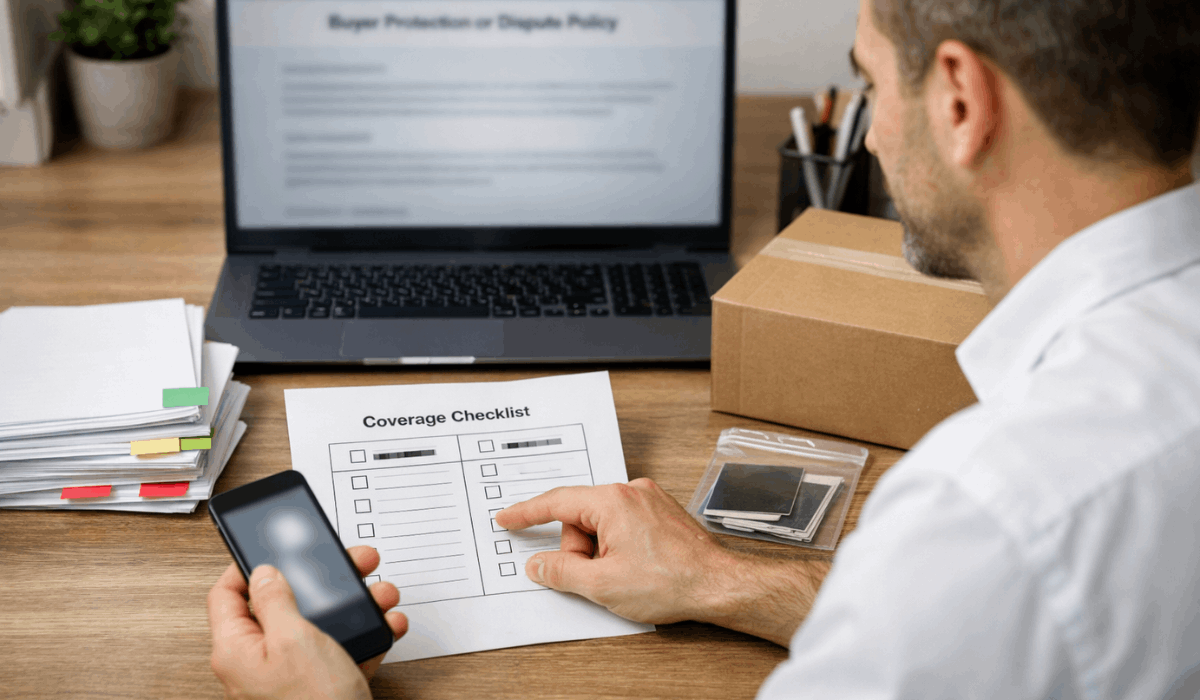
What Buyer Protection Does—and Doesn’t—Cover
Buyer protection helps in many cases, but it has clear limits that scammers rely on.
Knowing what is covered and what is not helps you act correctly and on time.
- Item not received — Covered if tracking does not confirm delivery within the stated window.
- Item not as described — Covered when the product differs clearly from the listing.
- Proof requirements — Claims fail without photos, videos, or clear timelines.
- Time limits — Protection expires if disputes are opened too late.
- Return conditions — Coverage may end if returns are shipped incorrectly or late.
How to Reduce Your Risk Before You Pay
Most marketplace scams can be avoided before checkout with a few disciplined checks.
These steps help you catch problems early and protect your payment.
- Verify the exact item — Match title, specs, photos, and options to one clear version.
- Check seller history — Review recent feedback, order volume, and issue patterns.
- Read condition details — Confirm how “new,” “open-box,” or “refurbished” is defined.
- Confirm shipping origin — Ensure the item ships from the listed country.
- Use protected payment methods — Pay only through the platform’s checkout system.
- Review recent negative reviews — Look for repeated issues, not the average score.
- Check return feasibility — Confirm return address, cost, and time limits before paying.
- Compare identical listings — Spot price gaps or spec differences across sellers.
- Avoid off-platform contact — Keep all messages and payments inside the marketplace.
- Screenshot key details — Save the listing, specs, and promises before checkout.
What to Do If You Suspect a Scam
Acting early gives you the best chance to recover your money or receive the correct item. The steps below help you protect your claim and avoid common mistakes.
- Stop using the item — Do not install, activate, or modify it.
- Document everything — Take photos and videos of the item, packaging, and labels.
- Check protection deadlines — Confirm how long you have to open a dispute.
- Contact the seller inside the platform — Keep all communication on record.
- Open a dispute if needed — Escalate through official buyer protection channels.
- Save tracking evidence — Screenshot tracking pages and delivery status changes.
- Do not accept partial refunds early — These often close your case permanently.
- Follow return instructions exactly — Use the correct address, carrier, and timing.
- Avoid closing the dispute yourself — Let the platform resolve it.
- Escalate before deadlines — Move the case to platform review if the seller delays.
Final Takeaway
Marketplace scams are common, but they are easier to avoid when you know how they work and where to look.
Checking listings carefully, verifying sellers, and acting fast when something feels wrong protects your money and your time.
Use this guide before your next purchase and rely on our marketplace reviews to shop with more confidence.