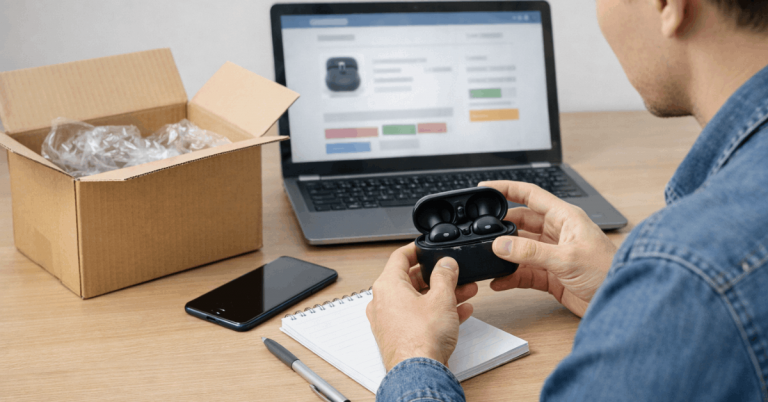
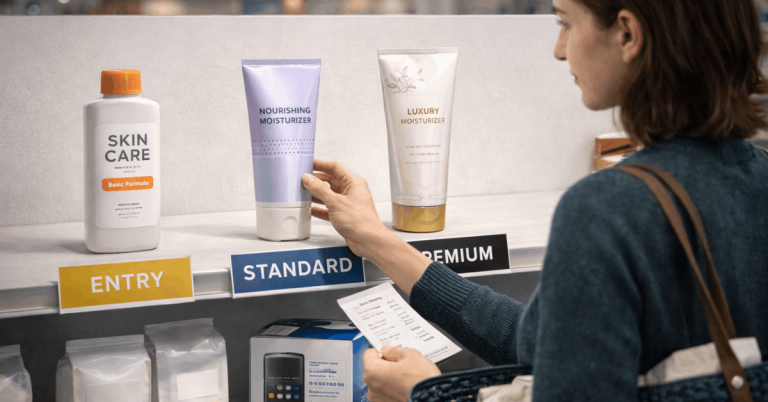
A listing can say “new” while leaving questions unanswered: was it opened for inspection, returned, repaired, or repacked without accessories?
Those details matter when the item is expensive, personal, or difficult to send across borders. This guide shows how to check condition claims before payment, document delivery day, and report an order that is not as described.

“New” Needs More Than a Prominent Label
The condition field should agree with the description, selected option, images, and seller response.
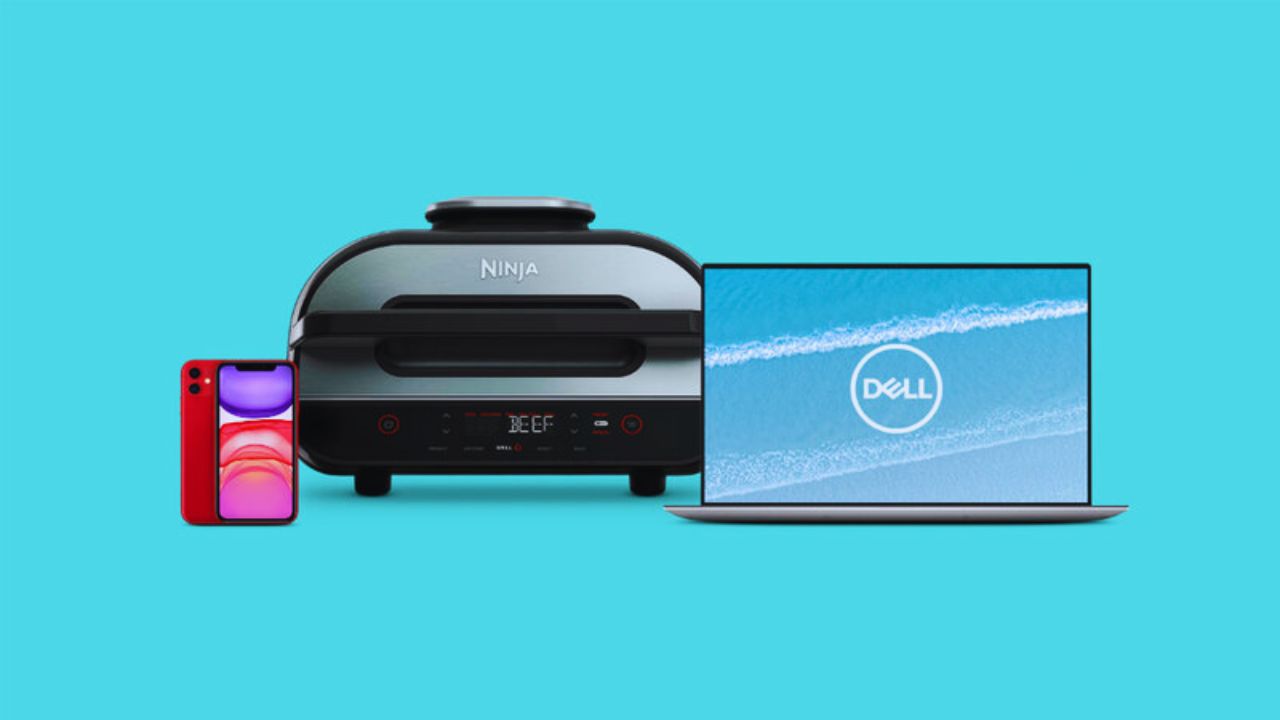
A clear new-item page gives the exact model, box contents, and whether factory packaging is included.
Be cautious when it says “tested,” “like new,” “opened for checking,” or “may have minor marks.” None automatically means a bad purchase, but they change the condition you should expect and the price you should accept.
Read the Small Print Around Open-Box and Refurbished Stock
Open-box items may be returns, display units, or opened products. Refurbished, renewed, and reconditioned items have usually been inspected or repaired, but the work can vary between a brand and an independent seller.
Treat these labels as separate products, not minor wording changes. Check who did the work, whether parts were replaced, whether accessories are original, and the return period.
A lower price may suit reduced certainty, but only when the condition is stated plainly.
The Selected Variation Can Quietly Change What You Receive
Marketplace pages often combine new, open-box, used, and bundle options under one main photo.
The lowest price may belong to a bare unit, a returned item, or a version without the cable, manual, or branded box pictured. Choose the exact variation before rereading specifications and the contents list.
Then take a screenshot. The selected option matters more than the main image if the order arrives without a promised part.
A Large Discount Is Not Proof of a Good Deal
A wide price gap may reflect clearance stock, but it can also point to older units, missing extras, regional versions, or a condition hidden lower on the page.
Compare the model and included parts across sellers. A cheaper listing is not automatically risky, but it needs stronger proof when far below similar offers.
Recent buyer photos of seals, labels, and accessories help. Let evidence outweigh the discount that caught your attention.
Seller Patterns Matter More Than a Store’s Overall Score
A high seller rating may come from hundreds of low-cost orders that required little care. It does not show how a store handles a costly device, collectible, or fitted item.
Read item-level reviews and search for opened, seal, used, missing, scratched, replacement, or refund. Notice whether buyers describe a one-off issue or a recurring habit. Recent feedback reveals more than a lifetime score.
Also Read: What to Do If Your Package Never Arrives
Ask One Question That Creates a Useful Record
When a listing leaves doubt, send a short message through the marketplace. Ask whether the item is factory-new, never activated, never refurbished, and supplied with listed accessories.
A direct answer that matches the page can help if the package tells a different story. A vague reply, copied response, or request to continue elsewhere is a reason to reconsider.
Keep the conversation on-platform so your question and the seller’s answer remain attached to the order.
Some Purchases Need a Higher Standard of Proof
Condition matters differently across categories. An opened storage container may be harmless if it is clean and complete.
A used charger, beauty item with a broken seal, battery, or already-activated device can be a bigger problem.
For personal-care items, electronics, branded goods, and collectibles, require condition language, recent photos, and workable return terms. The greater the consequence, the higher your proof threshold should be before checkout.
Regional Versions Can Look New but Still Be the Wrong Fit
A product made for another market may be factory-new and still disappoint you.
Plug type, voltage, warranty coverage, software, manual language, sizing, or included accessories may differ from a local version.
Check the model number instead of relying on a brand name or box design. This is especially useful for electronics and fitted items. Confirm the regional version matches your location before treating a low international price as genuine value.
Delivery Day Gives You Your Cleanest Evidence
Inspect the order before you install, activate, wash, charge, or throw anything away. Photograph the shipping label, outer box, seals, inner packaging, and visible condition when it arrives.
Then compare the model, colour, accessories, and serial information with the screenshot you saved. A resealed box is not proof of prior use; customs or a damaged carton may explain it.
Careful photos create a record if there are scratches, loose accessories, or incorrect contents.
Keep the Package Intact Until You Know the Item Is Right
Do not remove tags, discard protective films, repair a flaw, or use a product extensively while deciding whether its condition matches the listing.
Return rules often require original packaging and complete accessories, especially for cross-border orders.
Test basic functions only as far as needed to confirm it works and matches the order. This protects your return options when the condition is genuinely wrong.
A Short Arrival Check Can Prevent a Long Dispute
This check is most useful for costly, fragile, technical, personal-care, or hard-to-return purchases. It takes minutes while the parcel, listing, and order page are together.
Focus on facts a support reviewer can see. Keep the package and your screenshots until you are satisfied.
- Photograph the sealed box, label, packing, and signs of damage or opening.
- Match the model, condition, accessories, and selected option to the saved listing.
- Report a mismatch through the marketplace before the buyer-protection deadline.
Act Early When “New” Does Not Match What Arrived
If the item has signs of prior use, missing original parts, incorrect packaging, or a condition that conflicts with the page, contact the seller inside the marketplace and explain the issue in a few factual lines.
Attach photos, the saved listing, and delivery date. Do not accept a partial refund or close a case before deciding whether the product is usable and the offer is fair.
Protection rules vary, but your deadline and evidence matter more than promises to sort it out later.
Make Future Orders Easier to Judge
Save sellers who repeatedly deliver items in the condition described, and avoid stores with recent reports of opened boxes, substituted accessories, or slow dispute replies.
For an unfamiliar seller, a low-risk order can show how they pack, dispatch, and respond before you buy something costly. Keep a note of successful shops and troublesome ones.
That turns each purchase into practical experience, not another guess, and makes the next order easier to judge.