This guide explains how to avoid receiving used or refurbished items when you shop on international marketplaces.
You can reduce the risk by verifying condition labels, spotting listing red flags, and choosing reliable sellers before you pay.
You will also learn how to inspect deliveries and act fast with buyer protection if the condition is wrong.
Understand the Labels That Signal “Not New”
Condition labels are your fastest clue that an item is not factory-new, even if the main page looks “new.”
Sellers may hide these terms in variants, specs, or short notes. Use these five labels as your quick filter before you pay.
- Used / Pre-owned: Previously owned or used, with wear risk.
- Open-box / Like new: Opened packaging or returns, not guaranteed factory-sealed.
- Refurbished / Reconditioned / Renewed: Restored after return or repair; quality varies.
- Manufacturer refurbished vs seller refurbished: The brand process is usually more consistent than third-party work.
- Bulk packaging / White box / No original box: Repacked or non-retail packaging, higher mismatch risk.
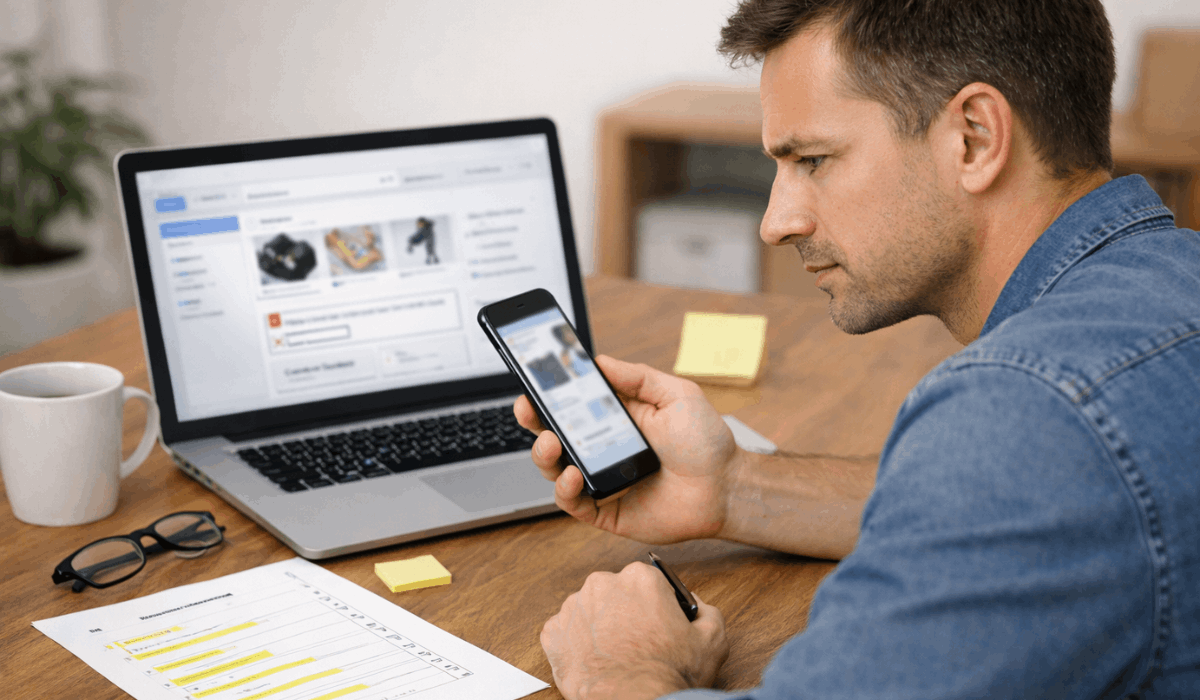
Red Flags Inside the Listing Page
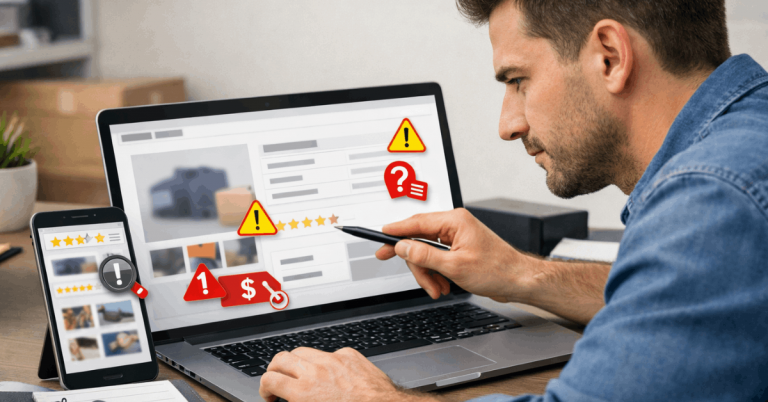
Listing-page red flags often appear as minor inconsistencies that indicate the item is not truly new.
These problems matter more in international orders because returns take longer, and buyer protection timelines can be strict. Use these five checks before you pay.
- Condition mismatch: The page looks “new,” but a variant, dropdown, or spec line shows used/open-box/refurbished.
- Vague “not new” wording: Terms like tested, inspected, graded, minor marks, or opened for check.
- Packaging warnings: No retail box, bulk/white box, repacked, or missing manuals/inserts.
- Unclear what’s included: “Accessories may vary,” missing charger/cables, or no full contents list.
- Price and proof don’t match: Big discount with only stock photos and no clear model/packaging proof.
Seller Reliability Checks That Actually Work
Seller reliability matters more than the product title when you want a new item.
Many problems recur because buyers trust star ratings rather than checking patterns. Use these checks to filter sellers that actually ship what they promise.
- Read recent reviews only: Focus on the last 30–90 days and scan for repeats like “opened,” “used,” “missing accessories.”
- Search reviews by keyword: Look specifically for used, refurbished, seal broken, not new.
- Check item-level feedback: Prioritize reviews tied to the exact product, not the seller’s overall store score.
- Compare against official stores: If an authorized seller exists, use it for high-risk categories like electronics and beauty.
- Watch fulfillment behavior: Sellers with mixed warehouse stock or frequent substitutions have higher condition-mismatch risk.
Smart Steps Before You Pay
Most condition problems can be stopped before checkout with a few controlled checks.
These steps help you lock in “new,” create proof, and reduce disputes on international orders. Use this short list every time you buy.
- Confirm “new” in three places: Condition field, full description, and the selected variant.
- Send a short seller message: Ask if the item is factory-sealed, never used, never refurbished, with all original accessories.
- Check warranty and activation rules: Verify region coverage, activation status, and eligibility for brand support.
- Use protected checkout only: Pay on-platform and avoid off-platform messages or payment requests.
- Choose safer shipping options: Prefer tracked shipping with delivery confirmation and clear return rules.
Category-Specific Risk Rules
Some product categories carry higher condition risk than others, even when listings say “new.”
These items are more likely to be returned, tested, or repackaged before resale. Use these rules to adjust your checks by category.
- Electronics: Check activation status, battery health risk, serial number policies, and warranty eligibility by region.
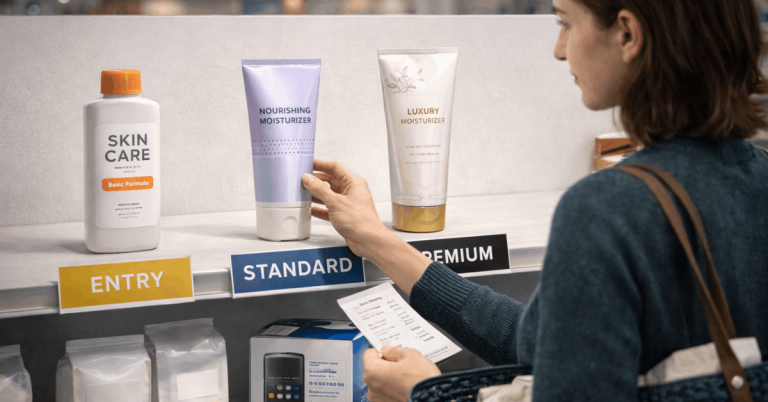
- Beauty and skincare: Look for tamper seals, batch codes, and strict hygiene-related return rules.
- Fashion and shoes: Watch for try-on returns, missing tags, worn soles, and repacked boxes.
- Luxury and collectibles: Require proof of authenticity, grading, or verification, and intact seals.
- Consumables and batteries: Verify manufacturing dates, shelf life, and safe packaging.
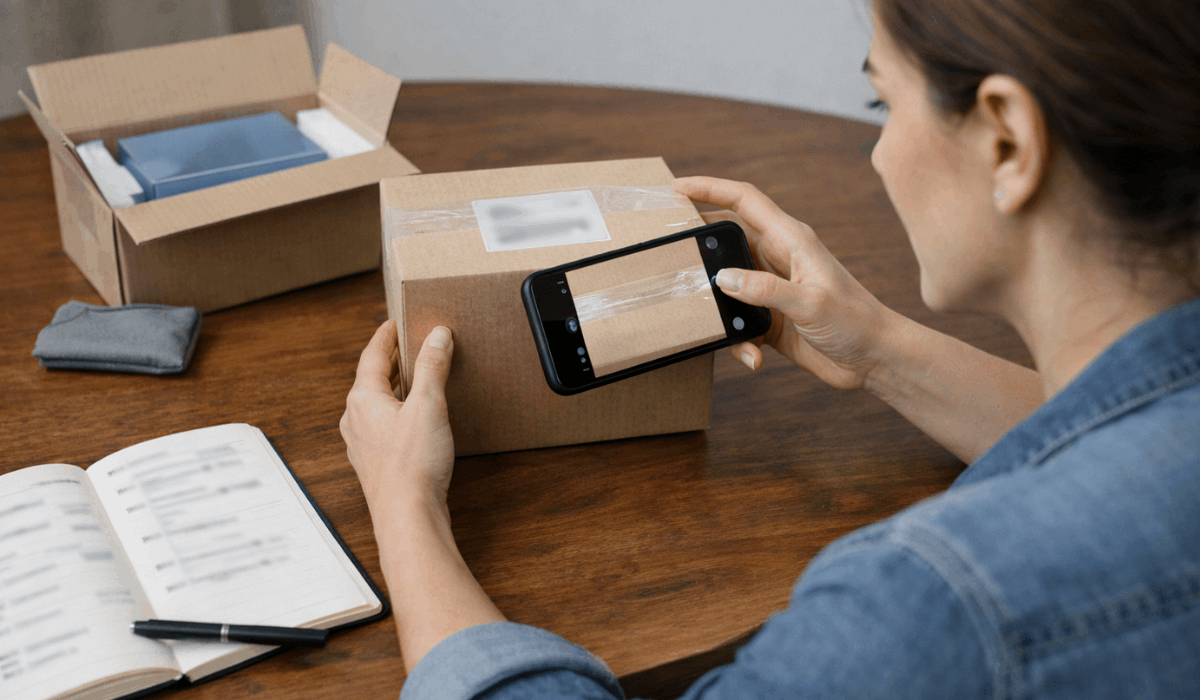
Delivery Day Inspection Checklist (Do This Before You Open Fully)
Delivery day is your last clean checkpoint before you lose return leverage.
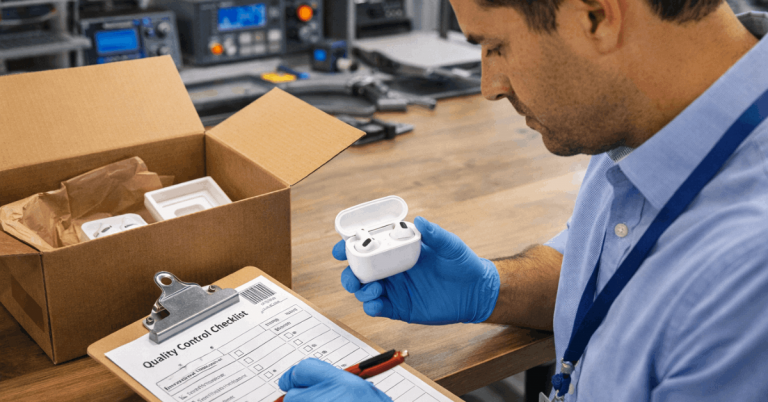
What you document in the first minutes can determine the outcome of your refund for international orders. Use this checklist before you fully open the package.
- Record first contact: Take photos or a short video of the sealed box from all sides, with labels visible but blurred.
- Check outer packaging: Look for re-tape, crushed corners, mismatched stickers, or damage that suggests prior handling.
- Inspect seals and wrap: Verify factory seals, shrink wrap, and the condition of the inner box before removing anything.
- Scan for use signs: Watch for fingerprints, scratches, missing films, or loosely packed accessories.
- Keep everything intact: Save the box, inserts, plastics, accessories, and screenshots until you confirm the condition.
What to Do If You Receive Used or Refurbished Anyway
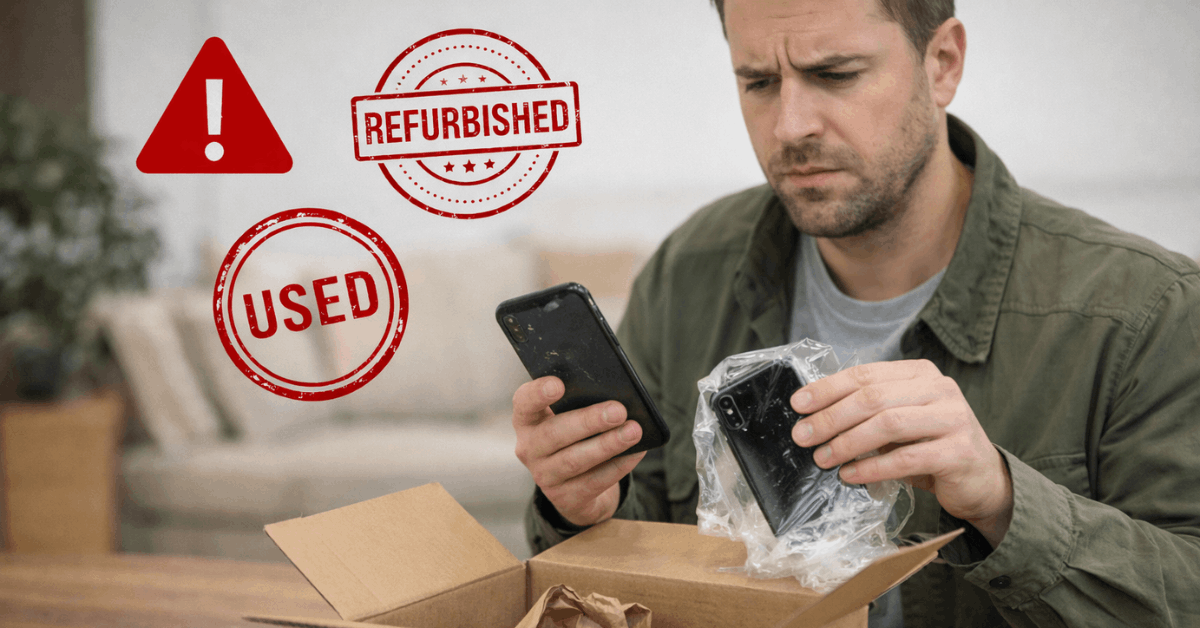
If a “new” item arrives used or refurbished, your timing and documentation matter.
Acting fast keeps buyer protection active and limits disputes on international orders. Follow these steps in order.
- Stop using the item immediately: Do not activate, install, or clean it, and keep everything as received.
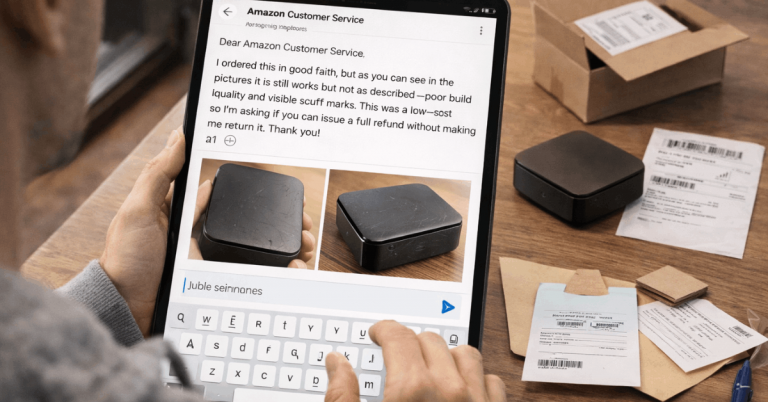
- Document the condition: Take clear photos and a short video showing packaging, seals, and signs of prior use.
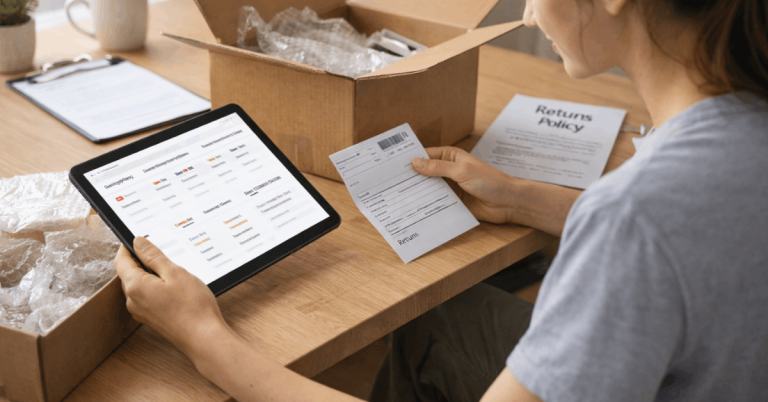
- Open an on-platform case: Select item not as described / wrong condition and note the delivery date.
- Message the seller clearly: Request a refund or replacement and set a short response deadline.
- Return safely if required: Use tracked shipping, ensure the parcel, and keep all receipts and proof.
Prevent Repeat Problems (Your Long-Term System)
Avoiding used or refurbished items long term requires a repeatable system, not one-off fixes.
Small habits reduce risk on every international order and save time later. Use this system to buy with control.
- Build a trusted seller list: Save sellers who consistently deliver sealed, new items.
- Track problem sellers: Note stores with condition mismatches or slow dispute handling.
- Reuse checklists and message templates: Keep your pre-buy questions and inspection steps ready.
- Time high-risk purchases carefully: Avoid peak sales periods for electronics, beauty, and collectibles.
- Review outcomes after delivery: Adjust your rules based on what worked and what failed.
Final Takeaway
Avoiding used or refurbished items comes down to checking condition labels, verifying seller reliability, and documenting delivery day proof every time you buy.
These habits reduce disputes and protect your money on international marketplaces.
Use this checklist on your next order to buy with confidence and keep control from checkout to delivery.