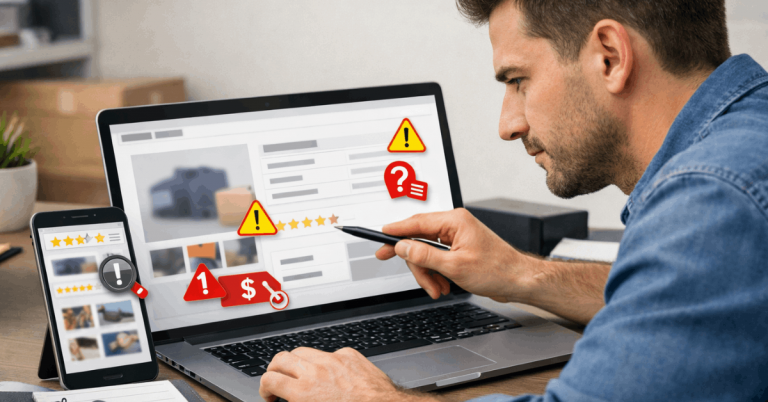
Low-quality listings are common on international marketplaces and often lead to poor product quality or long delivery delays.
You can avoid these issues by learning how to spot warning signs before you buy.
This guide helps you review listings with a focus on quality, shipping, and seller reliability.
Check the Listing Title
The listing title is often the first place where quality issues appear. A weak title usually signals missing details or low seller effort.
- Overly generic wording – Titles that use broad terms like “best item” or “high quality” without specifics hide important details.
- Missing product identifiers – No model number, size, version, or material makes it hard to verify what you will receive.
- Keyword stuffing – Titles packed with search terms instead of clear information reduce trust and clarity.
- Misleading emphasis – Focusing on bonuses or accessories instead of the main product can signal lower product quality.

Review Product Images Carefully
Product images show how transparent a seller is about quality. Weak or limited images often hide defects or differences.
- Blurry or low-resolution photos – Poor image quality makes it hard to judge materials, finish, or build quality.
- Stock images only – Listings without real photos may not reflect the actual item being shipped.
- Missing angles or close-ups – No detail shots can hide flaws, size issues, or weak construction.
- Inconsistent images – Photos that do not match each other suggest copied or reused listings.
Analyze the Product Description
The product description tells you what the seller is actually committing to deliver. Clear and complete descriptions reduce quality and delivery risks.
- Very short or generic text – Minimal detail often means weak quality control.
- Copied or repeated content – Duplicate descriptions suggest mass listings without inspection.
- Missing specifications – No materials, dimensions, or usage details increase mismatch risk.
- Conflicting information – Differences between the title, images, and text signal unreliable listings.
Look for Pricing Red Flags
Pricing often reveals more about product quality and delivery than the listing claims. Unrealistic prices usually signal hidden issues.
- Prices far below market range – Extremely low prices often reflect lower materials or quality shortcuts.
- Large discounts without explanation – Missing reasons for price drops reduce trust.
- Hidden shipping or handling fees – Extra costs may appear after the order is placed, changing the total value.
- Inconsistent pricing across listings – Wide price gaps for the same product signal reliability problems.
Inspect Seller Information
Seller details help you judge product quality and delivery reliability. Weak or incomplete profiles increase risk in international marketplaces.
- Limited selling history – New or inactive sellers have little proof of reliability.
- Incomplete profile details – Missing business information reduces accountability.
- No product category focus – Sellers listing unrelated items often lack quality control.
- Frequent name or store changes – Constant changes can signal attempts to avoid complaints.
Check Reviews and Ratings
Reviews show how products and sellers perform after purchase. Patterns in feedback reveal quality and delivery issues.
- Repeated complaints about quality – Similar issues across reviews indicate consistent problems.
- Mentions of late or missing deliveries – Delivery delays are a strong reliability warning.
- Vague or copied reviews – Short, generic feedback reduces credibility.
- Rating drops over time – Declining scores often reflect recent quality or shipping issues.
Verify Policies and Guarantees
Clear policies show how sellers handle problems after purchase. Missing or vague terms increase your risk when ordering internationally.
- Unclear return rules – No timelines or conditions make refunds difficult.
- Missing warranty information – Lack of coverage leaves you unprotected if the product fails.
- No delivery responsibility stated – Unclear liability for lost or damaged items creates disputes.
- Weak buyer protection terms – Limited dispute options reduce recovery chances.
Evaluate Estimated Delivery Times
Delivery estimates reflect how organized the seller’s shipping process is. Unrealistic or vague timelines often signal fulfillment problems.
- Very wide delivery ranges – Long windows suggest poor shipping control.
- Unrealistically fast international delivery – Overpromising increases the risk of delays.
- No tracking information mentioned – Lack of tracking reduces transparency.
- Different delivery times across similar listings – Inconsistencies indicate unreliable logistics.
Watch for Product Quality Disclaimers
Quality disclaimers often lower the seller’s responsibility. These statements usually shift the risk to you.
- “Style or color may vary” notes – Variations can hide quality differences.
- Material substitutions mentioned – Changes in materials affect durability and finish.
- Quality expectations reduced in fine print – Small notes can override main claims.
- Condition described as “approximate” – Vague wording weakens quality guarantees.

Check Packaging and Shipping Details
Packaging and shipping information affect how the product arrives. Missing details increase the risk of damage or delays.
- No packaging description – Lack of protection details raises damage risk.
- Long-distance shipping without safeguards – International transit needs proper handling.
- No customs or handling notes – Missing information can cause delays or extra fees.
- Responsibility for damage unclear – Unclear liability complicates claims.
How to Avoid Misleading Product Photos on International Marketplaces
Product photos can create false expectations when they are carefully staged or edited.
You need to check images with a critical eye to protect product quality and delivery outcomes.
- Compare all images for consistency – Differences in color, shape, or details suggest reused or edited photos.
- Look for real-use photos – Images showing the product in use are harder to fake.
- Check background and lighting tricks – Heavy lighting can hide flaws or alter colors.
- Watch for missing scale references – No size comparison increases mismatch risk.
- Reverse-check images mentally across listings – Photos that appear identical across sellers reduce trust.
Common Delivery Delays in Cross-Border Shopping and How to Predict Them
International deliveries often slow down due to factors outside the buyer’s control. You can still predict delays by reading listing and seller signals.
- Customs processing holds – Missing or vague customs information often leads to clearance delays.
- Indirect shipping routes – Multi-stop logistics increase transit time and risk.
- Seller handling delays – Late dispatch after payment signals weak fulfillment.
- Untracked or low-cost shipping methods – Cheaper options usually move more slowly and lack updates.
- Seasonal or regional congestion – Holidays and peak periods extend delivery timelines.
How Seller Reliability Impacts Product Quality
Seller reliability directly affects what you receive and how it arrives. Reliable sellers follow consistent quality and fulfillment standards.
- Consistent sourcing practices – Reliable sellers use stable suppliers and materials.
- Product inspection before shipping – Quality checks reduce defects and mismatches.
- Accurate listing maintenance – Trusted sellers update listings when products change.
- Clear handling and packaging processes – Proper handling protects product condition.
- Accountability for issues – Reliable sellers respond and correct problems quickly.
To Conclude
Low-quality listings often show clear warning signs across titles, images, pricing, and delivery details.
When you review listings carefully, you reduce the risk of poor product quality and long shipping delays.
Use these checks before every international purchase to protect your money and make smarter buying decisions.