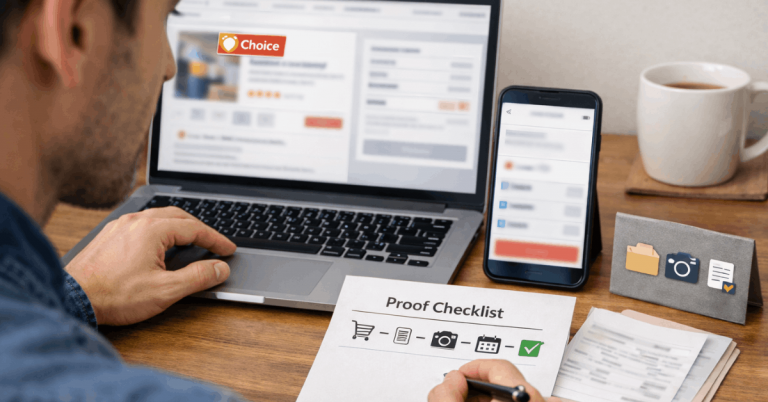
You can avoid most international buying problems by evaluating the marketplace before you pay.
This guide shows you how to judge buyer protection, seller standards, shipping reliability, and total cost using simple checks.
You will know when a marketplace is worth the risk and when to walk away.
What “Trustworthy Marketplace” Means in Real Buying Terms
A marketplace is “trustworthy” when it consistently protects your money and time, even when something goes wrong.
You judge it by what actually affects your outcome: delivery reliability, listing accuracy, and how refunds work in real disputes.
Use this checklist to stay focused on the factors that matter most.
Step 1 — Verify the Marketplace Itself
Check the marketplace first, not the seller. If the platform is weak on policies, payments, or support, you take the risk.
- Confirm the legal identity: Look for a real company name, registration details, and where it operates.
- Check support access: Make sure there is a working help center and a clear way to contact support.
- Read the buyer protection summary: You want a clear outline of what is covered, what is excluded, and how claims work.
- Review refund and return rules: Verify how refunds are issued and what triggers a return requirement.
- Check payment handling: Confirm it uses secure checkout and does not push off-platform payments.
- Understand fees and currency handling: Look for how it handles taxes, import costs, and currency conversion at checkout.
- Scan for enforcement signals: Check whether the platform mentions seller verification, policy violations, and penalties for bad sellers.
Step 2 — Check Buyer Protection and Dispute Rules
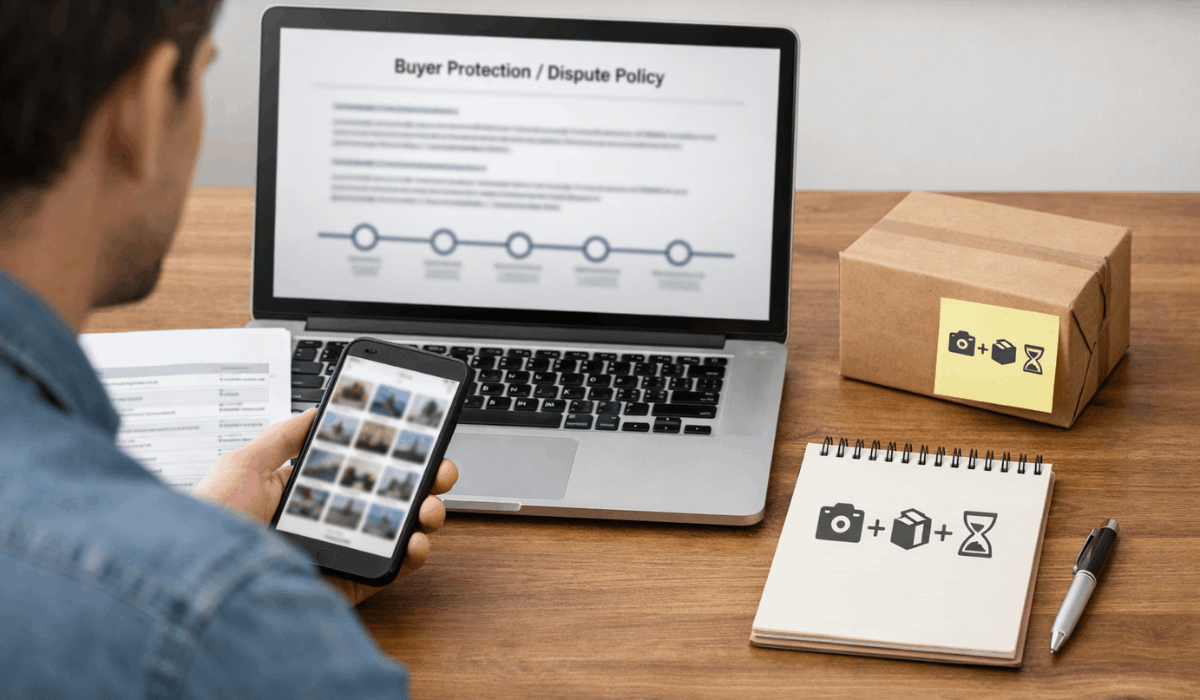
Buyer protection determines whether you can recover your money if something goes wrong. You check coverage, deadlines, and proof rules before you buy, not after.
- What’s covered: Not received, not as described, damaged, missing parts, counterfeit (if included).
- What’s excluded: Change-of-mind, custom/digital items, weak claims without proof.
- Dispute deadlines: Exact time window for opening a claim after delivery, or the latest delivery date.
- Proof requirements: Photos/video, screenshots, tracking, and order details that the platform accepts.
- On-platform messaging: In many cases, only on-platform communication counts as valid evidence.
- Return rules: When returns are required, who pays shipping, and any local return option.
- Resolution options: Whether you can get a refund, partial refund, or replacement, and how escalation works.
Step 3 — Evaluate Seller Quality Signals
A solid marketplace can still have bad sellers, so you check seller signals before you buy.
You focus on recent performance and patterns that predict problems. Use these points to filter sellers fast.
- Recent rating trend: Prioritize sellers with strong recent feedback, not just a high lifetime score.
- Order volume and history: More completed orders and a longer history usually mean more predictable fulfillment.
- Complaint patterns: Watch for repeats like fake items, wrong model, missing parts, poor packaging, or no response.
- Response speed and tone: Slow replies, copy-paste answers, or avoidance usually mean harder resolutions.
- Listing quality: Clear specs, real photos, and consistent details across title, options, and description.
- Proof-friendly details: Model numbers, measurements, included parts list, warranty/condition notes, and compatibility info.
- Return and warranty stance: Sellers who clearly accept platform returns and follow policy are easier to deal with.
Step 4 — Test Delivery Reality Before You Buy
Delivery is where international orders fail most often.
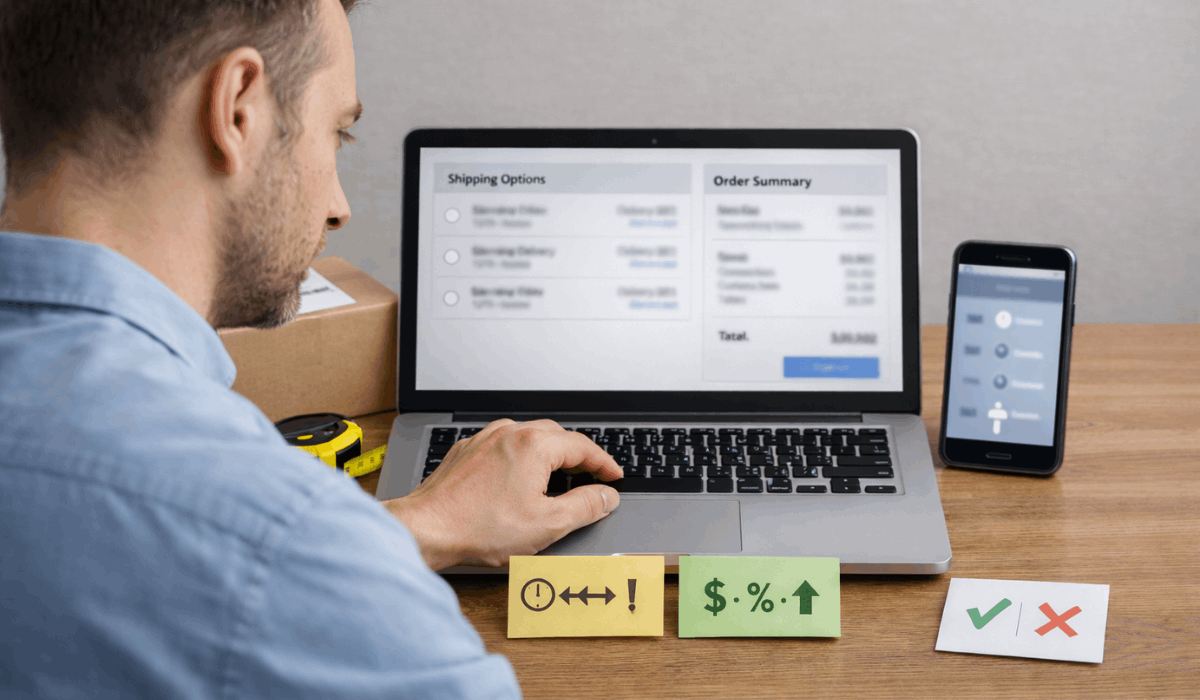
You check shipping method, tracking quality, and customs risk before you pay, so you don’t get stuck waiting with no leverage.
- Shipping method type: Know if it’s postal, economy, or courier, because speed and tracking reliability differ.
- Tracking quality: Confirm it provides end-to-end tracking, not only “label created” updates.
- Estimated vs typical delivery time: Compare the promised window to what buyers report for your country.
- Carrier handoffs: Watch for multiple handoffs, because delays often happen at transfer points.
- Customs and duties exposure: Check who pays duties, how fees are calculated, and whether the marketplace collects them upfront.
- Delivery proof rules: Understand what counts as “delivered” and what you must show if you didn’t receive it.
- Return shipping reality: Check return address location and cost, since international returns can erase your refund.
Step 5 — Check Total Cost (Not Just the Item Price)
The cheapest listing can become the most expensive order once fees hit. You add up the full landed cost and the return risk before you pay.
Use this checklist to avoid price traps.
- Add the full landed cost: Item price + shipping + taxes/VAT + duties + handling fees.
- Watch currency conversion costs: Check who converts the currency and whether you can avoid marked-up conversion.
- Check payment-related fees: Some payment methods add cross-border, processing, or installment fees.
- Spot shipping price tricks: Low item price with inflated shipping, or “free shipping” with hidden fees elsewhere.
- Account for return cost risk: International return shipping can cancel out a refund.
- Look for split-shipment costs: Multiple packages can lead to extra fees, delays, and more tracking issues.
- Confirm what’s included: Accessories, cables, warranty, and region compatibility can add hidden replacement costs.
Step 6 — Research Real User Experiences
Real user experiences tell you how the marketplace performs when things go wrong.
You focus on dispute outcomes, delivery timelines, and listing accuracy, not just star ratings. Use these checks to spot patterns fast.
- Dispute results: Look for reports on refunds, partial refunds, replacements, and the time it took to resolve each case.
- Delivery reality: Track common delays, “stuck in transit” issues, and whether tracking updates were reliable.
- Listing accuracy: Check how often buyers mention wrong models, missing parts, fake items, or condition mismatches.
- Seller behavior patterns: Note repeated complaints about slow replies, stalling, or pushing off-platform contact.
- Region-specific feedback: Prioritize buyers in your country, as customs, carriers, and timelines vary.
- Recent reviews only: Give more weight to recent posts because policies and seller pools change.
- Photo and video evidence: Trust reviews that show proof and consistent details, not vague comments.
Step 7 — Do a Low-Risk Test Purchase
If you are unsure about a marketplace, a small test order gives you real evidence without risking much money.
You use it to measure checkout clarity, tracking quality, and how support behaves. Keep the test simple and easy to document.
- Pick a cheap, simple item: Choose something low-cost with clear specs and low counterfeit risk.
- Choose tracked shipping: Use an option with end-to-end tracking so you can judge delivery reliability.
- Save proof before paying: Screenshot the listing, seller info, shipping terms, and buyer protection summary.
- Test the checkout details: Confirm that currency conversion, taxes, and fees are clearly shown at payment.
- Track every milestone: Record order date, dispatch date, tracking updates, and delivery date.
- Test support safely: Ask one basic question to see response speed and clarity, without starting a dispute.
- Evaluate return feasibility: Check return address, shipping cost, and the steps required if the item is wrong.
Conclusion — Your Decision Rule
You buy with confidence when you evaluate a marketplace before buying and confirm it can deliver reliably, enforce disputes, and show the real total cost upfront.
You get better outcomes when you use the same checks every time and avoid sellers and platforms that waste your time.
Evaluate a Marketplace Before Buying on your next order, and only pay when the marketplace meets your minimum standards.