That $12 Bluetooth speaker on Temu looks like a steal. But the $9 customs charge, 3-week wait, and zero return path turn that steal into a donation.
Buying from international marketplaces is a skill. And part of that skill is knowing exactly when to close the browser tab and walk away.
Every marketplace listing tells you the price. Almost none of them tell you the total landed cost: the duties, VAT, courier surcharges, and currency conversion fees stacked on top.
This article is for the deal-hunter who buys from AliExpress, Temu, Shein, or similar platforms regularly. The goal is simple: know when to skip.
The 2-Minute Checklist Before Buying From International Marketplaces
A quick mental pass on seven conditions can save hours of dispute emails later. Hit two or more of these, and the purchase probably isn’t worth it.
Run through this list before comparing sellers or prices:
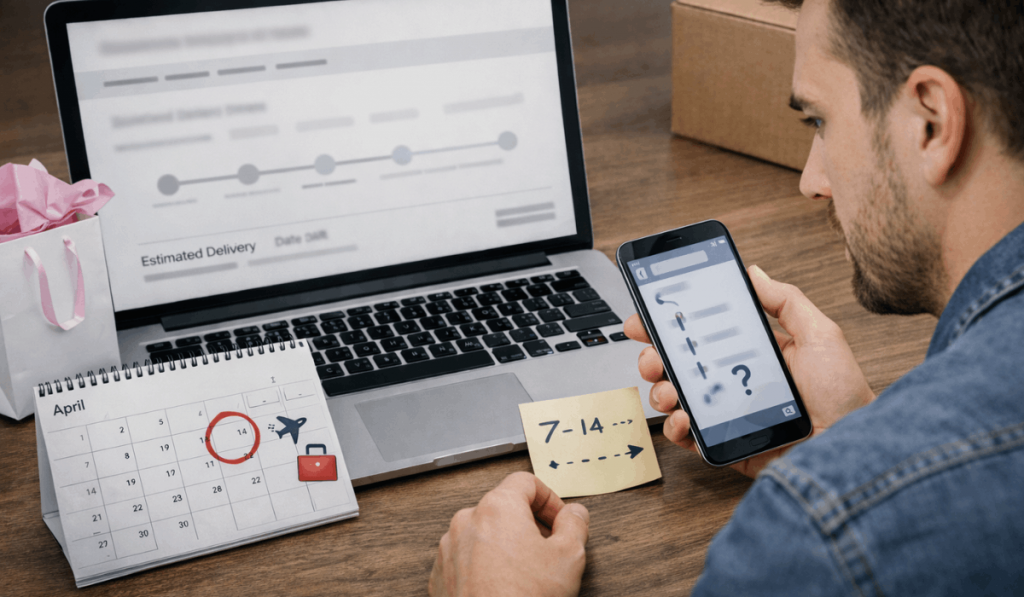
- The item needs to arrive within 7 to 14 days, and international shipping plus customs clearance could break that window
- Total landed cost is unclear because duties, VAT, courier fees, and foreign exchange charges aren’t spelled out
- Return shipping would cost close to the item price, which means you’re stuck with whatever arrives
- The product needs a local warranty or service center, and no practical repair path exists in your country
- The listing is missing specs, model numbers, sizing details, or clear product photos
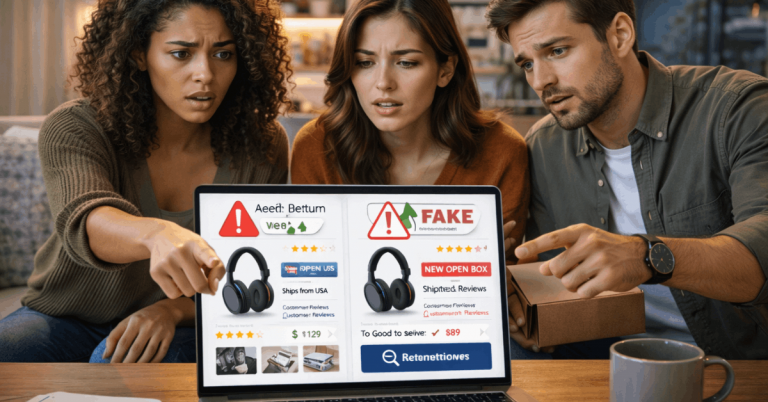
- The seller has a thin history, inconsistent store details, or review patterns that look manipulated
- The product category is high-risk for counterfeits: branded electronics, chargers, batteries, or suspiciously cheap name-brand goods
I think the second point on this list, the total landed cost, is the one that burns people on platforms like Temu and AliExpress more than any other single factor.
A $20 item can quietly become a $35 item after import duties and courier handling fees hit. And because those charges arrive separately (sometimes weeks after delivery), the mental accounting never catches up.
Product Categories That Fail the Cross-Border Shipping Test
Not every product category carries the same risk when ordered internationally. Some items travel fine. Others are almost guaranteed to cause problems because of breakage, compatibility failures, or the near-impossibility of returns.
The distinction matters because a blanket “don’t buy internationally” rule is wasteful. Phone cases, cable organizers, craft supplies, and stickers? Those ship fine. The problems cluster around specific categories.
Fragile, Heavy, and Bulky Goods
Glass, ceramics, and screens break during long transit routes with multiple carrier handoffs. Proving breakage to a seller 6,000 miles away is harder than it sounds. Photos of a cracked vase don’t always trigger a refund when the seller disputes whether it left their warehouse intact.
Heavy and bulky items carry ballooning shipping surcharges. The return shipping on a 5 kg item can exceed the original purchase price. At that point, you own the item whether you want it or not.

Electronics, Storage Devices, and Battery Products
Chargers and battery-powered electronics bought internationally come with compatibility and safety risks. Voltage standards, plug types, and certification requirements differ across countries. A charger rated for 220V used on a 110V system (or the reverse) isn’t a minor inconvenience. It’s a fire risk.
Fake storage capacity on SD cards, SSDs, and USB drives is a documented problem on international marketplaces.
A 512GB drive may report 512GB to your computer but only hold 32GB of real data, corrupting everything past that threshold. Testing takes time, and by the time you confirm the fake, the return window may be closed.
| Product Type | Primary Risk | Return Difficulty |
|---|---|---|
| Glass, ceramics, screens | Breakage during multi-carrier transit | High: proving damage is contested |
| Heavy or bulky items | Shipping surcharges exceed savings | Very high: return shipping cost prohibitive |
| Chargers and batteries | Voltage mismatch, safety certification gaps | Medium: but safety risk outweighs refund |
| SD cards, SSDs, USB drives | Fake capacity reporting | High: testing delays eat the return window |
| Clothing and shoes | Sizing standard mismatch | High: return shipping slow and expensive |
The pattern is clear: if the item is fragile, electronic, or fit-dependent, international orders carry disproportionate risk compared to local alternatives.
Also read: How to Evaluate a Marketplace Before Buying
Clothing, Shoes, and Cosmetics Across Borders
Sizing standards differ wildly between countries. A “Large” on an Asian marketplace listing often corresponds to a “Small” or “Medium” on Western size charts. Even when measurements are listed in centimeters, the fit can differ based on cut, stretch, and fabric weight.
Cosmetics, skincare, and supplements create a different problem. Expiry dates may be printed in formats that are hard to read.
Heat exposure during weeks of transit can degrade active ingredients. And verifying authenticity on a $6 serum from a marketplace seller with no brand authorization is basically guesswork.
Seller Red Flags That Should Kill the Deal Immediately
The seller matters more than the listing photos. A strong product listing means nothing if the person behind it has a pattern of late shipments, missing items, or vanishing after disputes.
These red flags should end the conversation before you add anything to your cart:
- New seller with zero or minimal history: no track record means no data on delivery speed, packaging quality, or willingness to resolve problems
- Store details that keep changing: the store name, listed location, or return policy shifts between visits
- Ratings are high but reviews lack specifics: dozens of 5-star ratings that all say “great product” with no photos and no detail are a manipulation signal
- Recent review trends turning negative: if the last 30 days of reviews mention delays, missing items, or poor packaging, that’s the current reality
- Seller won’t answer direct questions about specs, sizing, or what’s included in the box
- Pressure to communicate or pay off-platform, which removes your buyer protection entirely
The Review Manipulation Problem on International Marketplaces
I think the common advice to “just check the reviews before buying” is dangerously misleading on platforms like AliExpress and Temu.
Review manipulation on international marketplaces operates at a scale that makes star ratings almost meaningless for certain product categories.
Sellers routinely offer free products in exchange for 5-star reviews, use review-swap networks, or launch new storefronts with imported fake review histories.
A smarter approach: ignore the star count entirely. Instead, filter for 1-star and 2-star reviews only, then read what went wrong.
The complaints tell you more than the praise ever will. If the negative reviews mention the same problem repeatedly (wrong size, fake capacity, broken on arrival), that’s your real product description.
This is the gap every “how to buy safely from international marketplaces” article misses. They tell you to check reviews.
They never tell you that the review system itself is compromised on many international platforms, and that reading the negative reviews is the only reliable signal left.
According to the Federal Trade Commission’s guidance on fake reviews, deceptive review practices violate consumer protection rules, but enforcement across borders remains limited.
When International Marketplace Returns and Disputes Become Dead Ends
Returns fail for predictable reasons. And when they fail, the money is gone. Knowing these failure points in advance lets you decide whether the purchase is worth the risk of being stuck.
Return shipping costs are the biggest trap. On a $15 item, the return label to ship back to China or Southeast Asia can cost $20 or more. The math doesn’t work.
Sellers know this, which is why some offer partial refunds of 10% to 30% instead of processing a real return. They’d rather lose a few dollars than pay for reverse logistics.
Short return windows compound the problem. If the platform gives you 15 days from delivery, but the item takes 3 weeks to arrive and another week for you to test it, the window is already closed.
Original packaging requirements add another layer: boxes often arrive crushed, which disqualifies the return.
Hard-to-prove defects are the final wall. A slightly off color, a subtle size mismatch, or a cosmetic flaw that doesn’t photograph well leaves the buyer in a weak position during disputes. Platform dispute teams tend to side with sellers when photo evidence is ambiguous.
The European Consumer Centre has published guides specifically about cross-border shopping disputes within and outside the EU. Their data shows that disputes with sellers outside the EU have lower resolution rates than domestic ones.
Smarter Alternatives When the International Deal Isn’t Worth the Risk
Walking away from a cheap international listing doesn’t mean paying full retail locally. Several middle-ground options exist.
- Local retailers with clear return policies: the price premium often runs 15% to 25% higher, but the return process takes days instead of weeks
- Authorized resellers and official brand stores: counterfeit risk drops sharply, and warranty coverage is typically valid in your country
- Marketplace listings with local fulfillment: Amazon, eBay, and similar platforms often have warehouse-fulfilled options that ship domestically even when the seller is based overseas
- Trusted local platforms for used or refurbished goods: condition can be verified before purchase, and shipping is fast
- Waiting for a verified local sale or restock: patience avoids the customs fees, the dispute risk, and the 4-week anxiety of watching a tracking number sit in limbo
The bundle trick is worth mentioning too. Consolidating multiple purchases into a single international order can lower per-item customs and delivery costs. But this only works when the seller is reliable. Bundling orders from a sketchy seller just multiplies the risk.
Questions People Ask About Buying From International Marketplaces
Q: Is it safe to buy electronics from AliExpress or Temu in 2026?
Low-risk electronics like phone cases and cables are generally fine. Anything with a battery, charger, or voltage requirement carries compatibility and safety risks that are hard to verify from a marketplace listing. Stick to certified local retailers for those categories.
Q: How do I calculate the total cost of an international marketplace order?
Add the listed price, estimated import duties for your country, any VAT or sales tax applied at the border, courier handling fees (usually $5 to $15), and the currency conversion markup your payment method charges. Some platforms now estimate duties at checkout, but the estimate isn’t always accurate.
Q: Can I trust seller reviews on international marketplaces?
Star ratings alone are unreliable due to widespread review manipulation. Filter for 1-star and 2-star reviews and look for repeated complaints. If multiple buyers report the same issue, treat that as the baseline product experience rather than the exception.
Q: What’s the best way to dispute a bad international marketplace purchase?
Open the dispute through the platform first, not through your payment provider. Upload clear photos and screenshots of the listing versus what arrived. If the platform dispute fails within their timeline, then escalate to a credit card chargeback as a second step.
Q: Are international marketplace purchases covered by consumer protection laws?
Coverage depends on your country and where the seller is based. EU buyers have some cross-border protections within the EU, but purchases from sellers in China or Southeast Asia fall outside those frameworks. Credit card chargeback rights may be your strongest fallback.
Conclusion
The cheapest listing on an international marketplace is rarely the cheapest outcome after fees and hassle. Smart cross-border shopping means knowing which purchases deserve the risk and which ones don’t.
A $10 saving on a product that can’t be returned is a $10 loss wearing a disguise. The best deals happen when the total landed cost is clear and the seller has earned your trust.