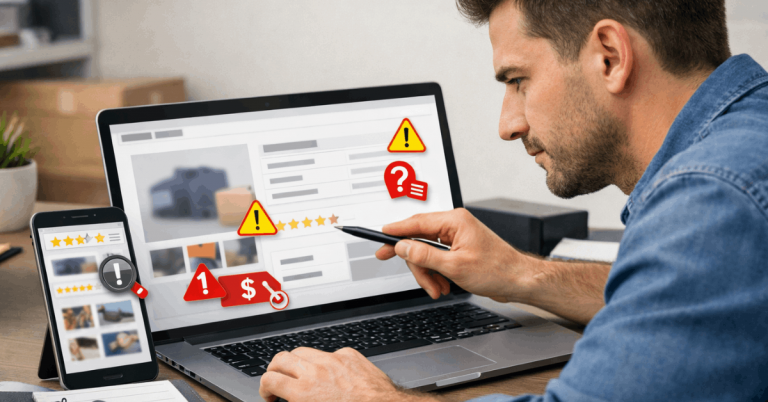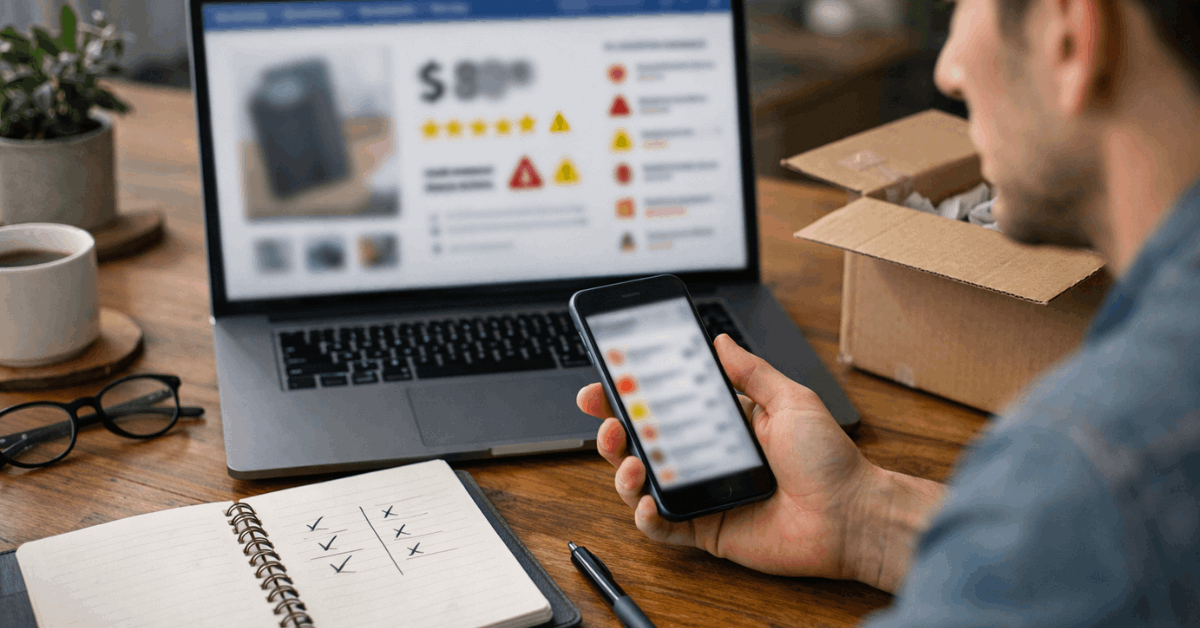
You can spot overpriced, low-quality products by checking the proof, patterns, and the real total cost before you pay.
This guide shows you how to read listing details, review photos, seller behavior, and delivery risks so you avoid paying premium prices for weak items.
You will use simple checks that work across international marketplaces, especially when returns and shipping problems make mistakes expensive.
What “Overpriced Low-Quality” Looks Like in International Marketplaces
Overpriced, low-quality items usually look polished on the listing page but fail in terms of proof and performance.
You can spot them by matching the price to the level of verified details, seller support, and delivery risk.
- High price with vague specs — “Premium” claims appear without exact materials, measurements, or compatibility details.
- Polished photos with weak proof — Studio images dominate, while real photos showing texture, stitching, ports, or packaging are missing.
- Claims that replace evidence — “100% original” or “best quality” statements appear without serials, close-ups, or documentation.
- Review patterns that contradict the listing — Repeated reports mention “not as described,” wrong variants, missing parts, or fast wear.
- Shipping and returns that raise risk — High shipping fees, unclear return rules, or return costs exceed the item’s value.
- Seller behavior that avoids details — Replies are slow or vague, photo requests are refused, or buying pressure is applied.

Listing Checks That Reveal Low Quality Before You Pay
You can spot low-quality items faster when you treat the listing like a checklist. These quick checks help you confirm proof, not promises.
- Spec check — Look for exact materials, measurements, weight, and compatibility.
- Variant check — Make sure the dropdown option matches the photos and description.
- In-the-box check — Confirm what’s included, especially parts and accessories.
- Photo proof check — Prefer close-ups of texture, seams, ports, labels, and edges.
- Review pattern check — Focus on recent repeats like “not as described” or “missing parts.”
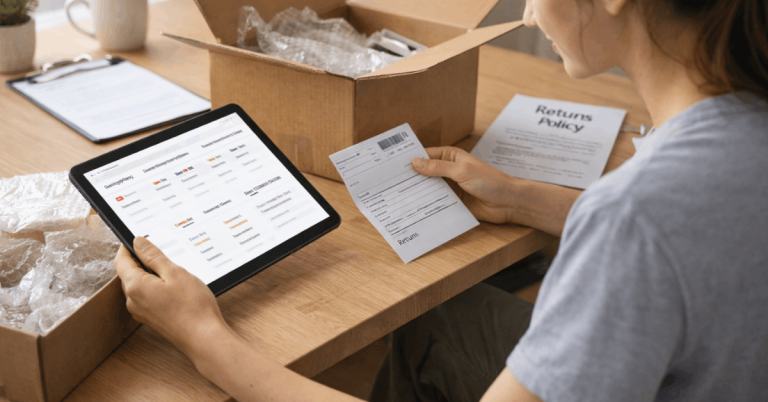
- Returns check — Verify the return window, return shipping, and any warranty.
Price Reality Checks That Stop You From Overpaying
A high price only makes sense when the product has clear proof, reliable support, and manageable delivery risk.
These checks help you judge whether the total cost matches what you will actually receive.
- Total cost check — Add item price, shipping, taxes, and platform fees before deciding.
- Comparable listing check — Compare the same specs across multiple sellers, not just photos.
- Photo reuse check — Watch for identical images on cheaper listings that suggest the same product.
- Shipping method check — Don’t pay “premium” pricing for slow, untracked, or economy routes.
- Return cost check — Estimate return shipping costs, since they can exceed the item’s cost.
- Discount framing check — Ignore fake “original price” discounts and focus on today’s total.
Seller Reliability Signals That Predict Product Quality
Seller behavior often tells you what will happen after delivery.
These signals help you judge whether the seller stands behind the product or disappears when problems start.
- Store history check — Prefer sellers with steady ratings and consistent sales over time.
- Recent trend check — Watch for sudden complaint spikes in the last 30–90 days.
- Repeat-buyer check — Look for reviews from buyers who have purchased more than once.
- Response quality check — Ask one clear question and judge speed and clarity.
- Photo request check — Reliable sellers can send current photos of your exact variant.
- Dispute behavior check — Avoid sellers linked to refund delays or blame shifting.

Delivery and Packaging Clues That Affect Quality
Product quality does not stop at manufacturing. Shipping method and packaging quality often decide whether the item arrives usable or damaged.
- Shipping route check — Long routes and multiple handoffs increase the risk of damage.
- Tracking quality check — Poor or stalled tracking often signals rough handling.
- Economy shipping risk — Fragile items sent via low-cost routes are more likely to arrive damaged.
- Packaging protection check — Look for reviews showing padding, a tight fit, and layered protection.
- Moisture protection check — Watch for reports of leaks, condensation, or weak sealing.
- Accessory packing check — Small parts should be secured separately to avoid loss or scratches.
Category-Specific Overpricing Red Flags
Different product categories hide low quality in different ways. These red flags help you spot overpricing faster by matching checks to the item type.
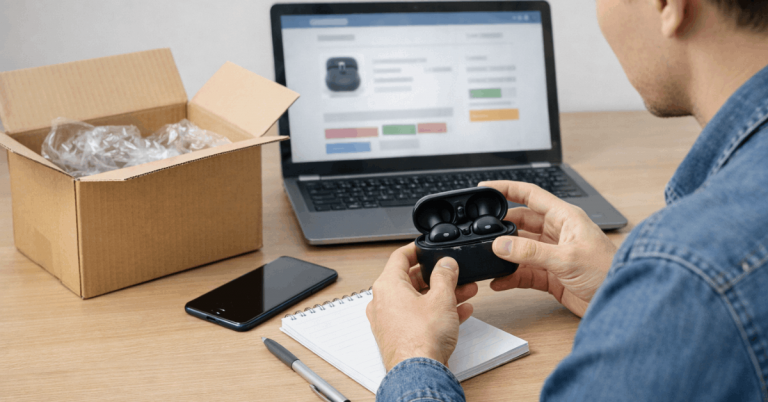
- Electronics and accessories — Inflated specs, missing certifications, weak cables, or no warranty details.
- Fashion and footwear — Stock photos only, vague fabric details, inconsistent sizing, and weak stitching.
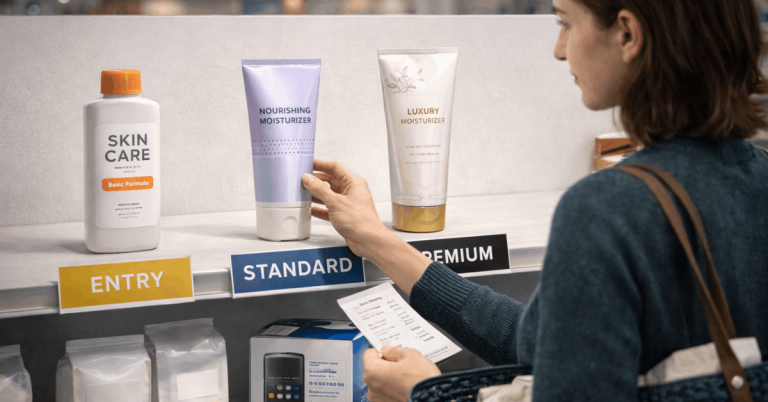
- Beauty and personal care — No ingredient list, unclear batch details, or packaging that differs from reviews.
- Home and kitchen items — Thin materials, missing measurements, unstable joints, or poor load ratings.
- Toys and collectibles — Reused promo images, no scale reference, and damage reports tied to weak packaging.
- Automotive and tools — Compatibility claims without model lists and reports of early breakage.
A Simple “Overpriced or Not” Checklist
You make better buying decisions when you follow the same steps every time. This checklist helps you decide quickly whether to buy or walk away.
- Proof over claims — Specs, photos, and reviews clearly support the price.
- Variant match — The selected option matches the images and description.
- Total cost — Item, shipping, taxes, and fees still make sense together.
- Seller reliability — Store history and recent feedback look stable.
- Delivery risk — Shipping method and packaging are suited to the product’s fragility.
- Return reality — Returns and refunds are realistic for your location.
What to Do If You Already Bought an Overpriced Low-Quality Item
You still have options after delivery if the item does not match the listing. Acting fast and documenting clearly improves your chances of a refund or partial credit.
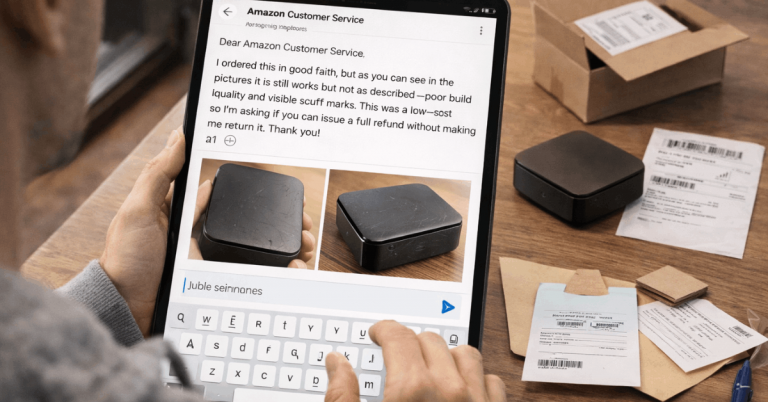
- Document everything — Take clear photos and short videos of defects, packaging, and missing parts.
- Capture listing proof — Screenshot the product page, variant selection, and original claims.
- Contact the seller once — Send one clear message describing the issue and your requested solution.
- Open a dispute early — Use the platform’s dispute system before deadlines pass.
- Choose the right outcome — Request a partial refund if return shipping is costly.
- Leave a useful review — Share facts about quality, delivery, and seller response to help others.
Final Takeaway
You avoid overpriced, low-quality products by checking proof, patterns, and the real total cost before you pay.
Using the same listing, seller, and delivery checks every time helps you reduce surprises and protect your budget on international marketplaces.
Use this checklist on your next purchase, and walk away early when the price doesn’t match the quality.