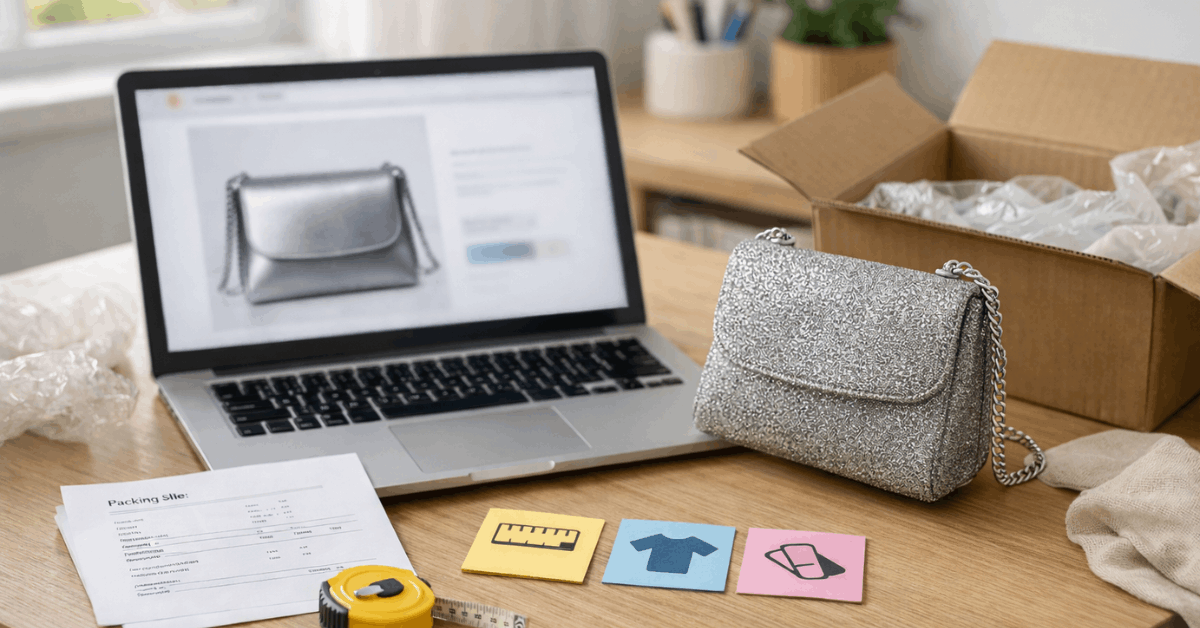
Product Descriptions vs Reality is the gap between what a listing promises and what you actually receive from international marketplaces.
This guide shows you how to check reviews, photos, specs, and seller behavior so you can spot warning signs before you pay.
You will learn how to reduce quality surprises, avoid delivery-related damage, and choose more reliable sellers.
Why Product Descriptions Don’t Match What You Receive
Here are the main reasons why product descriptions don’t match what you receive on international marketplaces.
These points focus on how listings are written, how information gets lost, and how sellers handle inventory and fulfillment.
- Marketing-first wording — Claims stay broad to sell fast, so limits and real specs get hidden.
- Translation errors — Sizes, materials, and features can change meaning when listings are auto-translated.
- Stock or supplier photos — Images may show a sample or edited promo shot, not the shipped item.
- Variant confusion — Dropdown options can change what you get, even when the main photos look the same.
- Batch and supplier changes — Sellers can switch factories or versions without fully updating the listing.
- Packaging and handling damage — A correctly packed item can still arrive cracked, bent, or scuffed due to poor packaging and rough transit.
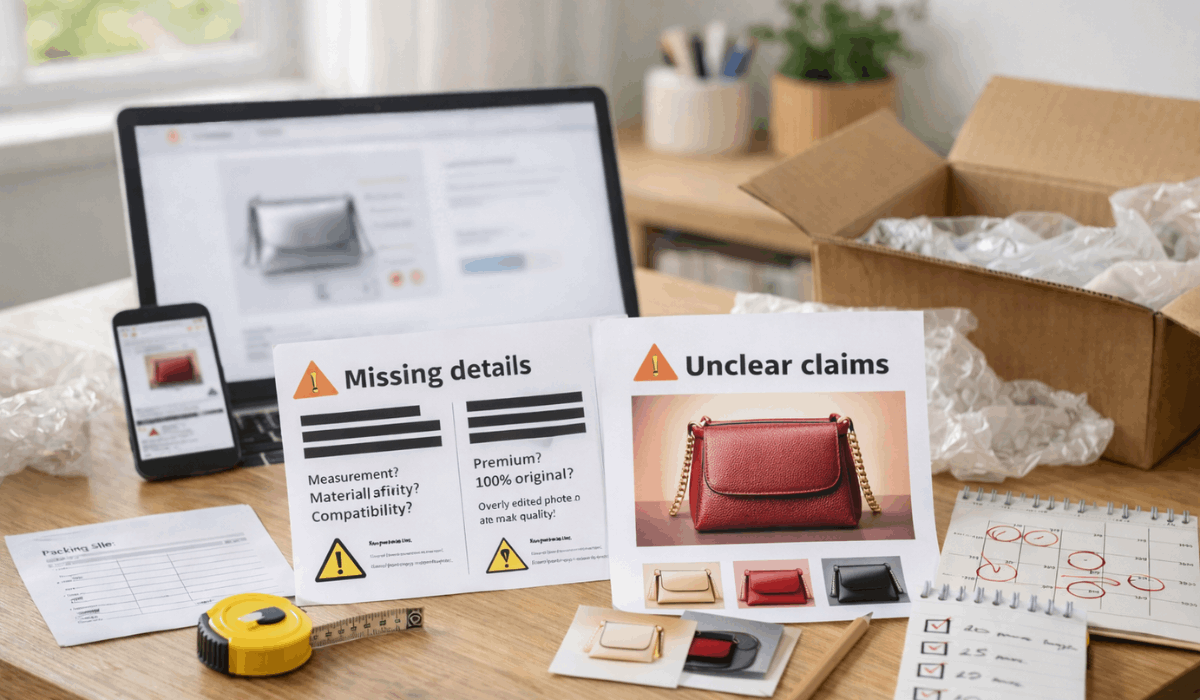
High-Risk Listing Signals You Should Treat as Warnings
Here are high-risk listing signals you should treat as warnings before you buy.
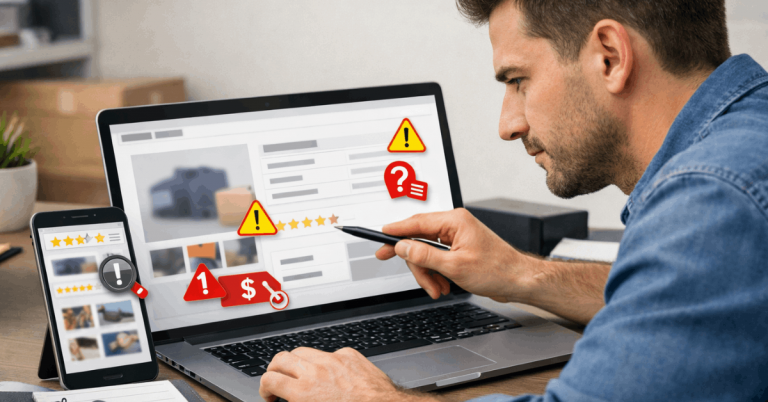
These red flags often appear when details are missing, claims are inflated, or variants are confusing.
- Vague specs — Missing measurements, materials, or compatibility usually mean surprise issues.
- Too-good claims — “Premium” or “100% original” without proof often hide poor quality.
- Over-edited photos — No real photos can mean the item won’t match what you see.
- Confusing variants — Dropdown options can change the product while images stay the same.
- Recent complaint spikes — New “not as described” patterns often signal a quality drop.
What to Check Before Buying
Here’s what to check before you buy on international marketplaces.
These steps help you confirm product quality, reduce listing surprises, and avoid delivery problems.
- Listing specifics — Verify measurements, materials, model/version, and what’s included in the box.
- Variant selection — Double-check the exact size, color, bundle, and plug type you’re choosing.
- Recent reviews — Focus on the newest feedback for quality, accuracy, and real delivery timing.
- Buyer photos/videos — Look for natural images that show scale, texture, stitching, and defects.
- Seller response — Message the seller for real photos, measurements, or compatibility confirmation.
- Shipping method — Compare economy, standard, and expedited, and expected handoff delays.
- Packaging mentions — Watch for repeated notes about weak packing or damage on arrival.
- Return/refund rules — Read the conditions, timelines, and who pays return shipping.
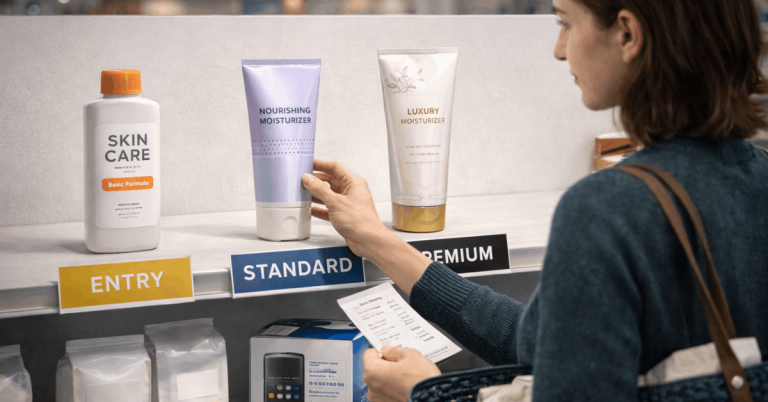
- Price vs category norms — If it’s far cheaper than similar listings, expect trade-offs.
- Proof for disputes — Screenshot the listing details and options before checkout.
Delivery Reality That Impacts Product Quality
Delivery can affect product condition even when the seller ships the correct item.
These issues are common in international orders with long routes and multiple handoffs.
- Long transit time — Heat, humidity, and storage can weaken packaging and materials.
- Multiple handoffs — More transfers mean more handling and higher damage risk.
- Weak packaging — Thin boxes and low padding lead to dents, cracks, and scuffs.
- Customs checks — Openings and delays can shift items and reduce protection.
- Last-mile pressure — Final delivery is where drops, crushing, and misplacement occur most often.

Seller Reliability Checks That Reduce Surprise
Seller checks help you avoid “not as described” issues and reduce delivery stress. Use these signals to judge reliability before you pay.
- Store history — Prefer steady recent feedback and repeat buyers, not sudden complaint spikes.
- Review patterns — Focus on recurring issues such as defects, missing parts, or incorrect variants.
- Message quality — Ask one clear question and judge how specific and fast the reply is.
- Real photo proof — Reliable sellers can send current photos of the exact variant or packaging.
- Dispute readiness — Avoid sellers who delay, dodge refunds, or push you off-platform.
Category-Specific Reality Checks
Different categories fail in different ways, so your checks should match the item type.
Use these category-specific checks to reduce “Product Descriptions vs Reality” surprises.
- Clothing and shoes — Verify cm measurements, fabric blend, and fit through buyer photos.
- Electronics and gadgets — Confirm model, plug/voltage, and real performance in recent reviews.
- Beauty and skincare — Check seals, dates, ingredients, and reviews for authenticity concerns.
- Home tools and hardware — Verify material grade, exact size, and included parts from reviews.
- Fragile home goods — Prioritize packaging notes, damage patterns, and return terms.
A Simple “Before You Buy” Checklist
Use this simple checklist to reduce “Product Descriptions vs Reality” problems before you place an international order.
It keeps you focused on the details that most often cause quality issues, wrong variants, and delivery surprises.
- Confirm the basics — Check exact measurements, material, model/version, and what’s included in the box.
- Lock the right variant — Recheck size, color, bundle, and plug type before checkout.
- Read recent reviews first — Focus on the newest feedback for accuracy, defects, and delivery timing.
- Use buyer photos as proof — Look for real shots that show scale, texture, and flaws.
- Check seller reliability — Review store history, response quality, and dispute behavior patterns.
- Choose shipping with fewer risks — Prefer methods with consistent tracking and fewer handoffs.
- Scan for packaging and damage reports — Avoid listings with repeated “arrived broken” patterns.
- Save evidence — Screenshot the listing, selected options, and key specs for disputes.
What to Do When the Item Doesn’t Match the Listing
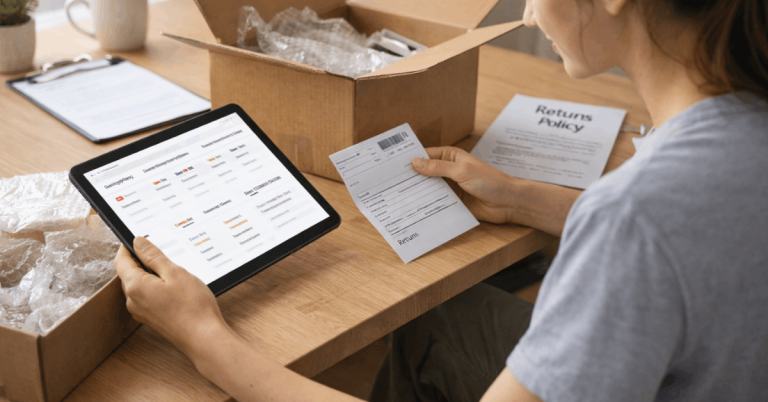
When an item doesn’t match the listing, act fast and stay organized so you don’t miss platform deadlines.
These steps help you document the issue, push for a clear fix, and improve your chances of getting a refund.
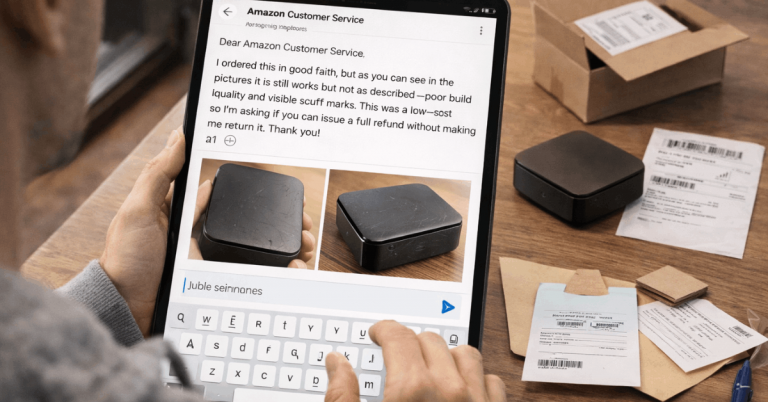
- Document immediately — Take photos and video of the parcel, labels, packing, and the item, with the item next to a ruler or tape measure.
- Compare to the listing — Screenshot the product page, selected variant, and key specs that don’t match.
- Message the seller clearly — State the mismatch in one short message and request a specific resolution (refund, partial refund, or replacement).
- Keep communication on-platform — Avoid moving to private chat apps, which can weaken your case.
- Open a dispute on time — Start the platform claim before the buyer protection window ends, even if the seller is “checking.”
- Upload clean proof — Use labeled photos that show the issue without edits, filters, or heavy cropping.
- Follow the platform steps — Choose the correct reason code (wrong item, missing parts, defective, not as described).
- Check return rules before sending back — Confirm the return address, who pays shipping, and whether return tracking is required.
- Track all deadlines — Note response timers, escalation dates, and refund processing steps.
The Bottomline
Product Descriptions vs Reality becomes manageable when you verify specs, rely on recent buyer proof, and choose reliable sellers with consistent delivery outcomes.
Use the warning signals and checklists in this guide to reduce quality surprises and protect yourself when shipping and handling affect item condition.
Use these checks on your next order and start buying smarter today.