Ordering something from another country feels like a small leap of faith. The tracking updates in a language you barely recognize, the delivery date keeps shifting, and the whole time you’re wondering: what if this goes wrong?
Buyer protection exists for that exact moment of doubt. It gives cross-border shoppers a structured way to get money back when a purchase fails, arrives broken, or looks nothing like the listing.
But the process has strict rules, tight deadlines, and a few blind spots that can cost you a refund if you don’t catch them early. And the way most people use buyer protection is backwards.
The gap between what buyer protection promises and how it works in practice is where this gets interesting. So let’s talk about what’s covered, what’s quietly excluded, and where your real power sits during a dispute.
Does Buyer Protection Cover My Order If Something Goes Wrong?
The short answer: yes, but only specific problems the platform can verify. Buyer protection on marketplaces like AliExpress, Temu, and DHgate is a structured dispute system. It runs on rules, evidence, and deadlines. Think of it as a claims process, not a customer service line.
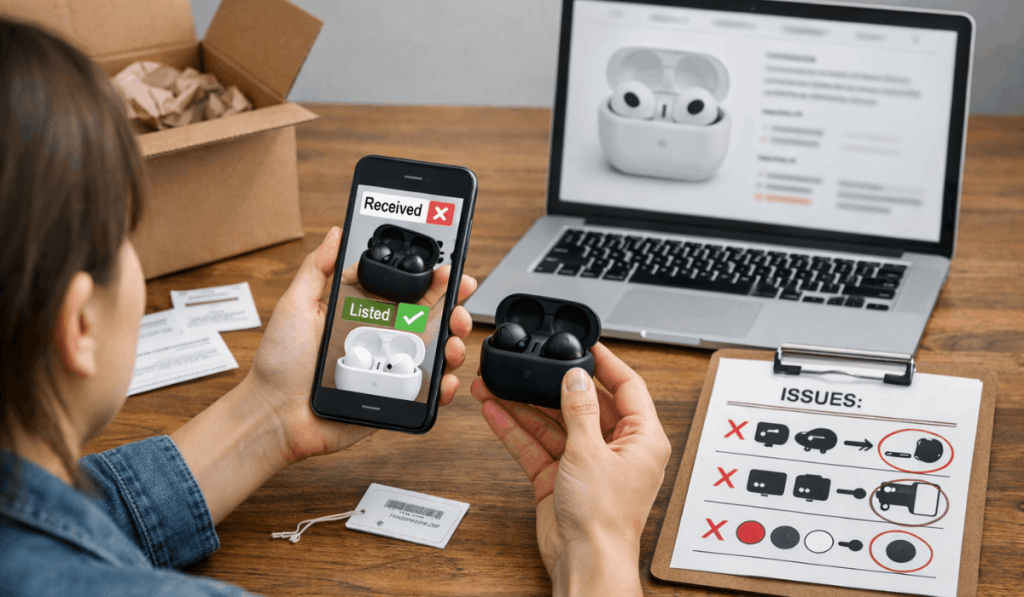
A common misconception is that buyer protection acts like a blanket guarantee on every purchase. It doesn’t. The platform checks whether your problem falls into a recognized category, then reviews your proof against the listing details and tracking data.
Disputes the Platform Will Usually Accept
The strongest cases match a clear dispute category with evidence the platform can check in minutes. The categories that get approved consistently include:
- Item not received: tracking never shows delivery by the platform’s final deadline, or tracking stalls for weeks mid-route
- Item not as described: the product differs in model, specs, size, material, or condition compared to the listing
- Damaged on arrival: the item arrives broken, cracked, or unusable, and photos show the damage clearly
- Wrong item or missing parts: a different product, variant, or incomplete set arrives instead of what the listing showed
- Seller refuses to resolve: the seller ignores messages, stalls, or refuses a fix that matches platform policy
Disputes That Get Denied More Often Than People Expect
Not every complaint qualifies. And the rejections that sting worst are the ones buyers assume should be covered.
Buyer’s remorse is the biggest one. Changing your mind about a product that matches its listing description won’t qualify.
Neither will complaining about slow shipping when the delivery is still within the estimated window. Minor color variations or texture differences disclosed in the listing? Those rarely count either.
Off-platform deals are another dead zone. If a seller convinced you to pay through PayPal, WhatsApp, or any channel outside the marketplace, buyer protection typically won’t apply.
The same goes for customs duties, import taxes, and seizures: those costs and risks sit with the buyer on almost every cross-border platform.
| Dispute Type | Likely Outcome | Evidence Needed |
|---|---|---|
| Item not received (tracking confirms) | Full refund | Tracking screenshot, delivery deadline proof |
| Item not as described (clear mismatch) | Full or partial refund | Side-by-side photos of listing vs. item received |
| Damaged on arrival | Full or partial refund | Photos of outer box damage, item damage, packaging |
| Buyer’s remorse | Denied | N/A |
| Slow shipping within estimate | Denied | N/A |
The pattern here is clear: verifiable problems with photo proof win, and subjective complaints lose.
Also read: How Currency Conversion Affects Final Price
How “Not Received” and “Not As Described” Claims Work Differently
These two categories cover the vast majority of buyer protection disputes, but the platform evaluates them in completely different ways. Lumping them together is a mistake that costs people refunds.
Filing a “Not Received” Claim on International Orders
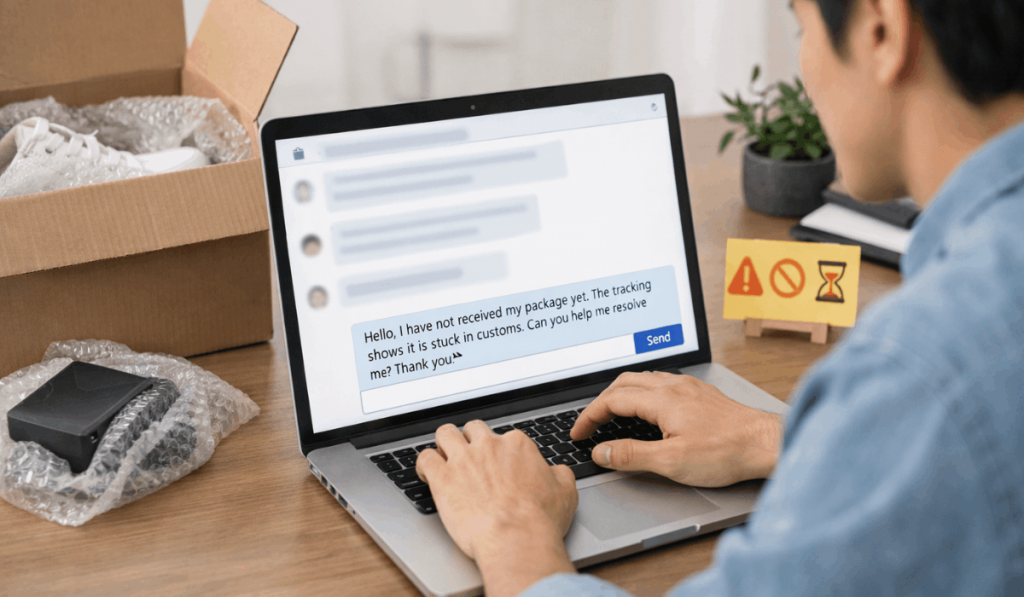
“Not received” means the platform cannot confirm delivery to your address by the protection deadline. International shipping complicates this because parcels can sit in customs for days, show misleading “delivered” scans at a regional hub, or stall entirely without updates.
The strongest “not received” cases happen when tracking never updates to a confirmed delivery status by the deadline, when tracking stops moving mid-route for an extended period, or when the package gets returned to sender because of address or paperwork issues.
A tricky edge case: tracking shows “delivered” but you never got the package. This can still qualify, but the burden of proof shifts to you. Platform dispute teams may ask for evidence of address issues or local delivery problems to override the tracking status.
I would push back on the idea that a “delivered” scan automatically kills your case on AliExpress or Temu.
Carriers in some regions scan parcels as delivered when they reach a local distribution center, not the buyer’s door. Screenshot the tracking detail and check what type of delivery scan was recorded.
Filing a “Not As Described” Claim That Gets Approved
“Not as described” requires a comparison between the listing and what landed in your hands. The platform checks whether the difference is meaningful enough to justify a refund.
Cases that win consistently share one trait: the buyer shows a specific, measurable gap between the listing and the product.
A wrong model number, a storage capacity that doesn’t match, a “new” item with visible wear marks, or a size that follows a completely different sizing standard than the listing implied.
Weak “not as described” claims usually fail because the difference is subjective. “It looked bluer in the photos” rarely works. “The listing says 128GB and the phone shows 64GB in settings” almost always does.
The documents and photos you need for a solid “not as described” dispute include:
- A screenshot of the listing with specs, model number, or condition stated
- A clear photo of the item showing the mismatch (label, settings screen, measurement)
- A side-by-side comparison if the visual difference matters
- A screenshot of your order confirmation showing which variant you selected
Damage Claims: The 5-Minute Window After Unboxing
Damage disputes live or die by how fast you document after opening the box.
I think damage claims are actually the easiest to win on platforms like AliExpress, but only if the buyer takes photos of the outer packaging before opening it. Once that box is opened and tossed, half the evidence disappears.
Documenting Damage the Right Way
Photograph the shipping box first. Dents, tears, wet spots, and crushed corners on the outside tell the dispute team that the damage happened during transit, not after delivery.
Then photograph the inside packaging: missing padding, loose items rattling around, and poor protection around fragile parts.
Close-up shots of cracks, bends, scratches, and broken components should be taken in good lighting. A blurry photo on a dark table will weaken your claim. And keep every label, insert, and order slip visible. The dispute team uses these to verify your claim matches the right order.
One detail worth mentioning: the timestamp on your photos matters. Taking damage photos days after delivery raises questions. Taking them within hours of delivery makes your case much harder for the seller to dispute.
Seller Tactics That Drain Your Dispute Clock
This is the part of buyer protection that almost nobody writes about. Sellers on international marketplaces know the dispute system better than most buyers.
Some sellers use that knowledge to run down the clock, push for off-platform resolutions, or pressure buyers into accepting less than they’re owed.
Common stalling tactics to watch for include:
- Asking you to close the dispute first before they’ll process a refund or send a replacement. Never do this. Once the dispute is closed, you lose platform protection.
- Offering a refund through PayPal or another off-platform method. This pulls your transaction out of the marketplace’s dispute system entirely.
- Sending repeated messages asking for “more photos” without specifying what they need. This eats time and pushes you closer to the dispute deadline.
- Pushing a quick partial refund for a small amount, hoping you’ll accept rather than wait for a full resolution.
I disagree with the common advice to “always try to work things out with the seller through messages first” on platforms like AliExpress.
My take: on a platform where the dispute window on AliExpress can be as short as 15 days after the protection period, spending 5 to 7 days chatting with a stalling seller burns through your safety margin.
Open the formal dispute immediately. The seller can still offer a solution inside the dispute process, and your deadline stays protected.
The Right Order of Steps When Filing a Buyer Protection Claim
Getting the sequence right matters more than most buyers realize. Filing a dispute too early (before the delivery deadline passes) can get it rejected.
Filing too late (after the protection window closes) means you have no case at all, no matter how damaged or wrong the item is.
The sequence that protects your claim and timeline:
- Check the platform’s buyer protection policy page to confirm your dispute window dates
- Match your problem to the right claim type: not received, not as described, or damaged on arrival
- Message the seller on the platform with one clear request and a short timeline (2 to 3 days)
- Open a formal dispute before the deadline if the seller stalls or pushes for an off-platform fix
- Upload all evidence: photos, listing screenshots, tracking, and order confirmation
- Follow return instructions exactly if the platform requires a return, and use tracked shipping
- Do not close the dispute until the refund is confirmed in your account or the correct replacement arrives
The Federal Trade Commission has a useful overview of consumer rights in online purchases that applies to cross-border orders shipped to US addresses. The protections differ by country, but the documentation principles stay the same.
Questions People Ask About Buyer Protection
Q: Can I open a buyer protection dispute if tracking says delivered but I never got the package?
A “delivered” scan doesn’t automatically disqualify your claim. Screenshot the tracking detail and check if the delivery scan matches your exact address. Some carriers mark items delivered at a sorting facility, not the final door.
Q: Does buyer protection cover items bought during flash sales or promotional events?
Promotional pricing doesn’t change your protection eligibility. The same dispute categories and deadlines apply whether you paid full price or bought during a sale event.
Q: What happens if I miss the dispute deadline by one day?
Platforms enforce deadlines strictly. Even one day late typically means the case cannot be opened, regardless of how strong your evidence is. Set a calendar reminder for a few days before the deadline as a safety net.
Q: Can a seller see all the evidence I upload in a dispute?
Yes, sellers can view your submitted photos, screenshots, and messages during the dispute. Keep your evidence factual and organized, and avoid emotional language that could weaken your case.
Q: Is a partial refund worth accepting, or should I push for a full refund?
A partial refund can be reasonable if the item is usable but flawed. If the item is completely wrong, broken, or missing, push for a full refund. Accepting a partial too quickly removes your ability to escalate later.
Conclusion
Buyer protection on international orders runs on deadlines, evidence, and the dispute categories each platform recognizes. The buyers who get refunds treat every purchase like a potential case file from day one.
Knowing the rules before something goes wrong gives you a head start over every other shopper. And the seller’s charm offensive during a dispute matters far less than your timestamped photos.