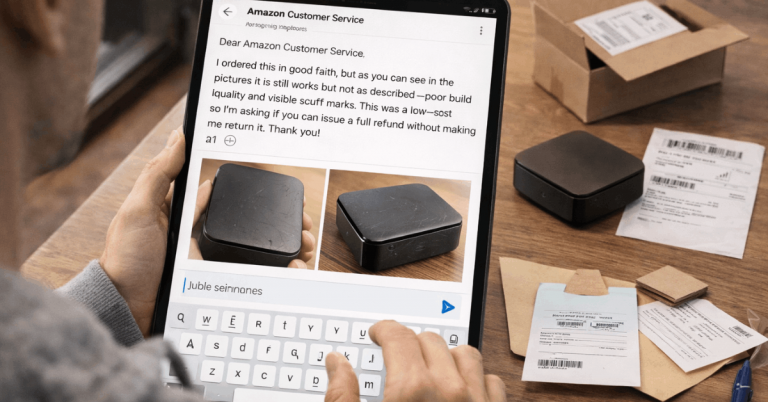
Shopping on international marketplaces usually forces you to trade off price, quality, and delivery time.
If you push one side too hard, you often increase the risk in the other two.
This guide gives you a simple way to set priorities, check seller proof, and choose the option that fits your timeline and budget.
Start With Your “Non-Negotiables”
Balancing price, quality, and delivery time starts with clear “non-negotiables.” This prevents random trade-offs driven by discounts, hype, or one strong review.
- Deadline comes first. Set the latest acceptable arrival date, then remove options that can’t meet it.
- Minimum quality bar. Define what “acceptable” means for materials, durability, fit, and function.
- Maximum total cost. Include shipping, possible taxes/duties, and the cost of returns or replacements.
- Risk tolerance level. Decide whether only proven sellers make the cut, or if testing newer sellers is acceptable.
- Deal-breaker rules. Examples: no tracked shipping, vague specs, missing size chart, weak refund policy, or repeated defect complaints.

Use a Simple 3-Way Decision Framework
Use three modes: speed, value, or price. Choose the mode that fits the deadline and risk level.
- Speed-first: Choose when late delivery makes the item pointless.
- Value-first: Choose when a solid mix of quality and timing matters.
- Price-first: Choose when the item is low-risk and easy to replace.
- Tie-breaker: Favor the seller with a stronger history and clearer tracking.
- Risk check: If the proof is weak, skip the cheapest listing and move on.
How to Evaluate Product Quality Before You Buy
Product quality is easiest to judge through proof, not claims. Focus on signals that consistently predict what arrives.
- Buyer photo reviews first: Check real lighting, close-ups, and multiple angles.
- Patterns beat ratings: Repeated complaints about stitching, thin material, or defects matter most.
- Match the exact variant: Confirm reviews are for the same size, color, and version.
- Use measurements, not labels: Rely on the size chart numbers and compare with an item at home.
- Check for clear specs and construction: Prefer listings with specific materials and visible seam/finish quality.
How to Predict Delivery Time More Accurately
Delivery estimates are often best-case scenarios. Accurate predictions come from proof in seller behavior and recent shipping patterns.
- Check handling time: Slow dispatch adds days before transit even starts.
- Use tracked shipping: Frequent scans usually mean more reliable timelines.
- Read recent “delivered in X days” reviews: Real timelines beat the listing estimate.
- Confirm ship-from location: Local/regional warehouses are usually faster than cross-border.
- Plan for customs and carrier handoffs: These are the most common sources of surprise delays.
Seller Reliability Checks That Actually Matter
Seller reliability affects both shipping speed and whether the item matches the listing. The strongest checks come from recent, repeatable proof.
- Recent review trend: Look for rising complaints about delays, defects, or wrong items.
- Buyer photo consistency: Multiple real photos that match the listing and variations.
- Dispatch + tracking behavior: Watch for “shipped late” or tracking that stays inactive.
- Consistency across listings: Similar quality reports across the seller’s other products.
- Refund/dispute outcomes: Reviews showing fair refunds and smooth resolution matter.
Price Signals: When Cheap Is Fine and When It’s Risky
Low price can be a good deal or a warning sign, depending on the product type and what can go wrong.
The key is spotting when cheap lowers quality, accuracy, or delivery reliability.
- Cheap is fine for low-stakes items. Simple products with few failure points are safer even at low prices.
- Cheap is risky for fit-sensitive items. Clothing, shoes, and anything that depends on exact sizing can fail even with good photos.
- Cheap is risky for electronics and precision parts. Lower price often means weaker components, inconsistent QC, and higher defect rates.
- Cheap is risky when the listing lacks proof. No buyer photos, vague specs, and copied descriptions increase uncertainty.
- Cheap becomes expensive after totals. Shipping, duties, and return costs can erase the “deal” fast.

Smart Buying Tactics to Balance All Three
Smart tactics reduce risk without forcing a bad trade-off between price, quality, and delivery time.
These actions focus on proof, planning, and predictable logistics.
- Build a shortlist of 3–5 options. Compare price bands, review proof, and shipping promises side by side.
- Set a “proof threshold.” Require enough recent buyer photos and consistent feedback before buying.
- Split the order by urgency. Buy essentials with faster shipping, and non-urgent items with cheaper methods.
- Choose sellers with predictable dispatch. Prioritize recent reviews that mention on-time shipping and active tracking.
- Avoid peak congestion when timing matters. Big sales and holidays raise the risk of delays across shipping networks.
- Confirm total cost before checkout. Include shipping, taxes/duties, and return risk in the decision.
- Use a first-order test buy. Start small with a new seller, then scale up only after results match the listing.
Returns, Refunds, and “Hidden” Delivery Costs
Returns and refunds can turn a “fast” or “cheap” order into a slow, expensive problem.
Hidden delivery costs often appear after checkout as fees, delays, or policy limits.
- Return shipping can cost more than the item. International returns often mean paying shipping both ways, so a refund may not be “full.”
- Refunds can take weeks. Processing time, return transit, and dispute steps add delays even when the seller agrees.
- Some refunds require proof and strict timing. Missed deadlines, missing photos, or incomplete packaging can reduce approval chances.
- Duties and taxes may not be refunded. Some destinations charge import fees that are hard to recover, even after a return.
- “Free returns” can have limits. It may apply only to certain items, specific carriers, or the first return per order.
- Replacement shipments add delivery time. Even when a replacement is approved, shipping starts over, and customs may repeat.
- Restocking or partial refunds happen. Sellers may offer partial refunds for minor defects instead of a full return.
Quick Scenarios: What to Choose in Real Life
Real purchases are easier when the decision mode is clear. These scenarios show which priority to choose and what to check fast.
- Need it in 7 days: Choose speed-first, use tracked shipping, and pick a seller with recent “arrived fast” reviews.
- Buying for long-term use: Choose value-first, prioritize strong buyer-photo proof, and consistent durability feedback.
- Trying a new product type: Choose value-first with a small test order, then scale up if it matches the listing.
- Buying a backup or spare: Choose price-first, keep the item simple, and expect slower delivery.
- Clothing or shoes: Choose value-first, rely on measurements and fit reviews, and avoid listings with mixed sizing feedback.
- Electronics or precision items: Choose value-first or speed-first, then prioritize proven sellers and clear specs.
- Gift purchase: Choose speed-first, add a buffer, and avoid peak sale periods.
The Bottomline
Balancing price, quality, and delivery time works best when priorities are set first, then proof and seller reliability guide the final pick.
Strong buyer photos, clear specs, and predictable tracking reduce surprises and protect the budget.
Use this framework before checkout, compare a shortlist, and take action now by choosing the option that matches the deadline and quality standard.