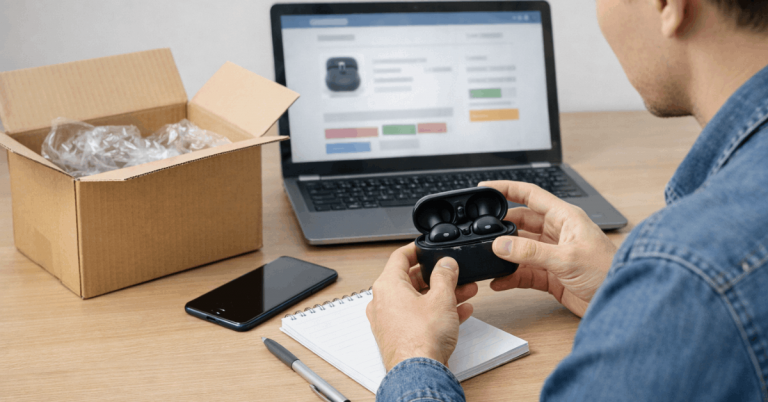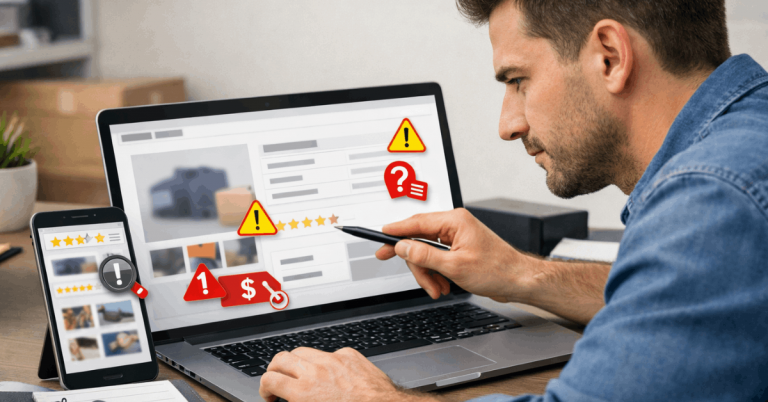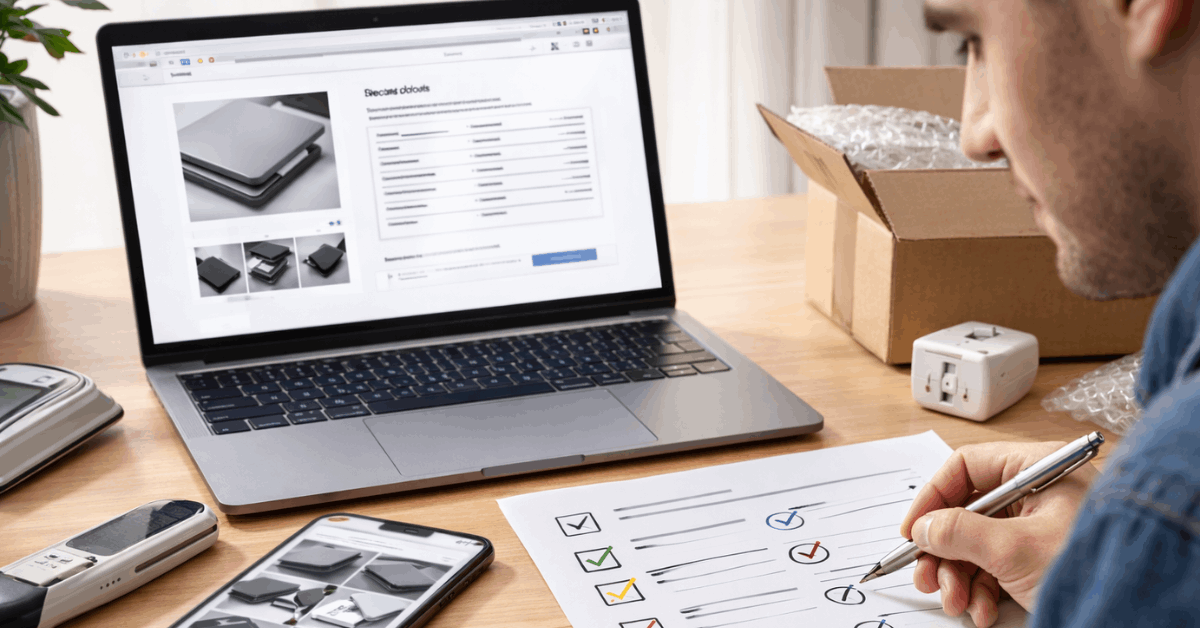
You can judge product quality online by focusing on proof, not promises.
You should check the exact variant, listing specs, real photos, and review patterns that match how you will use the item.
This guide gives you a simple system to avoid low-quality products, shipping surprises, and unreliable sellers on international marketplaces.
Start With the Product Basics
You can’t judge quality or delivery risk if you’re not sure what you’re buying. Start by confirming the exact product details so every comparison is accurate.
- Confirm the exact product name and type. Make sure the listing clearly states what it is and what it is meant to do.
- Match the exact variant. Check the size, color, model number, version, and bundle contents to ensure you evaluate the correct item.
- Look for measurable specs first. Prioritize dimensions, weight, capacity, compatibility, power ratings, and included parts.
- Check materials and build clues. Look for specific material names and details, such as thickness, finish, stitching, or connector type.
- Treat vague claims as unproven. Words like “premium” or “high quality” should be ignored unless the specs and photos back them up.
- Verify what’s included in the box. Confirm accessories, cables, chargers, manuals, and add-ons to avoid extra cost later.
- Check requirements that affect delivery success. Look for power standards, plug types, sizing charts, and region compatibility.
- Scan for inconsistencies. If the title, photos, and specs don’t match, treat the listing as unreliable.
Read the Listing Like a Specification Sheet
A strong listing explains what you get and how it performs in measurable terms. A risky listing hides details, uses generic claims, or avoids clear photos.
Check Specs That Prove Performance
You should look for specs you can verify, not opinions. For international orders, specs also reduce “not as described” disputes.
- Choose measurable details. Dimensions, wattage, capacity, material type, supported devices, and certifications matter most.
- Match specs to your use. Confirm the product fits your space, your device, and your local standards.
- Watch for missing numbers. If key specs are absent, the seller can switch versions without obvious proof.
Inspect Photos for Real-World Signals
Photos are your best substitute for holding the item in person. You should look for evidence of build quality and packaging that survives shipping.
- Prioritize close-ups. Seams, edges, ports, labels, texture, and fasteners reveal quality.
- Look for packaging evidence. Boxes, foam, seals, and protective wrap help predict arrival conditions.
- Flag overly perfect images. If every image looks like a stock photo with no detail shots, assume a higher risk.
Use Reviews as Evidence, Not Hype
Reviews are most helpful when they include proof and context. Reviews fail when they are vague, repetitive, or disconnected from your exact variant.
Filter for Verified Use and Detailed Context
You should prioritize reviews that show the buyer actually used the item. You should also focus on reviews that mention shipping and arrival conditions.
- Match your variant and use case. Size, model, and bundle need to align with what you plan to buy.
- Look for time-based proof. Reviews mentioning days/weeks of use are more useful than first impressions.
- Value delivery details. Mentions of delays, damaged packaging, and customs issues matter for international buying.
Spot Low-Quality Review Patterns
You should watch for patterns that suggest manipulation. These patterns often appear when product quality is inconsistent or misrepresented.
- Repeated phrases and “generic praise.” Short, similar reviews with no details are weak evidence.
- Extreme claims without proof. Perfect ratings with no photos or context are less reliable.
- Suspicious timing spikes. Sudden bursts of similar reviews can indicate coordinated posting.
Cross-Check the Brand and Seller
Quality depends on who made the product and who ships it. On international marketplaces, seller reliability also affects delivery speed and dispute outcomes.
Validate the Brand’s Track Record
You should check whether the brand appears consistently across listings and buyers. You should also verify whether support exists beyond the marketplace.
- Look for consistent product identity. Model names and specs should match across listings.
- Check support and warranty clarity. A real process usually includes clear steps and contact routes.
- Watch for “brandless” switching. If branding changes between images and descriptions, treat it as a risk.
Evaluate Seller Reliability
You should check the seller’s history and behavior signals that affect delivery and returns. Reliability matters more when shipping crosses borders.
- Review seller history and complaints. Look for recurring issues with incorrect items, delays, or poor packaging.
- Assess shipping performance. Consistent delivery updates and realistic timelines are better signs than fast promises.
- Avoid off-platform pushes. Requests for outside payment or private messaging increase your risk.
Connect Price With Quality and Delivery Risk
Cheap can be fine when the proof supports it. Price should align with materials, performance, packaging quality, and return reliability.
Use Comparable-Item Benchmarking
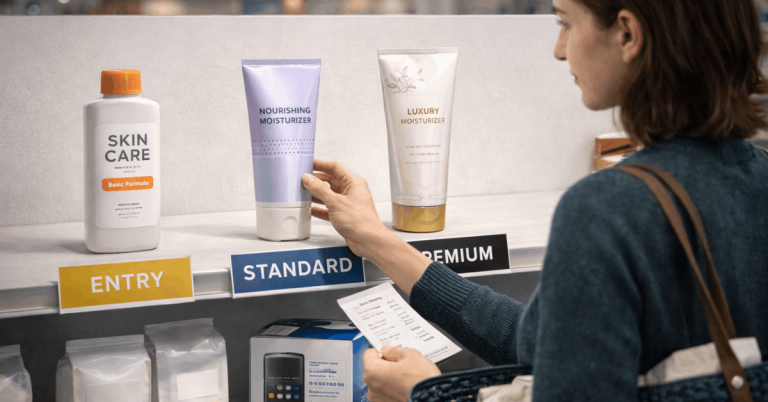
You should compare 2–3 similar products using the same specs and inclusions. This helps you see whether a lower price means fewer parts or weaker materials.
- Compare specs side by side. Focus on materials, size, capacity, and included accessories.
- Check what’s missing. Big price gaps often come from missing chargers, weaker packaging, or older versions.
- Re-check the variant. A small change in version can explain a large price difference.
Watch for Hidden Cost Traps
International purchases often look cheap until you add extra costs. You should confirm the full “landed cost” before checkout.
- Check shipping fees and delivery method. Faster methods can still be delayed by handoffs.
- Account for duties and taxes. Import fees can wipe out the savings.
- Factor in return shipping. Return shipping across borders can cost more than the item.
Assess Returns, Warranty, and Dispute Strength
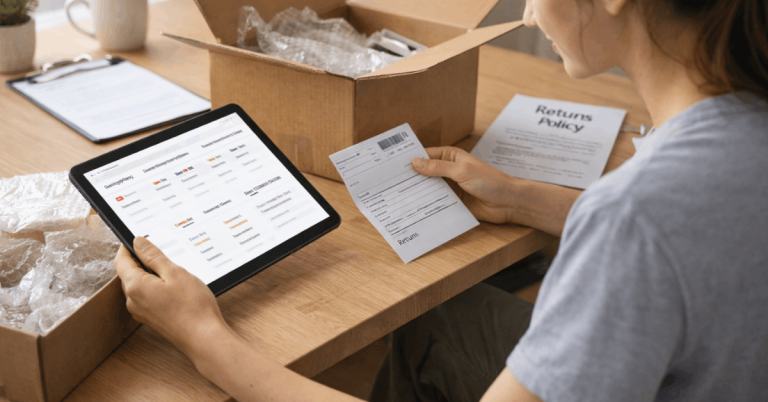
Even good products can arrive damaged or not match the listing. Strong policies matter more when the seller is overseas.
Read Return Rules Like a Contract
You should treat policies as your safety net, not a bonus. Return details affect whether you can recover your money if the item is of poor quality.
- Confirm the return window. Short windows are risky when delivery takes longer.
- Check condition rules. Some policies require original packaging and unused condition.
- Verify refund method. Confirm whether refunds are cash, wallet credit, or partial refunds.
Check Warranty Terms and Proof Requirements
Warranties on international orders can be limited or hard to claim. You should know what evidence you’ll need before you buy.
- Confirm coverage and exclusions. Know what voids the warranty and what is not covered.
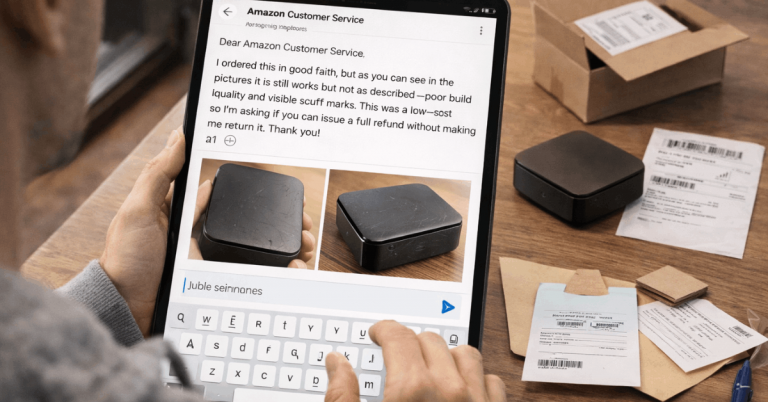
- Save proof early. Keep screenshots of the listing, order number, and received-item photos.
- Plan for claim steps. If the process is unclear, treat the warranty as weak.
Run a Final Pre-Checkout Quality and Delivery Checklist
You need a repeatable system that quickly catches risky listings. This helps you avoid impulse buys that become return headaches.
60-Second Go/No-Go Checklist
You should buy only when the basics are solid. Skip the purchase if two or more checks fail.
- Variant matches your needs.
- Specs are clear and measurable.
- Photos show real build details.
- Reviews include proof and shipping notes.
- Seller and policies look reliable.
When to Buy Local Instead
You should buy local when delivery timing, authenticity, or returns matter more than price. This is often the safer choice for urgent or high-risk categories.
- When timing matters. Events, travel, or gifts don’t mix well with uncertain shipping.
- When returns are hard. Expensive return shipping makes overseas buys risky.
- When authenticity is critical. High-fake categories are safer with local sellers and stronger protections.
Final Takeaway
You can judge product quality online by treating the listing, photos, and reviews as evidence you can test.
You should also connect quality checks to delivery reality by verifying seller reliability, shipping costs, and return strength.
Use this system before every international purchase to reduce risk and buy with confidence.