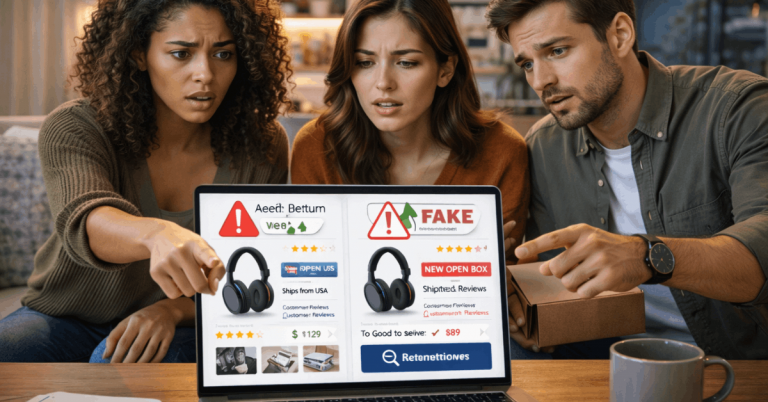
A five-star storefront can still send the wrong size, delay delivery, or disappear when a refund is needed. So, how reliable are marketplace seller ratings?
They are useful only when you read the score alongside the reviews and the seller’s recent behavior. This guide shows what ratings reveal, where they can distort the picture, and what to check before placing an order.

Treat the Score as a Starting Clue
A rating usually reflects feedback about dispatch, communication, description accuracy, and returns. It can show whether a shop has handled many orders without constant complaints, but it cannot predict your particular delivery.

Platforms use different rules for collecting and displaying feedback. Read the number as an early signal, not a final answer, then look for the details behind it.
The Number Often Combines Different Experiences
A buyer may leave seller feedback for a late parcel, while another rates the product itself. On some marketplaces, those experiences are shown separately; on others, they sit close together and are easy to confuse.
Check the label beside the rating before making assumptions. You need to know whether the score reflects service, product quality, or both.
A High Average Can Hide a Recent Decline
A strong lifetime score may include years of successful orders, smaller purchases, or reviews posted before the store changed warehouses or suppliers.
The average may remain high even after buyers begin reporting broken packaging, incorrect variants, or unanswered messages.
That does not mean every newer complaint proves a scam. It means recent reports deserve more weight than old praise when your order matters.
Read Recent Comments Before Older Praise
Older positive feedback still adds context, especially for a long-running shop, but it should not outweigh what buyers are saying now.
Recent reviews can reveal a change in stock, shipping partner, packaging quality, or response time. Instead of scanning only the star total, filter feedback by date and look for current patterns in real orders.
Start With the Low Ratings, Then Check the Balance
Read several one- and two-star reviews first, then compare them with positive comments from the same period. You are looking for repeated concerns, not demanding perfection from a human business.
Five buyers mentioning missing accessories or delayed dispatch over several weeks matters more than one angry review with no explanation. Also notice whether positive reviewers mention the same delivery speed and item accuracy.
Detail Makes a Review More Useful
“Great seller” and “fast shipping” may be sincere, yet they do not tell you whether the buyer received the same model, how the box arrived, or what happened when something failed.
More useful comments explain the variant, packaging, delivery range, and any contact with the store. Photos help when they clearly show the selected item rather than a different version. Prioritize specific details over cheerful phrases.
Pay Attention to What Happens After a Problem
A delivery delay or defective item does not automatically make a seller unreliable.
What matters is whether the store gives a factual reply, offers a reasonable next step, and keeps the discussion inside the marketplace. This is where a profile’s public responses can tell you more than its average score.
Seller Replies Show Their Working Style
Read a few responses to complaints and product questions. A helpful seller does not need perfect wording, but the reply should address the issue rather than deny it, blame everyone else, or ask the buyer to pay outside the platform.
Repeated copy-and-paste responses are not proof of dishonesty, although they may signal limited support. Calm, concrete replies suggest better accountability if you need help later.
Also Read: Is eBay Safe for International Purchases?
Store History Can Explain Odd Patterns
When the profile shows a start date, prior names, or transaction history, examine them without jumping to conclusions. A newer shop can be legitimate, and a long-established store can still decline.
However, sudden changes in brand images, item categories, delivery promises, or store identity are worth noting. They may indicate a change that makes older ratings less relevant. Use that information as context, not as automatic proof.
Keep Seller Reliability Separate From Product Quality
A dependable store can sell a poorly made item, and a mixed product review can come from a seller who packs orders carefully and handles returns fairly.
Combining these two questions leads to bad decisions, especially for marketplace listings with many similar versions. Judge the shop and the item on their own evidence.
Product Reviews Answer a Different Set of Questions
Use product feedback to assess materials, fit, durability, and whether buyer photos match the listing.
Use the seller’s feedback to evaluate dispatch speed, message quality, packaging, and refund handling.
For example, customers may love a particular lamp but complain that one shop sends it without enough protection. Confirm reviews refer to the exact variant and seller you selected.
Shipping and Returns Reveal the Practical Risk
Before paying, read the delivery range, carrier name, tracking availability, return deadline, refund method, and who covers return postage.
A highly rated store may still be unsuitable for a birthday gift, a fragile item, or anything expensive to ship back across borders.
The real question is whether the offer works under your circumstances. Clear terms and realistic timing can matter more than a small rating difference.
Use a Brief Check Before You Commit
Not every inexpensive order requires a long investigation. A short check is enough to catch common warning signs when a delayed, damaged, or incorrect item would be frustrating.
Spend two minutes on the recent feedback, product evidence, seller replies, and return rules. That small pause makes the rating part of the decision instead of the whole decision.
Ask Four Questions That Match Your Order
Think about what could actually go wrong with this purchase. A fragile decoration, phone accessory, or time-sensitive gift needs different reassurance than a low-cost replacement part.
Use the questions below after reading the listing and profile, then decide whether the remaining uncertainty feels acceptable for the price and your location.
- Do recent reviews discuss the same variant or delivery situation?
- Do several buyers report the same issue?
- Can the return policy realistically work from your country?
Read the Story Behind the Stars
Marketplace seller ratings are neither useless nor a guarantee of good service. They become helpful when recent feedback, reviews, public replies, delivery terms, and product evidence point in the same direction.
For a low-risk purchase, a few unanswered questions may be tolerable; for electronics, gifts, or urgent items, they may not be. Let evidence set your expectations, and keep stars in their proper place: as a clue, not a promise.