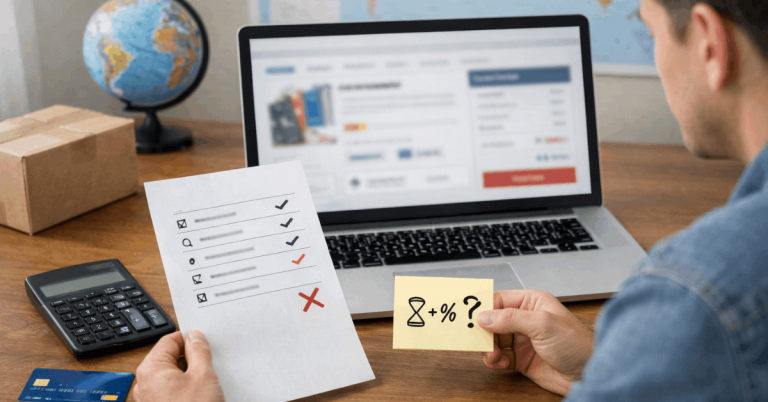
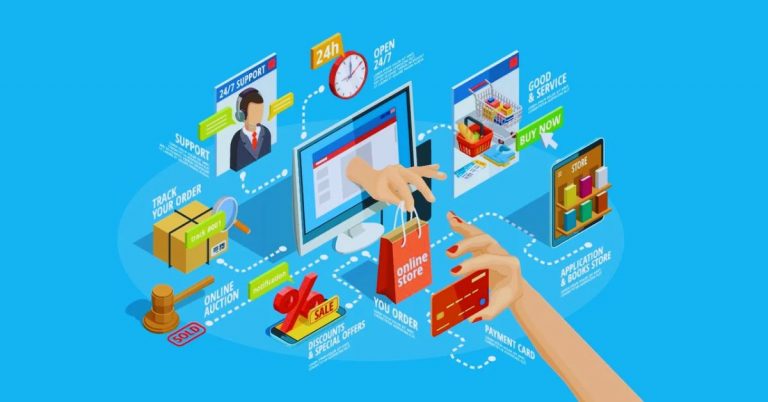
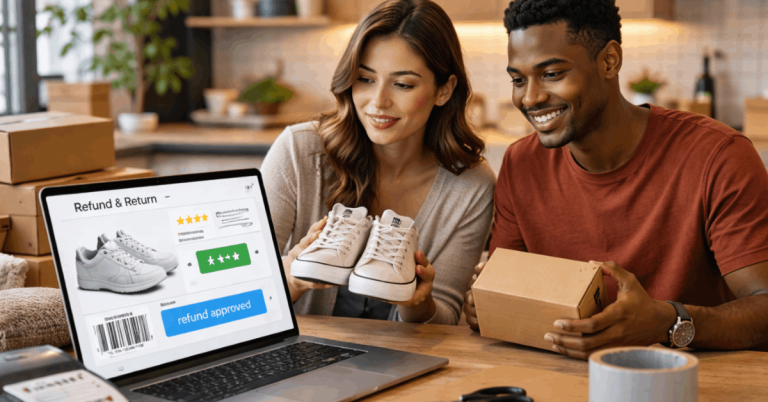
That $12 wireless earbud deal on Temu stopped looking suspicious the moment the listing hit 4.7 stars. And that right there is the trap.
Fake listings on marketplaces have gotten smarter in 2026. Scammers stopped using broken English and stolen stock photos a long time ago.
Spotting a fake listing on marketplaces like Amazon, eBay, or AliExpress now takes more than gut instinct. It takes a system.
I would argue the biggest danger comes from listings that look completely normal. Those are the ones draining wallets across every platform right now.
Red Flags That Give Away Fake Listings on Marketplaces
Every scam listing shares a handful of tells, but the pattern changes depending on the platform and product category.
A fake iPhone case on Wish looks different from a fake supplement on Amazon. Learning to read these signals by platform saves both money and frustration.
Pricing That Breaks the Math
A listing priced 60% or more below retail should trigger instant suspicion. Scammers price items low enough to catch impulse buyers but high enough to seem like a “deal” rather than an obvious fraud.
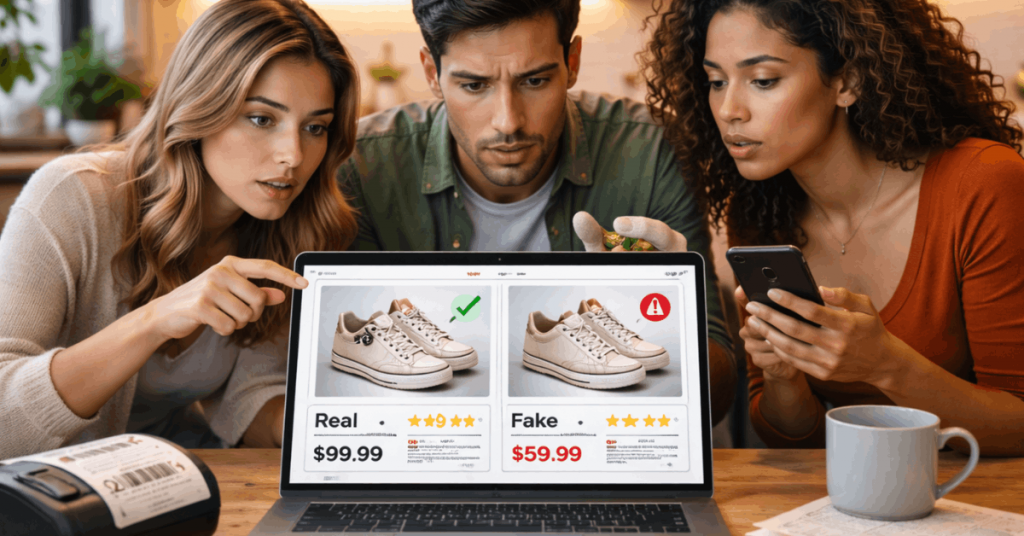
Compare the price on the manufacturer’s own site first. Then check CamelCamelCamel for the Amazon price history on that specific ASIN. A product that normally sells for $45 but suddenly appears at $9 has a story behind it, and the story is rarely good.
Product Descriptions Full of Filler
Fake listings love all-caps titles and exclamation points. Real brands write clean, structured descriptions. Scam listings stuff descriptions with irrelevant terms to game search algorithms.
Watch for missing details: no manufacturer name, no country of origin, no material specs. A listing describing a “stainless steel” watch that shows a plastic one in the photos is giving away the game for free.
Photos That Don’t Match the Product
Reverse image search using Google Lens is the single fastest way to catch stolen product photos. Drag the listing image into Google Lens and see where else it appears. If that same photo shows up on five unrelated sites, it was lifted.
Real sellers include packaging shots, close-ups, and different angles. A listing with only lifestyle images (product sitting on a marble counter, artful lighting, no label visible) is hiding something.
Platform-by-Platform Breakdown of Fake Listing Risks
Not every marketplace carries the same risk. Seller verification, buyer protection policies, and review filtering vary wildly. A scam that would survive on Wish for weeks might get flagged on Amazon in hours.
| Platform | Seller Verification | Buyer Protection | Common Scam Type |
|---|---|---|---|
| Amazon | Moderate (third-party sellers loosely vetted) | Strong (A-to-Z Guarantee) | Inflated ratings, used items sold as new |
| eBay | Moderate (feedback-based) | Strong (Money Back Guarantee) | Counterfeit collectibles, replica sneakers |
| AliExpress | Low | Moderate (dispute system) | Fake branded electronics, mislabeled clothing |
| Temu | Low | Moderate | Misleading product photos, sizing discrepancies |
| Wish | Low | Weak | Exaggerated photos, incorrect product received |
Amazon and eBay offer the strongest buyer protection, but that protection kicks in after the damage. Prevention beats a refund dispute every time.
Amazon and AliExpress Scam Patterns
Amazon’s third-party seller marketplace is enormous. Many sellers use bot-driven review farms to inflate ratings. On AliExpress, counterfeit branded electronics and clothing are the biggest problem areas.
Always click through to see who is selling the item. A listing might appear on an Amazon product page, but the seller could be a random third-party account with no track record. The “Sold by” line matters more than the listing title.
eBay and Temu Tricks
eBay scammers target collectibles, sneakers, and vintage items because authentication is harder. Temu listings frequently use professional-looking product photos that bear little resemblance to what arrives.
On eBay, if a price for Nike shoes sits at half the retail value, the listing almost certainly involves replicas. Check the seller’s feedback percentage and read the negative reviews first. Those tell the real story.
Wish and Smaller Platforms
Wish has a long history of exaggerated product images. A listing might show a full-sized blender but ship a miniature version. Brand names are sometimes misspelled intentionally to dodge trademark filters.
Smaller marketplaces often lack the infrastructure to police listings at all. If a platform has no visible dispute resolution process, consider that a warning sign before placing any order.
Also read: How to Avoid Customs Problems When Shopping Online
How Fake Reviews Fool Smart Buyers
Reviews are supposed to be the safety net. But review manipulation is now an industry, and the tools scammers use have outpaced the filters platforms deploy against them.
I think the standard advice of “always check reviews” is misleading, specifically because Fakespot’s own analysis has found that roughly 42% of Amazon product reviews are unreliable.
Telling someone to trust reviews on a platform where nearly half of them are questionable is like recommending a smoke detector that works 58% of the time.
A better approach: skip the star rating entirely and focus on three signals instead.
- Reviews that include user-uploaded photos of the actual product received tend to be more reliable than text-only reviews
- A sudden spike of five-star reviews posted within the same week is a classic sign of a purchased review batch
- Reviews mentioning specific product dimensions, weight, or delivery timelines carry more weight than generic praise like “great product, love it”
Tools like Fakespot and ReviewMeta grade the trustworthiness of a product’s reviews on Amazon and other platforms. Running a listing through either tool takes about 30 seconds.
How Sellers Game Star Ratings
Some sellers offer gift cards or refunds in exchange for five-star reviews. Others use bot networks to post hundreds of reviews within days of launching a product.
The fastest way to spot this: sort reviews by “most recent” rather than “top reviews.” If the recent reviews are mostly negative while the overall rating is 4.5 or higher, the early reviews were likely manufactured.
Seller Profile Red Flags to Check Before Buying
A listing can look perfect but still be a scam if the seller behind it has no credibility. Checking the seller profile takes 30 seconds and can prevent a loss of $20, $50, or more.
These seller warning signs appear consistently across platforms:
- Account age under 90 days combined with hundreds of listed products suggests a disposable storefront that will vanish after enough complaints
- A seller offering unrelated product categories (phone cases, kitchen gadgets, and auto parts from the same store) is likely a drop-shipper with no actual inventory
- Poor grammar in the seller bio or store name often indicates an overseas operation set up specifically for quick-turnover scams
- No return address or contact information listed anywhere on the seller page
New sellers are not automatically scammers, but a new account with no reviews selling high-demand electronics deserves extra scrutiny.
Cross-Platform Price Checking Catches Cloned Listings
Some scammers post the same product across Amazon, AliExpress, and eBay at wildly different prices. If one platform shows a $25 listing and another shows $5 for the identical item, both listings deserve investigation.
Search the product name and model number across at least two platforms. Then compare against the manufacturer’s website. That three-point check takes less than two minutes and catches cloned listings that a single-platform search would miss.
What to Do When a Listing Looks Suspicious
Catching a fake listing means nothing without follow-through. Platforms have reporting systems, but those systems move slowly. A scam listing can stay live for days after a report is filed.
Take these steps before and after placing an order:
- Message the seller with a specific question about the product. Vague or copy-paste replies are a red flag. No reply at all is worse.
- Screenshot the listing including the price, product description, seller name, and photos. If the listing disappears after a purchase, the screenshots become the evidence.
- Report the listing through the platform’s built-in complaint tool. On Amazon, use the “Report” link on the product page. On eBay, select “Report this item.”
- Pay through protected channels only. PayPal, marketplace checkout, or credit cards with chargeback rights. Never pay via wire transfer, Zelle, or direct bank deposit.
Real Cases That Show How Fake Listings Work
A buyer on Wish ordered a branded iPhone case and received a generic plastic shell with no branding. The listing photos had shown the Apple logo clearly. Another Amazon buyer received a used electric shaver marked as new, packaging already opened and resealed.
An eBay shopper purchased discounted Nike shoes and received obvious replicas with different sizing than advertised.
All three situations had warning signs visible before purchase: unrealistic pricing, new seller accounts, and zero user-uploaded review photos.
Each buyer could have avoided the loss by spending 60 seconds checking the seller profile and running the listing photos through Google Lens.
Questions People Ask About Fake Listings on Marketplaces
Q: Can I get a refund if I buy a fake product on Amazon?
Amazon’s A-to-Z Guarantee covers purchases from third-party sellers when the item received is materially different from the listing. File a claim within 30 days of the latest estimated delivery date. Keep all packaging and take photos of what arrived versus what was shown.
Q: Is Temu safe to buy from in 2026?
Temu has a dispute resolution system, but product quality varies dramatically between sellers. Stick to items under $15 where a total loss is manageable, and always read reviews that include photos before ordering.
Q: How does Fakespot detect fake reviews?
Fakespot analyzes review patterns including posting frequency, language similarity between reviews, and reviewer account history. It assigns a letter grade from A to F. Products graded D or F have a high percentage of questionable reviews.
Q: Are seller verification badges reliable?
Badges like Amazon’s “Best Seller” label or eBay’s “Top Rated Seller” tag are earned through sales volume and customer metrics. They reduce risk but do not eliminate it. Even verified sellers occasionally ship items that do not match the listing.
Q: What is the fastest way to check if a listing photo is stolen?
Open Google Lens on mobile or desktop, upload the listing image, and scan the results. If the identical image appears on unrelated e-commerce sites or stock photo databases, the seller did not take it.
Conclusion
Fake listings on marketplaces will keep evolving as long as platforms profit from seller traffic. The tools to catch them already exist, but only buyers who use them consistently stay protected.
A 60-second check across Fakespot, Google Lens, and the seller profile page catches the vast majority of scams. The next suspiciously good deal that crosses your feed deserves those 60 seconds.