Ordering a glass vase online feels fine until it shows up with a crack running through the base. That moment changes how you shop forever.
Delivery handling is the invisible step between clicking “buy” and holding your purchase. And for fragile items, it’s the step where things go wrong the fastest.
The packaging around your order matters more than the product’s brand or price tag. A $200 collectible in a thin box has worse odds than a $30 mug wrapped in foam and double-boxed.
This guide breaks down exactly where fragile items get damaged during delivery, what to look for before placing an order, and how to protect yourself if something arrives broken.
Where Fragile Items Get Damaged During Shipping
The shipping process puts fragile items through more stress than people realize. Each stage of transit introduces a different type of risk, and most damage happens during transitions between stages rather than during the long haul itself.
Drop Impacts at Transfer Hubs
Every time a package changes hands, it gets tossed, dropped, or slid onto a new conveyor. Quick hits crack glass, chip edges, and break internal mounts. The more transfer hubs a package passes through, the higher the odds of a sudden impact.
I would choose a shipping route with 2 transfer points over one with 5, even if it costs more and takes an extra day. The math works out: fewer handoffs mean fewer chances for someone to toss your box onto a pile.
Stacking Pressure and Vibration
A fragile box sitting at the bottom of a shipping container takes the weight of everything above it. Heavy stacking pressure bends frames, crushes housings, and warps cardboard until the item inside has zero protection left.
Then there’s vibration. Long-haul transit creates constant shaking that loosens parts and causes rubbing damage. Think of it like this: your item spends hours or days vibrating against whatever is next to it inside the box. Loose items rattle themselves into damage without a single drop.
Temperature Swings and Moisture
This is the risk that almost nobody talks about when discussing fragile item delivery. Hot-and-cold temperature swings weaken adhesives, and cold snaps make materials brittle.
A ceramic piece that survived the conveyor belts can crack in the back of a delivery truck that sat in the sun for four hours.
Damp conditions warp packaging, trigger stains, and cause corrosion on metal parts. Cosmetics are especially vulnerable here: caps loosen under heat, pumps snap under pressure, and seals leak when temperatures climb.
Packaging Factors That Decide Survival
Packaging determines whether your order survives the journey. But not all packaging is equal, and the differences between good and bad packing are easy to spot once you know what to look for.
Box Size and Cushioning Material
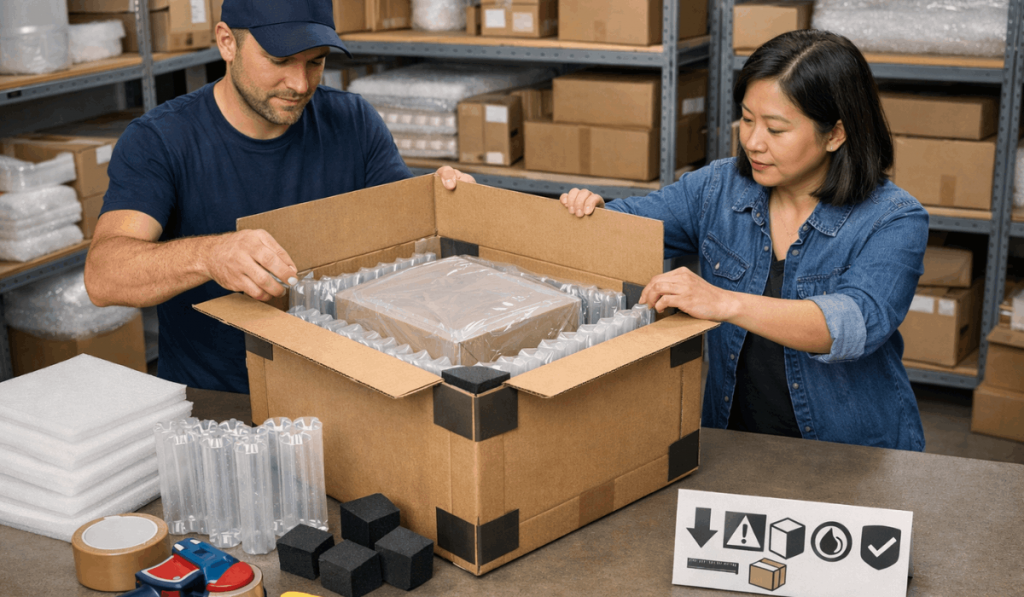
The right box size is the single biggest factor. Less empty space inside the box means less movement and fewer impact hits. A snug fit keeps the item locked in position during every bump and turn.
Foam or air columns absorb shock better than loose bubble wrap. Loose wrap shifts during transit, leaving gaps where the item can slam against the cardboard wall. Void fill like packing peanuts or crumpled paper stops items from sliding and bouncing.
Double Boxing and Corner Protection
Double boxing is the gold standard for fragile items. A second outer layer reduces damage from drops and punctures because the impact has to break through two barriers instead of one.
Corner and edge guards protect the first points that hit the ground during a drop. Corners take the brunt of almost every impact. A box without corner protection is a box that fails at the most common failure point.
| Packaging Factor | Good Sign | Red Flag |
|---|---|---|
| Box fit | Snug with minimal gaps | Oversized box, item moves freely |
| Cushioning | Foam inserts or air columns | Loose bubble wrap or newspaper only |
| Double boxing | Inner box inside outer box | Single thin box |
| Corner protection | Foam corners or cardboard guards | No edge protection at all |
| Moisture barrier | Plastic liner or sealed wrap | Open cardboard, no seal |
The takeaway: if a seller’s packaging hits 4 out of 5 good signs, your order has strong odds of arriving intact.
Also read: How to Buy International Products Safely: A Real-World Guide for Quality & Delivery
How Different Fragile Items Break During Delivery
Not every fragile item breaks the same way. Knowing the weak points of your specific product type helps you inspect smarter when the package arrives and ask the right questions before buying.
Glass, Ceramics, and Screens
Glassware and ceramics fail at rims, bases, and handles. These are the thinnest, most exposed points, and they crack on impact before anything else. Electronics and screens have a different failure pattern: corners dent first, then screens develop pressure cracks, and ports bend under sustained pressure.
Liquids, Cosmetics, and Small Appliances
Liquids and cosmetics are vulnerable to heat and transit pressure. Caps work themselves loose during vibration, and pump mechanisms snap when boxes get stacked. The damage often shows up as a slow leak rather than an obvious break.
Small appliances lose knobs, crack housings, and shift internal mounts from vibration. The outside of the box can look perfect while the motor mount inside has come loose. That’s why a quick function test within the first few minutes of opening matters so much.
Collectibles and Precision Parts
Finished surfaces scuff and dent inside the box when items rub against packaging material. Paint damage on collectibles often happens because the item was wrapped in rough material or left to slide around during transit.
Precision parts and tools bend at the tips, strip at the threads, and lose calibration from repeated shocks. If you’re ordering calibrated equipment, verify the calibration immediately and document any variance.
Seller Signals That Predict Better Delivery Outcomes
Picking the right seller can prevent damage before it happens. A few signals in the listing and review section tell you a lot about how seriously a seller treats packaging, based on data points from the eBay shipping best practices guide.
Packaging Proof and Review Photos
Clear packaging proof in listing photos is the strongest signal. Look for foam, corner guards, double boxing, or a tight fit visible in the images. Specific packing notes like “inner box + foam” carry more weight than vague claims like “safe packing.”
Recent review photos showing the actual packaging matter more than the overall star rating. A seller with 4.5 stars and three recent reviews showing crushed boxes is a worse bet than a 4.2-star seller whose buyers consistently photograph intact packaging.
Return Policy and Communication Speed
Fast seller replies suggest better after-sales support when things go wrong. Clear return and replacement terms with specific timelines reduce your risk if damage happens.
Watch for these seller signals before placing an order on fragile items:
- Specific packing descriptions in the listing (materials named, method described)
- Recent buyer photos showing intact packaging on arrival
- Return policy that explicitly covers “arrived damaged” with a stated deadline
- Tracked shipping options with visible route information
A seller who checks all four boxes is worth paying a small premium over the cheapest option.
The Pre-Purchase Checklist for Fragile Orders
Doing the work before you buy saves hours of dispute headaches later. This is where I disagree with the standard advice that says “just buy shipping insurance and you’re covered.”
I think insurance is a backup plan, not a prevention strategy, because a $5 insurance add-on won’t stop a cracked screen or a chipped vase. Prevention through seller selection and packaging verification stops the damage from happening in the first place.
A quick pre-purchase routine takes about 3 minutes and catches problems that insurance claims take weeks to resolve:
- Check listing photos and reviews for packaging evidence (foam, double boxing, tight fit)
- Message the seller directly and ask for double boxing and corner protection on fragile items
- Pick a tracked shipping method with fewer transfer points, even if it costs more
- Confirm the return policy covers transit damage and note the deadline for filing a claim
If the seller’s reply to your packaging question is vague or dismissive, skip the order. That response tells you everything about what happens after something breaks.
Comparing Risk vs. Price on Fragile Orders
A low price on a hard-to-replace fragile item is a trap. The savings disappear the moment you have to file a dispute, wait for a replacement, or eat the loss entirely. Vague specs, stock-only photos, and mixed review images are the three listing red flags that signal high risk.
According to the Consumer Product Safety Commission, product damage during transit is one of the top consumer complaint categories for online purchases. That tracks. The number of people who lose money on damaged fragile orders because they chased the cheapest listing is enormous.
What to Do the Moment a Fragile Package Arrives
The first 5 minutes after delivery decide whether you have a claim or a loss. Speed matters, and so does documentation quality.
Photograph and Record Everything
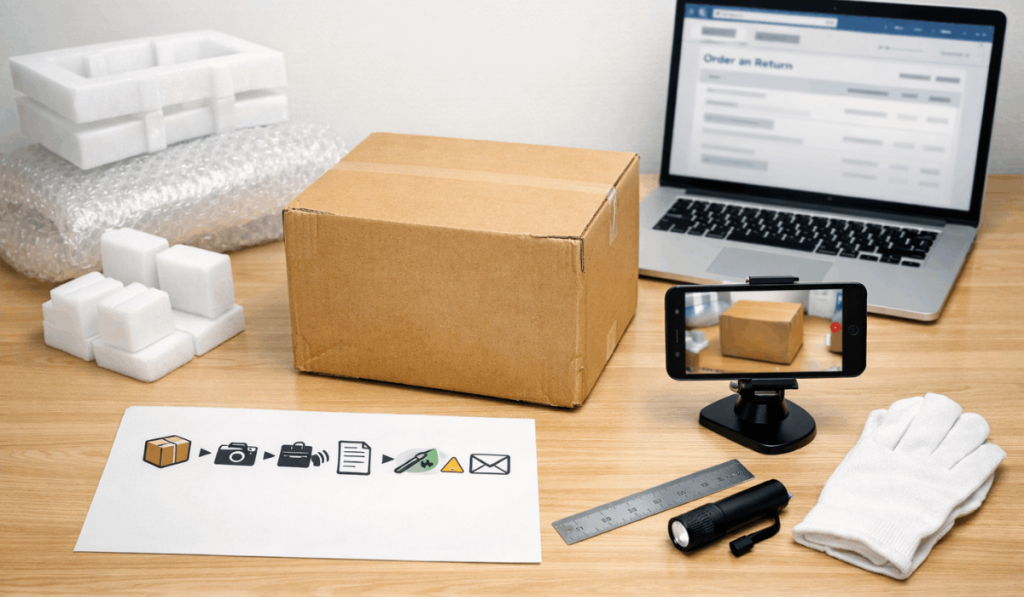
Photograph the box on all sides before opening. Capture corners, dents, wet spots, and the label area. Then record the unboxing in a single take, showing the seals, padding, and how the item sits inside the box.
Save all packaging materials. The box, inserts, wrap, and labels become evidence for your claim. Throwing away the box before inspecting the item is the single most common mistake buyers make with fragile deliveries.
Inspect Weak Points and Test Function
Check corners, edges, screens, ports, lids, and seals first. These are the failure points for 90% of fragile item categories. Power on the item and test basic functions immediately.
If anything is wrong, take close-up photos with a ruler for scale. Send the evidence to the seller within the return window and open a platform dispute if they don’t respond within 48 hours. Waiting longer than the stated deadline kills your claim entirely.
Questions People Ask About Delivery Handling for Fragile Items
Q: Does paying for faster shipping reduce fragile item damage?
Faster shipping often means fewer stops and less time in transit, which cuts exposure to stacking and vibration. But speed alone doesn’t fix bad packaging, so a well-packed standard shipment can outperform a rushed, poorly wrapped express order.
Q: Should I always buy shipping insurance for fragile orders?
Shipping insurance can help recover costs, but it doesn’t prevent damage. Filing a claim often takes weeks and requires documentation that many buyers don’t prepare. Choosing a seller with strong packaging and a clear return policy prevents more losses than an insurance add-on.
Q: How do I know if fragile item damage happened during shipping or was pre-existing?
An unboxing video recorded in one take is the best proof. Filming from sealed box to revealed item creates a clear chain of evidence that platforms like eBay and Amazon accept for disputes. A photo of the item alone, without packaging context, is much harder to use.
Q: Can I ask a seller to change their packaging for my order?
Absolutely. Messaging a seller before purchase with a specific request for double boxing or foam inserts is normal. Sellers who respond with details are usually the ones who pack well already. A vague or dismissive reply is a warning sign worth paying attention to.
Q: What fragile items are the riskiest to order online?
Large glassware, framed art, and electronics with exposed screens top the risk list because of their size, weight distribution, and breakable surfaces. Collectibles with painted finishes are also high-risk because even minor scuffs reduce their resale worth.
Conclusion
Delivery handling is the gap between a product leaving the warehouse and landing safely at your door. Protecting fragile orders starts before the purchase, not after the box arrives on your porch.
The sellers you choose and the packaging you verify matter more than any insurance policy ever will. Spend three minutes checking listings and reviews, and save yourself weeks of dispute headaches down the road.