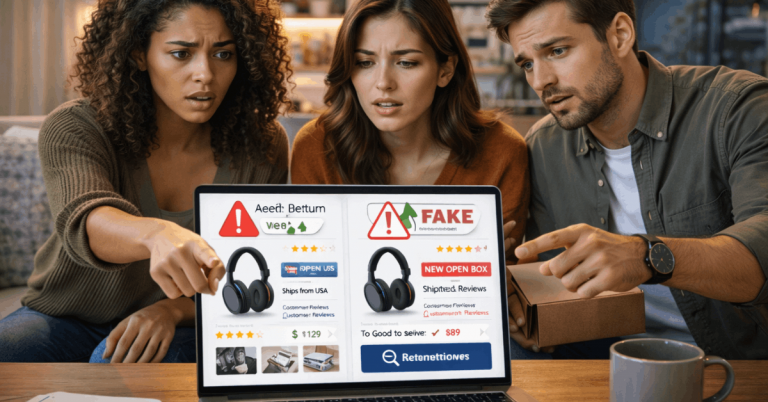
Spending 20 minutes comparing prices on a marketplace listing feels productive. Then the package arrives, and the product looks nothing like the photos.
Bad sellers on marketplaces survive because buyers rush past warning signs that are sitting right on the listing page. The red flags are rarely hidden.
Avoiding bad sellers on marketplaces takes a specific set of checks, none of them difficult. But the order and timing of those checks matter more than the checks themselves.
A single wrong purchase teaches a permanent lesson. This guide skips the generic advice and focuses on the behavioral patterns that separate risky sellers from reliable ones on marketplace platforms in 2026.
Why Bad Sellers Keep Showing Up on Marketplace Platforms
The reason shady sellers persist on platforms like Amazon, eBay, Temu, and Facebook Marketplace comes down to one structural problem: low entry barriers paired with slow enforcement.
A seller can register, list products, collect payments, and disappear within weeks. Platform moderation catches violations after the damage is done, not before.
Seller Registration Is Too Easy
Marketplace platforms allow fast onboarding with limited identity checks. That speed benefits legitimate sellers, but it also creates openings for short-term operators.

These sellers list products at aggressive prices, collect orders, and either ship low-quality substitutes or vanish entirely. The accounts get flagged eventually. But “eventually” can mean weeks or months of real buyers losing money.
Cross-Border Transactions Reduce Accountability
International sellers on marketplaces operate across different legal systems. A buyer in the United States disputing a product shipped from a warehouse in Shenzhen faces longer resolution timelines and fewer enforcement options.
Chargebacks through credit card companies can work, but the process takes 30 to 90 days on platforms like eBay. Platform dispute systems are faster, though outcomes depend on the seller’s response and the specific marketplace’s policies.
High Seller Turnover Hides Patterns
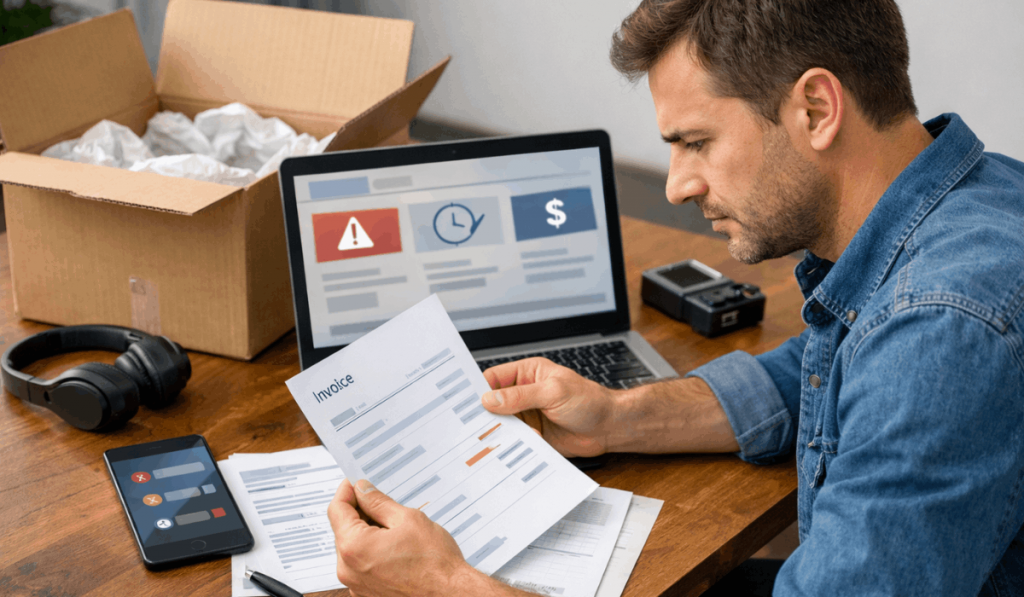
Short-term sellers disappear after complaints stack up, then re-register under new names. This constant turnover means a seller’s reputation can be manufactured fresh every few months.
I would pay closer attention to account age on Amazon than to star ratings, because a 4.8-star seller with a 60-day-old account tells a very different story than a 4.5-star seller operating for 3 years.
Reading Marketplace Reviews Without Getting Fooled
Reviews are the first thing buyers check and the first thing bad sellers manipulate.
The 2026 version of fake reviews is more polished than ever: AI-generated text, purchased accounts, and coordinated posting schedules make spotting fakes harder than it was even two years ago.
What Fake Reviews Look Like Now
Generic praise language is a dead giveaway. Phrases like “great product, fast shipping, love it” repeated across dozens of reviews suggest a pattern of purchased feedback.
Real buyers mention specifics: the exact color that looked different on screen, the packaging condition, the day it arrived versus the estimated delivery date.
Clusters of reviews posted within the same 48-hour window also raise doubt, especially on products with otherwise low review activity.
I think the common advice to “always check seller reviews first” is overrated on platforms like Amazon and AliExpress in 2026, because review manipulation has become so cheap and widespread that star ratings are now among the least reliable signals.
A seller’s response behavior, return policy clarity, and account age tell a sharper story than 500 five-star reviews ever will.
Photo Evidence and Missing Context
Reviews that include buyer-uploaded photos carry more weight than text-only feedback.
A photo of the product next to the listing image exposes size discrepancies, color mismatches, and material differences that no written description can capture. Reviews missing delivery context or usage details should be treated with skepticism.
The absence of negative reviews on a product with hundreds of ratings is itself a warning sign. Every product has flaws. A review profile with zero complaints suggests filtering or manipulation.
Spotting Red Flags on Product Listings
Listings are a seller’s storefront, and the details inside them reveal reliability before any transaction happens. A few specific patterns separate trustworthy listings from risky ones.
Overedited Images and Vague Descriptions
Excessive photo filters, lifestyle-heavy imagery with no close-up product shots, and stock photos instead of real product images all reduce credibility.
A listing that lacks material specifications, exact dimensions, or weight is asking the buyer to guess what they’re ordering.
Pay attention to contradictions between the images and the written description. A product shown in stainless steel but described as “premium alloy” is a mismatch that signals either carelessness or intentional misdirection.
Pricing That Feels Like a Trap
Extreme discounts below market average are the oldest trick on marketplaces, and they still work because buyers want to believe they found a deal.
Compare prices across at least three listings of the same product on the same platform before treating any price as reasonable.
Watch for these pricing red flags on marketplace listings:
- Incomplete price breakdowns where taxes, import duties, or handling fees get added at checkout
- Countdown timers and “only 2 left” alerts designed to pressure quick decisions without research
- Price changes after adding to cart, which indicate unstable or misleading seller behavior
- Wide price gaps across identical products from the same seller under different listings
A $15 product listed at $4 is almost never a deal. The gap between market price and listed price is usually filled by lower quality, substituted materials, or shipping delays.
Also read: International Shipping Times Explained
Payment Safety and Buyer Protection on Marketplaces
The payment method determines how much recourse a buyer has when problems occur. Platform-approved payment methods carry buyer protection that off-platform payments do not.
Here is a comparison of common payment methods and the buyer protection each offers on major marketplaces:
| Payment Method | Buyer Protection Level | Dispute Process |
|---|---|---|
| Platform checkout (Amazon, eBay) | High: full refund policies, automated claims | File through the platform’s resolution center |
| Credit card (Visa, Mastercard) | Medium-high: chargeback rights within 60-120 days | Contact the card issuer directly |
| PayPal | Medium: Buyer Protection on eligible purchases | Open dispute within 180 days of payment |
| Direct bank transfer | Low: limited or no chargeback options | Contact bank, outcome not guaranteed |
| Cryptocurrency or gift cards | None: irreversible transactions | No recourse available |
The takeaway is direct: stick to platform-approved checkout, and treat any request to pay off-platform as an immediate red flag.
When a Seller Asks to Move Off-Platform
Any seller who requests communication through WhatsApp, email, or direct messaging outside the marketplace is removing the transaction from the platform’s protection.
The reason is always the same: they want to avoid the dispute system. Off-platform requests for payment via bank transfer, cryptocurrency, or gift cards should end the conversation immediately.
Testing a New Seller Before Committing
Every new seller on a marketplace is a question mark, regardless of ratings. A small test purchase is the cheapest insurance against a larger loss.
Start with a single, low-cost item. Track the delivery timeline against the seller’s estimate. Check packaging quality. Compare the received product to the listing photos. Save screenshots of the listing, all messages, and the order receipt.
These documents become evidence if a dispute is needed later, and the process of testing creates a baseline for the seller’s performance on future orders. A buyer who skips this step and places a $200 order with an unverified seller is gambling without odds.
The following steps reduce exposure when testing marketplace sellers:
- Order one item only, avoiding bundles or bulk purchases until the seller proves reliable
- Monitor tracking updates from dispatch through delivery, noting any unexplained delays
- Inspect the product immediately upon arrival and photograph any defects or discrepancies
- Leave an honest review to contribute real feedback for future buyers
Seller Communication as a Trust Signal
Messaging a seller before placing an order is one of the most underused buyer tools on any marketplace. The speed, clarity, and consistency of a seller’s responses reveal reliability faster than any review section.
Ask a specific product question: dimensions, materials, warranty terms, or return eligibility. A seller who responds within hours with clear, detailed answers that match the listing is a stronger bet than one who takes days or sends vague replies.
Contradictory answers are a hard stop. A seller whose message says “30-day returns” while the listing says “no returns” has already proven unreliable. Walk away.
The Federal Trade Commission’s online shopping guidance outlines buyer rights for delivery timelines and dispute handling, which can be useful when a seller’s policies seem unclear or nonexistent.
When to Walk Away From a Marketplace Seller
Some warning signs justify leaving a transaction at any stage. Pressure tactics, refusal to explain return policies, and contradictory answers should each independently end the purchase decision.
A seller who uses urgency messages, sends off-platform payment links, or changes story between the listing and direct messages is operating from a playbook that ends with the buyer absorbing the loss.
Multiple red flags on a single listing are confirmation, not coincidence.
Questions People Ask About Bad Sellers on Marketplaces
Q: How do I report a bad seller on a marketplace platform?
Each platform has its own reporting system, usually found on the seller’s profile or the order page. Filing early matters because platforms weigh complaint timing when reviewing seller accounts.
Q: Can I get my money back after buying from a bad seller?
Refund eligibility depends on the payment method and platform policy. Credit card chargebacks and platform dispute systems are the two strongest options, but both have filing deadlines that range between 60 and 180 days.
Q: Are marketplace sellers with thousands of reviews always safe?
Not necessarily. High review counts can be manufactured through purchased feedback and coordinated posting. A seller’s account age, return policy, and response behavior are more dependable indicators than volume alone.
Q: What product categories have the highest risk on marketplaces?
Electronics and branded goods carry the highest counterfeit and defect risk. Fashion items come next, because sizing and material quality vary widely between sellers even for similar-looking products.
Q: Is it safer to buy from domestic sellers on marketplace platforms?
Domestic sellers typically offer faster shipping and simpler dispute resolution. Cross-border purchases add complexity around customs, longer delivery windows, and different legal protections, so the risk profile shifts depending on the product value.
Conclusion
Bad sellers on marketplaces rely on buyers who skip the research step before clicking the purchase button.
A small test order and a direct message can reveal more about a seller than 500 star ratings.
The red flags are almost always visible on the listing page, buried in details that rushed buyers overlook. Protect the purchase by treating every new seller like a question that needs answering first.