Expected Quality vs Actual Quality is the gap between what a marketplace listing makes you expect and what you actually receive at your door.
You will learn how to spot the signals that predict real build quality, delivery damage risk, and seller reliability before you pay.
You will also use a simple, evidence-first checklist so your next order better matches your expectations.
Define “Expected Quality” Before You Shop
Expected quality is what you believe you will receive based on the listing’s photos, specs, price, and reviews.
You should set it by writing your must-haves (materials, exact size, key features, and acceptable delivery window) before you check out.
The 5 Expectation Triggers That Mislead You
These triggers make you assume the item is better than it will be, even when the proof is weak. Use this list to spot “expectation inflation” before you buy.
- Studio photos and perfect angles that hide seams, edges, and weak parts
- Vague material terms (like “alloy” or “premium”) without exact specs or thickness
- Deal pricing that’s unreal for the category, which often means lower-grade parts
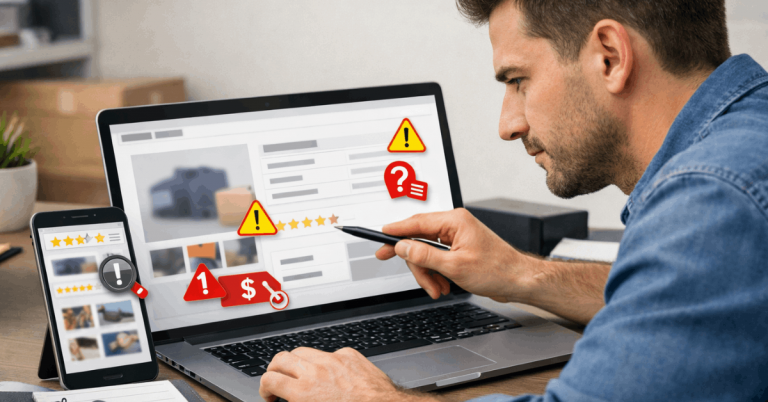
- Reviews that look convincing but lack evidence, especially a few real close-up photos
- Shipping promises with no detail, like no named carrier, tracking, or a clear delivery range
What “Actual Quality” Looks Like When It Arrives
Actual quality is what you can verify in your hands the moment the package arrives.
You should judge it by build, finish, fit, function, and how well the item survived shipping.
- Build feel and stability (solid vs loose, wobble, weak joints)
- Material reality (weight, texture, stiffness, and whether it matches the listing)
- Finish condition (scratches, chips, uneven coating, stains, dents)
- Fit and sizing accuracy (dimensions and compatibility with what you expected)
- Basic function and performance (core features work, no abnormal behavior)
- Included parts and accessories (correct pieces, correct counts, usable quality)
- Packaging protection level (foam, corner guards, void fill, double boxing)
- Shipping damage signs (crushed corners, compression marks, broken seals)
- Home goods: thin materials, poor tolerances, weak fasteners
Why the Gap Happens
The gap happens because listings shape your expectations faster than the marketplace can control sourcing and shipping outcomes.
You should assume variation unless the seller proves the exact version and handling.
- Vague specs that don’t lock in materials, thickness, or measurements
- Variant confusion where photos show one version, but you receive another
- Supplier changes under the same listing without updated images
- Edited or selective photos that hide weak points and finish flaws
- Review noise like copied phrases, missing close-ups, or mixed variants
- Quality control variation between batches, factories, or restocks
- Cross-border shipping stress (handling, compression, vibration, long transit)
- Packaging gaps (weak corner protection, no foam, poor void fill)
- Customs and relabeling can add delays or extra handling steps
- Return friction that makes sellers push “good enough” outcomes

Predict Real Quality Before You Buy (Your Pre-Checkout System)
You predict real quality by following a short proof-first routine before you pay. These 7 checks cut most surprises.
- Confirm the exact variant (size, version, bundle contents).
- Prioritize measurable specs (dimensions, weight, material type, what’s included).
- Inspect weak-point photos (edges, seams, underside, connectors, corners).
- Sort reviews by newest to catch quality drift and recent defects.
- Look for repeated issues across different buyers, not just star ratings.
- Test the seller with a single specific question that elicits a clear, factual reply.
- Choose tracked shipping with a named carrier when the item is fragile or time-sensitive.
Delivery Time vs Product Quality (How They Interact)
Delivery time affects product quality because longer routes mean more handling, greater pressure on packaging, and a higher risk of damage or delay.
You should choose shipping based on how fragile the item is and how hard returns will be.
- More transit time means more handling risk (drops, compression, vibration).
- Long routes can cause cosmetic damage to coatings, corners, and screens, even when the product is “fine.”
- Heat and humidity during shipping can change materials (warping, soft adhesives, peeling).
- Slow delivery increases return friction because windows close and shipping back costs more.
- Untracked shipping reduces accountability and makes it harder to prove disputes.
- Fast-tracked shipping can reduce delivery time, but it still requires strong packaging for fragile items.
- Time-sensitive orders raise the “arrival mismatch” risk because delays can make the purchase useless.

What to Do When Actual Quality Fails Your Expectation
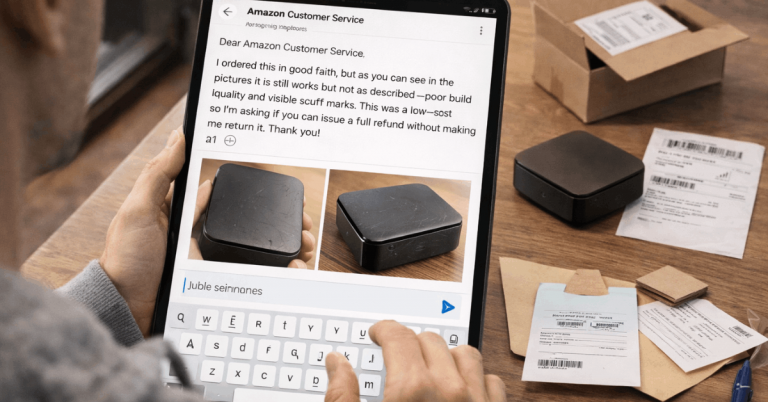
When actual quality falls short of your expectations, act quickly and document everything while the return or dispute window is still open.
Use these steps to protect your money and choose the right outcome.
- Stop using the item and keep all packaging until you decide what to do with it.
- Photograph the full proof sequence (box condition → unboxing → defect close-ups → measurements/fit → accessories).
- Save listing evidence (screenshots of claims, specs, variants, and shipping promises).
- Test only the basics needed to confirm the problem, then record the result.
- Message the seller with facts only (what failed, photos attached, what resolution you want).
- Choose a remedy: keep with a partial refund, replace, or return, based on whether the core specs/function failed.
- Escalate through the platform if replies stall, terms change, or the seller pushes off-platform.
Smart Buying Rules That Reduce the Gap Over Time
You reduce the gap over time by standardizing how you check listings, reviews, sellers, and shipping.
These rules help you get more predictable outcomes with fewer surprises.
- Define your non-negotiables first (materials, measurements, core features, delivery deadline).
- No-go on vague specs unless photo reviews clearly prove the exact build and variant.
- Trust repeat evidence, not one perfect review (same details confirmed by multiple buyers).
- Sort reviews by newest and avoid listings with recent quality drift warnings.
- Choose tracked, named-carrier shipping for fragile, expensive, or time-sensitive items.
- Prefer sellers with clear returns and consistent history over “new store + big discount” setups.
- Save proof before checkout (screenshots of specs, variant, price, shipping, and return terms).
Final Takeaway
Expected Quality vs Actual Quality becomes predictable when you rely on specs, real photo evidence, and shipping realities rather than hype.
You protect yourself by checking variants, validating seller reliability, and documenting fast when something fails.
Use the checklist from this guide on your next international marketplace order and buy with proof, not promises.