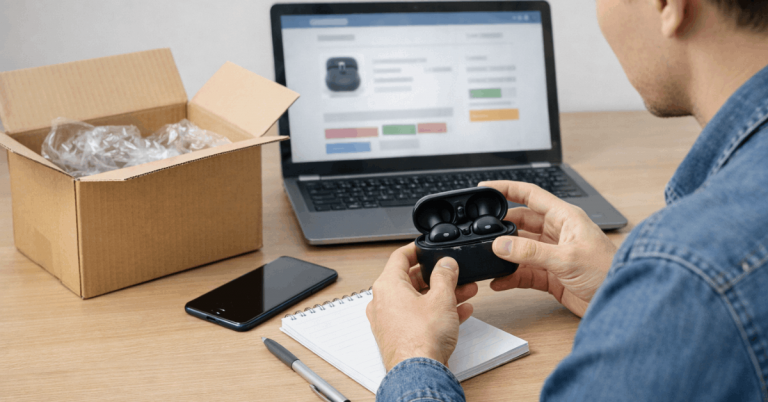
A parcel can look ordinary at the door and still contain a damaged part, wrong model, or fault that appears after a few minutes of use.
How long you should inspect products after delivery depends on the seller’s return rules, the platform’s dispute window, and what you ordered, but the safest approach begins that day.
First, preserve arrival evidence; then find problems before deadlines make them harder to resolve. This early habit is especially useful for international marketplace purchases.

The First Hours Set Up Your Claim
The first few hours are less about deciding whether you like the purchase and more about protecting the facts.

Before the box is opened or discarded, a crushed corner, damp cardboard, broken seal, or unfamiliar tape can provide valuable context with your tracking record and photos.
Photograph the Parcel Before You Touch the Tape
Take clear pictures of every side of the package, its shipping label, and any dents, punctures, stains, or loose tape. For a fragile or expensive purchase, record a short video before cutting the seal and through the first layer of packaging.
It does not need to be dramatic; a calm record shows the parcel’s condition and the sequence in which you found the item.
Confirm the Version, Not Just the Product Name
Compare the item with your order confirmation, not your memory or the main product photo. Check the size, color, model number, plug type, capacity, bundle contents, and accessories.
Sellers sometimes display a better-equipped option while the buyer selected a basic one. A similar item is not always the correct item, especially when a small difference affects compatibility or daily use.
What to Test Within the First Day
A visual check cannot show whether an item charges, connects, fits, or performs as stated.
Test the core purpose carefully on the first day, while the order information and packaging remain easy to access.
The goal is to identify a real fault through normal use, not push the item beyond its limits.
Use the Item in a Normal, Controlled Way
Charge the device, connect the cable, assemble the product, or perform one task you bought it for. Try shoes indoors, load a bag with sensible weight, or use a small appliance under ordinary conditions.
Notice overheating, unusual noise, weak connections, wobble, poor fit, or failure to complete its basic job. A brief note on the setup and result gives you a clear description of a repeatable issue.
Do Not Test Through a Safety Warning
Stop using the product if you notice smoke, a burning smell, exposed wiring, abnormal heat, battery swelling, sharp broken edges, or a leaking container. Further testing may create harm and let the seller argue that it was misused.
Keep it away from water, children, pets, and flammable materials, then document what you can safely see. Your safety matters more than extra proof.
Why the Second and Third Days Still Matter
Some defects appear only after an item has settled, charged, opened and closed repeatedly, or carried a light load.
The next 48 to 72 hours let you separate a one-off glitch from a recurring issue before the return deadline becomes urgent. Use this time to check stability and consistency.
Also Read: How Reliable Are Marketplace Seller Ratings?
Look for Problems That Appear After Light Use
Recheck hinges, joints, seams, fasteners, charging ports, coatings, and attachments after a day or two.
With electronics, notice battery drain, random restarts, weak wireless connections, or a loose charger; with furniture, watch for wobble, creaks, or shifting hardware.
Take one wide photo and one close-up so the seller can see the location and detail of the problem.
Decide Whether the Issue Is Cosmetic or Material
Not every flaw deserves the same response. A small mark may be tolerable, but a cracked housing, missing component, wrong voltage, unstable leg, or peeling finish on a frequently handled item changes the purchase’s value.
Read the listing again and identify the promise that was not met. This lets you request a fair remedy for the actual issue rather than react only from frustration.
Different Purchases Need Different Checks
The same three-day rhythm works for most orders, but the details should match the product’s likely weak points. A charger, chair, and jacket can fail in different ways, so start with the parts that affect safety, fit, or performance.
Electronics, Appliances, and Tools Need Faster Attention
For electronics, check the model, screen, ports, charger, accessories, and basic connectivity as soon as possible. Appliances and tools also need early checks for plug compatibility, loose guards, vibration, overheating, and unresponsive controls.
Do not disassemble components or attempt repairs before contacting the seller unless official instructions require it. Early records of a functional failure matter before the window closes.
Clothing, Furniture, and Home Goods Need Physical Checks
Inspect clothing for measurements, stains, seam strength, lining, and hardware before removing tags or washing.
With furniture and organizers, count each screw or bracket, examine panels for chips or warping, and see whether the assembled item sits level.
Kitchenware and decor need checking for cracks, sharp edges, or unstable bases. A missing part or structural defect is easier to show when packaging and contents remain together.
A Small Routine Keeps You From Missing the Window
You do not need a complicated plan for every delivery.
A brief routine captures important evidence before the box disappears and before a small concern becomes difficult to explain. Keep the process simple enough to follow and specific enough to support a claim.
Four Steps Cover Most Deliveries
Begin with the parcel, confirm the version, test the core function, then save records in one folder.
That sequence avoids a common mistake: using an item for days before noticing it was damaged or incomplete. It takes little time but gives you a stronger record when you contact the seller.
- Photograph the sealed parcel, label, contents, and visible damage.
- Compare the exact variant, accessories, and measurements with the order.
- Test the main function under normal conditions within one day.
- Report serious issues through the marketplace before the deadline.
Make the Decision While the Evidence Is Fresh
Fast inspection does not mean assuming every seller will disappoint you. It keeps your choices open while the listing, packaging, and return terms are easy to verify.
Start at the door, complete a practical check on the first day, and use the next two days for faults that need time to show themselves.
When something is wrong, contact the seller with straightforward facts, keep the conversation on the platform, and decide on a return, replacement, or partial refund before the deadline closes in.