Online shopping continues to grow, but so does the number of fake listings. How to identify fake listings on marketplaces is now a crucial skill for buyers.
These listings can trick you into purchasing counterfeit items or losing your money altogether. This guide gives you practical strategies to detect suspicious listings before you click “Buy.”
What Counts as a Fake Listing?
Many buyers fall for listings that look normal at first glance. These listings often promise more than they deliver and use deceptive photos or reviews.
Some items never arrive, while others arrive damaged or fake. Sellers use vague language to avoid accountability.
Which Platforms Are the Riskiest?
Each marketplace has different levels of seller verification. Amazon, AliExpress, eBay, Temu, and Wish have all reported fake listings.
Some use weak buyer protection policies, while others don’t filter reviews well. Risk levels vary by platform and product type.
Amazon and AliExpress
Amazon has many third-party sellers with inflated ratings. On AliExpress, fake electronics and clothing brands are common.
Seller ratings can be manipulated using bots or paid reviews. Always check who is actually selling the item.
eBay and Temu
eBay listings often include used or collectible items, which scammers target. Temu focuses on low-cost goods, which may lead to misleading product details.
If a price seems too low, it likely hides poor quality or hidden conditions. Check for inconsistencies in product specs.
Wish and Others
Wish often showcases exaggerated photos and incorrect sizing. You may also find brand names written incorrectly to mislead buyers.
Check product reviews with caution. A single listing may have been cloned and reposted.
Common Red Flags in Listings
Some listing traits appear frequently in fake product offers. Overuse of promotional words, missing brand names, and stolen images are all signs.
The listing may also have few or no customer reviews. Here’s how to analyze listings more critically:
- Product descriptions filled with all-caps and exclamation points often indicate low quality. Sellers rely on hype to distract you.
- No mention of the manufacturer or country of origin raises concerns. Authentic listings are more detailed.
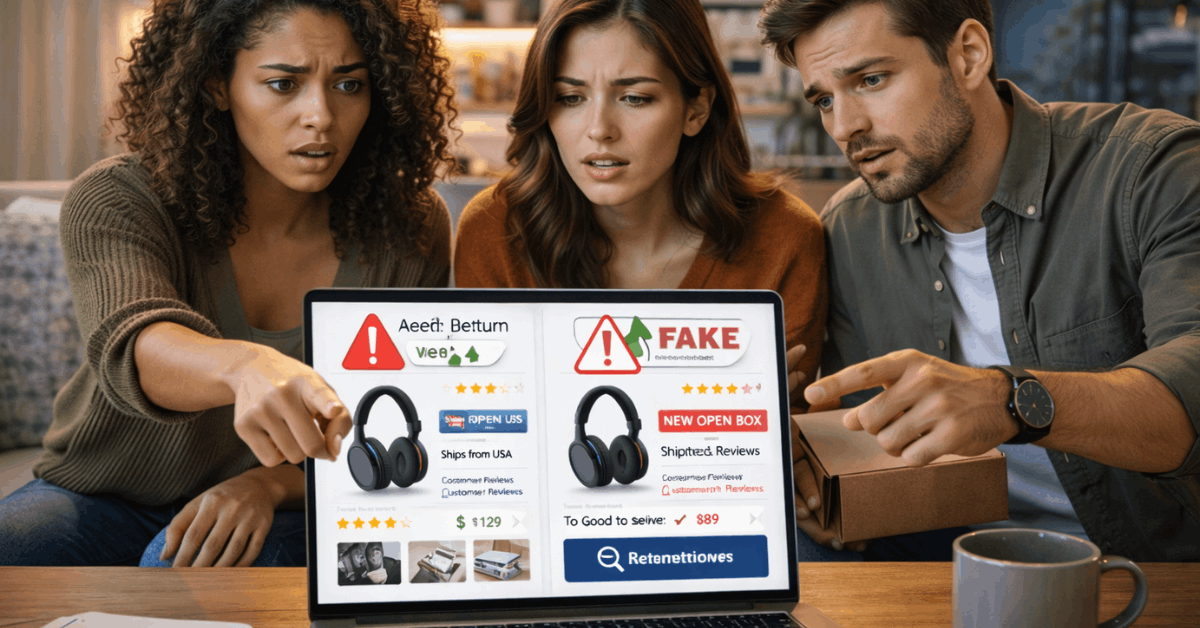
- Prices that are drastically lower than average suggest counterfeits or drop-shipped scams.
- Look for inconsistencies between images and descriptions. A product listed as “steel” may show a plastic version.
Signs of Fake Product Photos
Fake listings often include manipulated or stock images. The photos may look perfect but lack real product angles. Sellers sometimes edit out flaws or use irrelevant backgrounds. Here’s what to watch for:
- Reverse search the images using Google Lens. If the same image appears on unrelated sites, it’s likely stolen.
- Zoom in on photo details to check resolution and clarity. Blurry or low-quality photos are often signs of deception.
- Avoid listings that only show the product in lifestyle settings. Real sellers include packaging and close-ups.
- If you spot watermarks from other platforms, the listing might be cloned.
How to Spot Fake Reviews and Ratings?
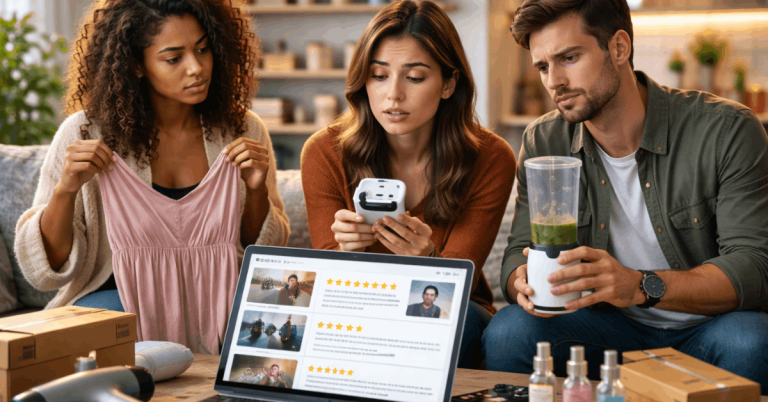
Reviews are often manipulated to build trust quickly. Some sellers use bots to post hundreds of 5-star reviews. These are usually vague and repeated. Use external tools to verify review quality.
- Use Fakespot to analyze review credibility on Amazon, eBay, and other major platforms.
- Check how many reviews were posted in the same week. A sudden spike is suspicious.
- Look for generic praise like “great product” without real use cases.
- Trust reviews that include photos, specific product uses, and delivery feedback.
Seller Profile Red Flags
Not all sellers are equal, even on trusted platforms. It’s important to check the seller profile before buying.
Fake sellers often leave very little behind. They rely on quick turnover before being banned.
- Profiles with no feedback or history should raise concern. Most sellers with positive reputations show it.
- Check how long the account has been active. New sellers without a track record are riskier.
- Sellers offering a huge range of unrelated products may be resellers with no actual inventory.
- Poor grammar and spelling in the seller bio often point to fake overseas accounts.
Be Cautious with Deep Discounts
Too-good-to-be-true deals are usually just that. Suspicious discounts are used to catch impulse buyers. Always research the product before trusting a massive price drop. Price comparison helps reveal the truth.
Why You Should Check Across Platforms?
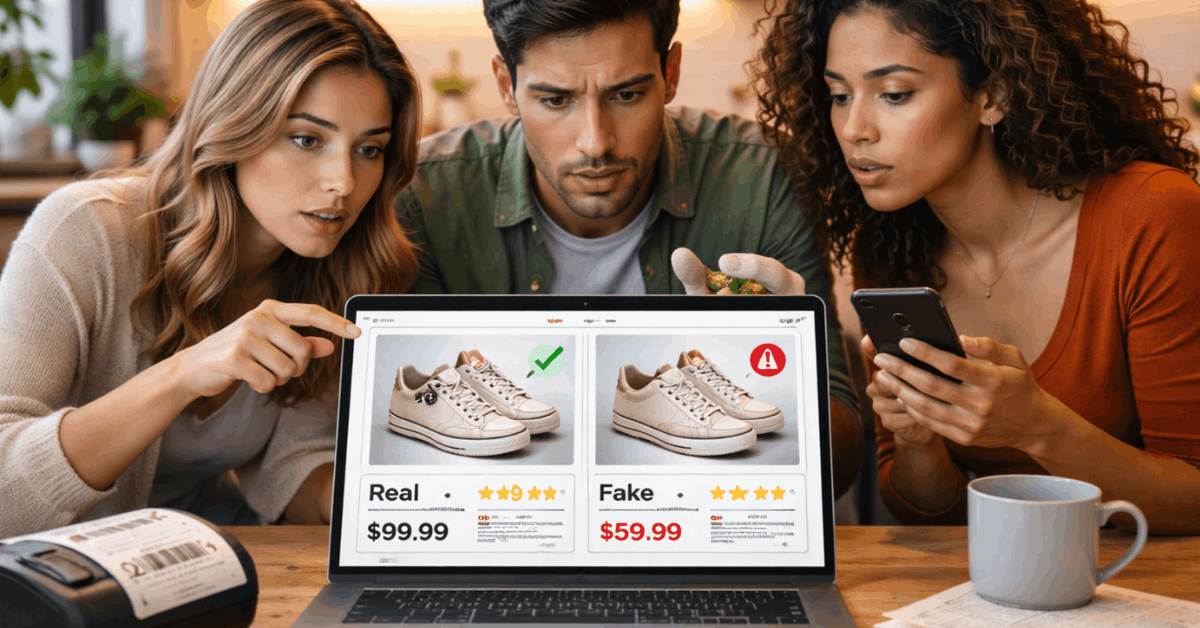
Some scammers list the same product on Amazon, AliExpress, and eBay with different pricing. If one platform shows a $25 product and another shows $5, verify both listings.
It’s best to go with the one that includes detailed reviews and verified sellers. Always cross-check with the manufacturer website.
Tools That Help
Verifying a listing doesn’t have to be manual. Use tools designed to reveal hidden listing issues. Many of them work across browsers and platforms. You only need a few minutes to avoid big mistakes.
- ReviewMeta shows how reliable Amazon reviews are
- Google Lens helps check photo sources
- CamelCamelCamel lets you view Amazon price history
- Scamadviser lets you check third-party seller websites
- Whois Lookup helps verify domain ownership if you’re redirected outside the marketplace
If You Suspect the Listing Is Fake
You should act before placing an order. Fake listings don’t always get taken down immediately. Marketplaces have reporting systems, but users must be proactive. Here’s what you can do:
- Contact the seller with specific questions. Vague or no answers are red flags.
- Report the listing using the platform’s complaint tools. Save screenshots if needed.
- Do not proceed if payment options are limited or unprotected.
- Always use payment methods with buyer protection (e.g., PayPal, marketplace checkout).
Real-World Case Examples
Understanding how these scams play out can help you recognize them. Many buyers share reviews that tell a different story from the listing. Here are a few real scenarios.
- A buyer ordered an iPhone case on Wish, only to receive a generic plastic version with no branding.
- One Amazon user received a used electric shaver labeled as new, with broken packaging.
- An eBay buyer clicked a too-low listing for Nike shoes and received poor replicas with different sizing.
- All of these issues could have been avoided by checking product photos, seller history, and reviews.
Expert Marketplace Tips for Smarter Shopping
Even experienced buyers can be fooled. Using a checklist can protect your wallet. Be cautious, observant, and always double-check listings. These habits lower your risk when shopping on any marketplace.
- Never rush a purchase when a listing lacks verified reviews
- Search for the same item on multiple platforms
- Always look for seller verification badges and store ratings
- Compare the listing photos with those on the brand’s official website
- Read recent reviews first, not just the overall rating
Final Take: Stay Ahead of Marketplace Scams
Being aware is your strongest defense. Identifying fake listings on marketplaces isn’t just about avoiding scams; it’s about making better, safer choices.
When you take the time to check reviews, verify sellers, and inspect photos, you stay in control. Avoiding a fake listing means avoiding wasted time, money, and frustration.