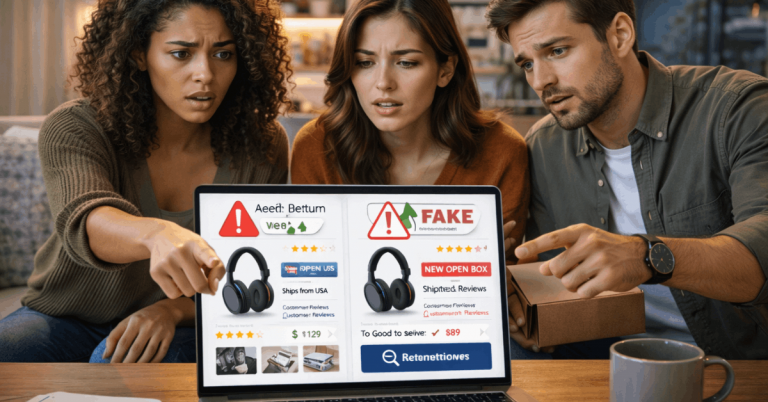
Learning how to evaluate a marketplace before buying would have saved that headache. The platform itself mattered more than the product listing.
Every cross-border purchase carries risk. But that risk becomes predictable once you know where to look before pulling out your card.
This guide is for the international online shopper who has been burned at least once and wants a repeatable system to avoid it again.
Why the Platform Matters More Than the Seller Rating
Every marketplace evaluation guide on the internet tells you to check seller ratings first. I think that advice is backwards, and the reason comes down to one thing: dispute resolution.
A seller with a 4.9-star rating on a platform with weak buyer protection will leave you stranded the moment your order arrives damaged. Meanwhile, a 4.5-star seller on a marketplace with strict enforcement and clear refund policies can still give you a good outcome when things go sideways.
The platform sets the rules. The seller just plays within them.
Check the Marketplace’s Legal Identity First
Start with the marketplace itself. Look for a registered company name, the country where it operates, and whether the help center functions or just redirects you to an FAQ graveyard.
A real company has a physical address, registration details, and a support channel that responds within 48 hours. If the only contact method is a web form buried three pages deep, that tells you something about how disputes will go.
Read the Buyer Protection Summary Before Adding to Cart
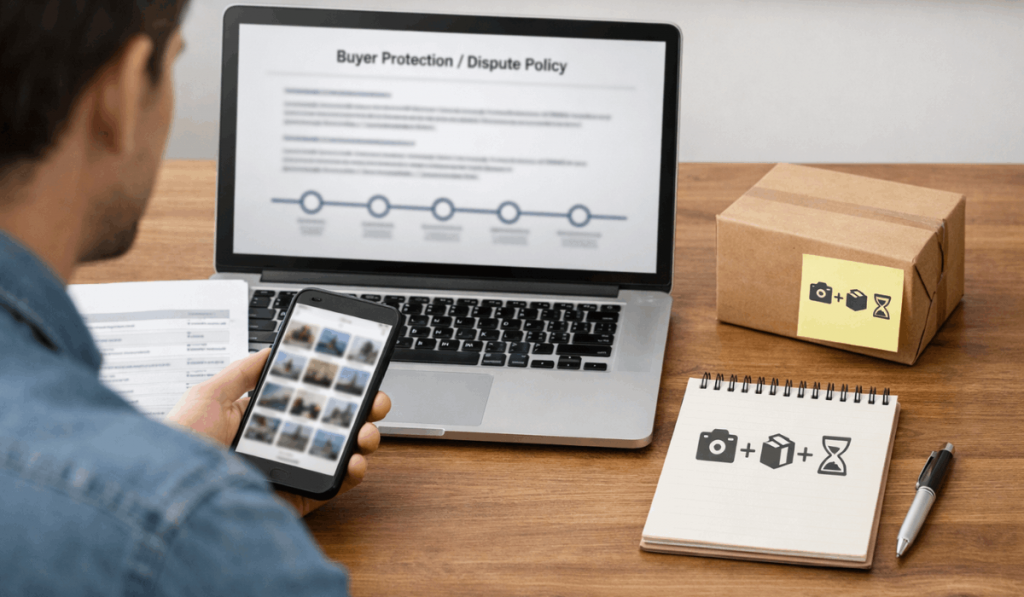
The buyer protection page is the single most useful document on any marketplace. Read it the way you’d read a lease agreement: what’s covered, what’s excluded, and what deadlines apply.
Specific things to check on the buyer protection page:
- Coverage types: items not received, items not matching the listing, damaged goods, and whether counterfeit claims are accepted
- Exclusion categories: change-of-mind returns, custom orders, digital products, and claims filed without photo evidence
- Dispute deadlines: the exact number of days after delivery (or expected delivery date) to open a claim
- Accepted evidence: photos, videos, screenshots, tracking data, and on-platform message threads
That last point gets overlooked constantly. On many platforms, only on-platform communication counts as valid evidence in a dispute. A WhatsApp conversation with the seller? Worthless.
Payment Security and Hidden Fee Traps
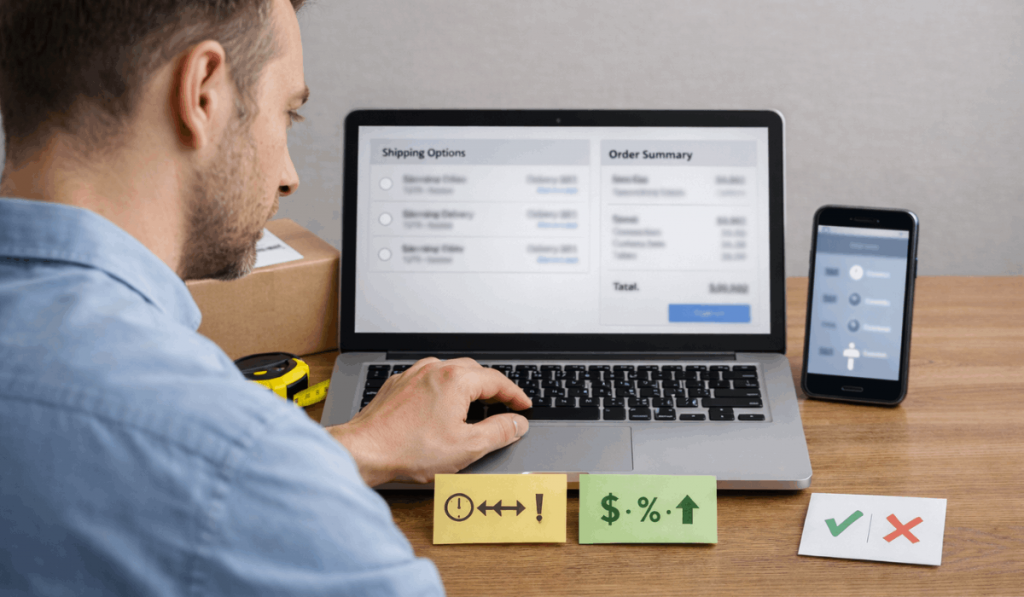
Confirm the checkout uses secure payment processing and does not push you to pay through external channels. Any marketplace asking you to send money via wire transfer or direct bank deposit outside the platform is a red flag.
Also look at currency handling. Some platforms bury a 2-3% markup inside the conversion rate, and that cost appears nowhere in the listed price. Check whether the platform converts currency at checkout or whether your bank handles it separately.
How to Evaluate Seller Quality Signals on Any Marketplace
A good platform can still have terrible sellers. Once you’ve confirmed the marketplace itself has real protections, the next filter is the individual seller.
Recent Feedback Beats Lifetime Score
A seller with 50,000 lifetime orders and a 4.8 rating looks solid. But what if the last 30 days of reviews mention wrong items, missing parts, and copy-paste customer service responses?
Recent rating trends matter more than cumulative scores. Sort reviews by newest first. Look for patterns in the complaints, not just the star count.
Listing Quality Tells a Story
Clear product photos, real measurements, model numbers, and an included-parts list signal a seller who is organized. Blurry stock photos, vague descriptions, and specs that contradict the title signal the opposite.
I would skip any listing on AliExpress or Temu where the title says one model number and the product description says another. That inconsistency usually means the seller runs dozens of generic listings and ships whatever is closest in stock.
One useful trick: check if the seller lists compatibility info and warranty terms in the description. Sellers who include those details tend to handle returns better, because they’ve already thought about what goes wrong after the sale.
Also read: How Import Taxes Affect Online Purchases
Shipping and Delivery: Where International Orders Fall Apart
The product could be perfect. The seller could be honest. And you still lose money because the shipping method was garbage. Delivery is the failure point for cross-border buying, and checking it before you pay gives you real leverage.
Tracking Quality Varies Wildly
A “label created” notification is not tracking. Real tracking means end-to-end updates: warehouse departure, customs clearance, carrier handoff, and final delivery scan.
Compare the estimated delivery window against what recent buyers in your country report. A marketplace promising 7-day delivery to Southeast Asia while reviews consistently mention 25-35 day waits is giving you a fantasy number.
| Shipping Type | Tracking Quality | Typical Speed | Customs Risk |
|---|---|---|---|
| Economy/postal | Partial or none after export | 20-45 days | Moderate |
| Standard tracked | End-to-end with delays at handoffs | 10-25 days | Moderate |
| Courier (DHL, FedEx) | Full real-time tracking | 5-12 days | Low (duties calculated upfront) |
Courier shipping costs more, but the tracking reliability and upfront duty calculation usually justify the price on orders above $50.
Customs, Duties, and the Cost Nobody Budgets For
The listing says $30. Shipping adds $5. Then customs slaps on $12 in duties and a $4 processing fee at your doorstep. The “$30 deal” just became a $51 purchase.
Check whether the marketplace collects duties and taxes at checkout. Platforms like Amazon Global Store calculate these upfront. Others leave it entirely to your local customs office, which means surprises at delivery.
Calculating the Real Total Cost of a Marketplace Purchase
The cheapest listing price rarely means the cheapest order. A proper evaluation of any marketplace requires adding up the full landed cost before clicking “Buy Now.”
Break down the total cost this way:
- Item price + shipping + taxes/VAT + import duties + handling fees = landed cost
- Currency conversion markup: check if the platform or your payment provider applies it
- Return shipping cost: international returns can cost $15-40, often canceling out the refund entirely
- Split shipment fees: multiple packages from the same order can trigger separate customs charges
That return shipping cost is the one everyone forgets. On a $25 item from China, a tracked return shipment to the seller’s warehouse might cost $20-30. The $5 “refund” left over barely covers the frustration.
The Test Purchase Strategy That Saves Real Money
If a marketplace is new to you, a low-risk test purchase reveals more than hours of research. Pick something cheap, simple, and hard to counterfeit. A phone case, a USB cable, a basic kitchen tool.
Use tracked shipping. Screenshot the listing, the seller profile, the buyer protection terms, and the checkout total including all fees. Track every milestone: order date, dispatch confirmation, each tracking update, and arrival date.
This single test tells you whether tracking updates are real, whether customs fees matched the estimate, and whether the platform’s support responds like humans or bots. It costs $5-10 and saves you from a $200 mistake later.
Researching Real Buyer Experiences Beyond Star Ratings
Star ratings are an average. Averages hide the extremes. A 4.3 rating could mean 90% of buyers had a great experience and 10% got scammed, or it could mean everyone had a mediocre experience. The distribution matters.
Search for the marketplace name plus “dispute,” “refund denied,” or “customs” on Reddit and local consumer forums. Region-specific feedback matters because carriers, customs processes, and delivery timelines differ between countries.
The Federal Trade Commission’s online shopping advice gives a solid baseline for understanding buyer rights when purchasing from international sellers.
And for marketplace-specific policies, always read the terms directly on the platform’s official buyer protection page rather than relying on third-party summaries.
Prioritize reviews from the last 3-6 months. Marketplace policies and seller pools change. A glowing review from 2024 has limited relevance to the experience you’ll get ordering in 2026.
Questions People Ask About Evaluating a Marketplace Before Buying
Q: How do I know if a marketplace’s buyer protection is real or just marketing?
Test it on a small order. File a low-stakes inquiry through support to measure response time and tone. Marketplaces that take 72+ hours to respond to a basic question will be worse during an actual dispute.
Q: Should I always choose the cheapest shipping option on international orders?
Cheap shipping usually means partial tracking and no insurance. On any order above $30, the tracked or courier option tends to be worth the extra cost because it gives you proof of delivery status if something goes wrong.
Q: Are marketplace seller ratings trustworthy?
Lifetime ratings can be misleading because they average out old performance with current behavior. Sort by recent reviews and look for repeated complaints about the same issue. A seller with 10,000 orders but 40 complaints about “wrong item” in the last month has a pattern worth avoiding.
Q: Can I get a refund if customs charges are higher than expected?
Typically, no. Customs charges are applied by your country’s government, not the marketplace. Some platforms will refund import duties they collected at checkout if the actual charge was lower, but this process takes weeks and requires documentation.
Q: Is it safe to buy electronics from international marketplaces?
It depends on the seller and the platform’s counterfeit policy. Check for model number accuracy, warranty terms, and whether the voltage or plug type matches your region. A $15 “discount” on a charger that fries your device costs far more than buying locally.
Conclusion
Evaluating a marketplace before buying takes about 20 minutes of focused checking on protection policies and fees. That small time investment prevents the kind of $50-200 losses that make international shopping feel like gambling.
Repeat the same checklist on every new platform until the process becomes automatic and fast. The best deal is the one where you already know what happens if something goes wrong.