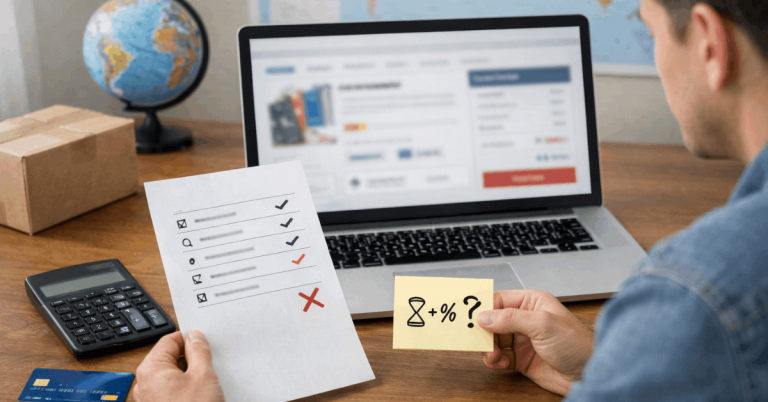
That $12 phone case on an overseas marketplace looked like a steal. Then $9 in customs duty showed up at your door, a courier demanded a $5 brokerage fee, and your bank skimmed another 3% on the currency conversion.
Suddenly, a budget buy costs more than the same item sold domestically. Hidden fees on international marketplaces catch buyers off guard because they live outside the product listing page.
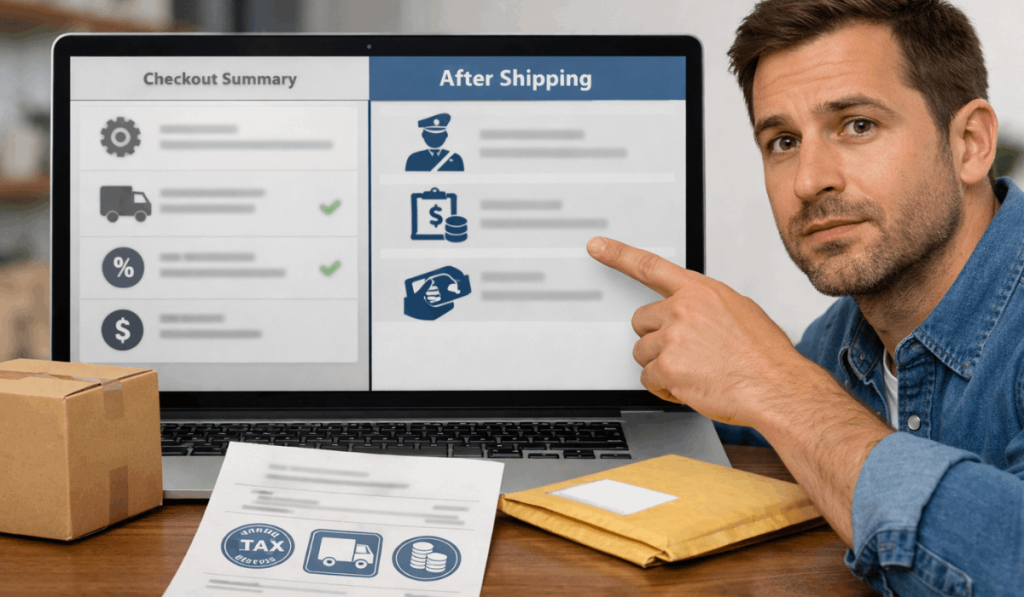
These extra charges come from payment processors, customs authorities, and courier services. None of them answer to the marketplace. And none of them care that the product page said “$12.”
Every casual cross-border shopper needs to understand where these hidden fees on international marketplaces come from, when they appear, and which ones can be avoided entirely.
Where Extra Charges Come From on International Marketplaces
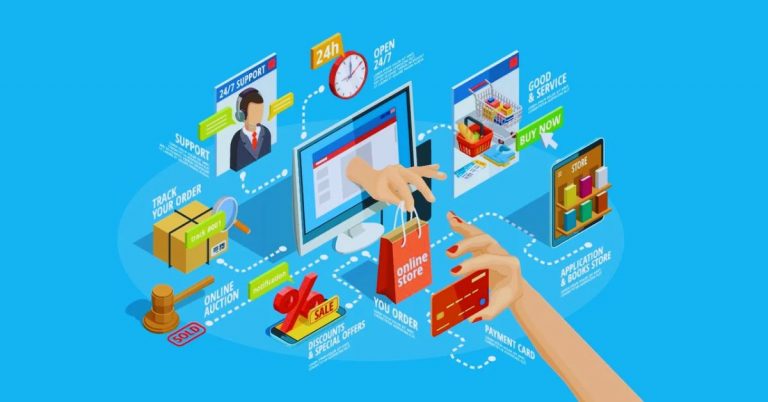
A single international order passes through at least four separate systems before it reaches your hands. Each system can add its own fee, and each operates on different rules.
The marketplace sets the product price. A payment processor converts your currency. A logistics company ships the package across borders.
And your country’s customs authority decides what taxes and duties to collect. These four layers rarely communicate a single, unified total to the buyer at the point of sale.
That disconnect is the root of every surprise charge.
Currency Conversion Markups
When a product is listed in a foreign currency, someone has to convert it. Platforms like AliExpress, Temu, and Amazon Global each handle this differently. Some convert at checkout using their own exchange rate. Others let your bank or card issuer handle the conversion.
Both options usually include a markup over the mid-market exchange rate. Platforms may add 2% to 4% on top of the base rate.
Banks and credit card networks often add their own foreign transaction fee of 1% to 3%. On a $50 order, that combination can quietly add $2.50 to $3.50 to the real cost.
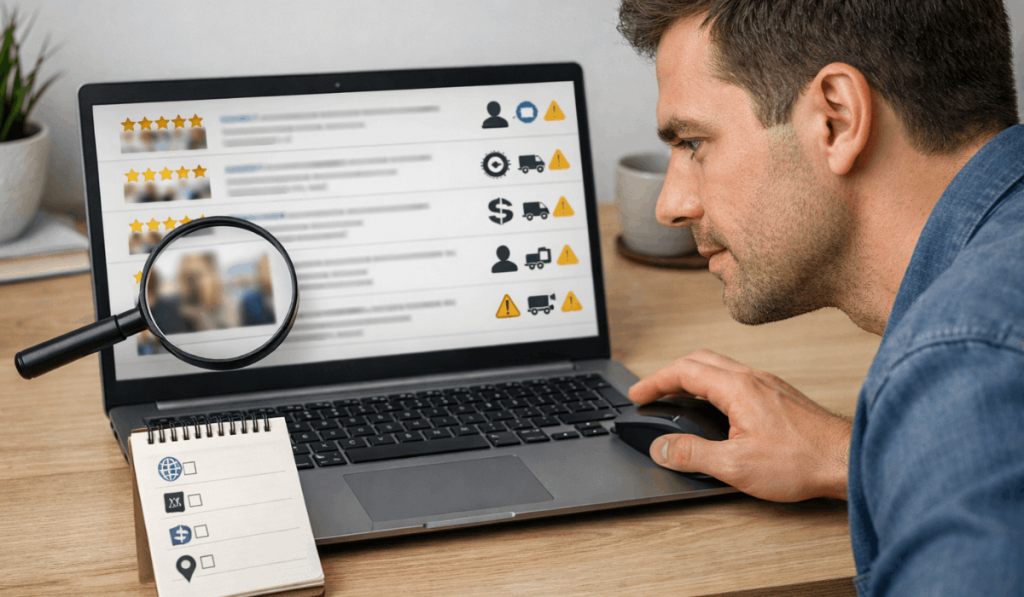
I would check the conversion rate shown at checkout against a site like XE.com or Google’s live rate before placing any order above $30. The gap tells you how much invisible margin is being added.
Import Duties and Customs Taxes
Customs duties depend on the item category, the declared value, and your country’s tariff schedule. A $40 pair of headphones shipped to Canada might attract a 0% duty rate, while the same package shipped to Brazil could trigger a 60% import tax.
Every country sets a de minimis threshold: the maximum value below which no duties or taxes are collected. Packages under that line pass through customs without extra charges.
Packages over that line get hit. The World Customs Organization publishes guides on how different countries handle these thresholds, and knowing your country’s number is the single most useful thing a cross-border shopper can learn.
A few examples of de minimis thresholds as of 2026:
| Country | De Minimis Threshold | What Gets Charged Above It |
|---|---|---|
| United States | $800 USD | Duties and taxes on full value |
| European Union | €150 (duties), €0 (VAT) | VAT on all imports; duties above €150 |
| Australia | $1,000 AUD | Duties and GST on full value |
| United Kingdom | £135 | VAT collected by marketplace at checkout |
The EU eliminated its duty-free VAT exemption in 2021, meaning every single import now carries VAT regardless of value. That one policy change turned even tiny purchases into taxable events.
Also read: How to Avoid Bad Sellers on Marketplaces
Courier Brokerage Fees
This is the fee that angers people the most. A courier like DHL, FedEx, or UPS clears your package through customs on your behalf and then bills you a brokerage fee for doing so. These fees can range from $5 to $15 per package.
The brokerage fee is separate from the duty itself. So a $20 item might trigger $4 in duty plus a $10 brokerage charge. The brokerage fee alone can exceed the customs tax.
National postal services (like USPS, Royal Mail, or Australia Post) tend to charge lower brokerage fees or none at all. But marketplace sellers rarely let you choose which courier they use.
Seller Tricks That Push Costs Onto the Buyer
Platform fees are one thing. Seller behavior is another. Some sellers structure listings in ways that shift charges to your side of the transaction after payment clears.
Under-Declared Item Values
Some sellers mark packages with a lower value than the real purchase price. The idea is to sneak the package under your country’s de minimis threshold. But customs authorities have gotten much better at catching this.
When they do, they reassess the value and apply duties based on their own estimate, which can be higher than the original price.
A reassessment often triggers both the duty charge and a customs penalty fee. So the attempt to save $5 in taxes can result in $20 or more in total added charges.
Low Product Price, High Shipping Fee
This tactic splits the real cost into two parts: a very low item price and a disproportionately high shipping charge. The listing looks cheap when sorted by price. But the total is the same or higher than competing listings.
The problem goes deeper than optics. Customs duties are usually calculated on the item value plus shipping cost. So even though the item price looks low, the declared shipping amount can push the total above the de minimis line.
Buyers who filter search results by lowest price fall into this pattern repeatedly. Sorting by “total price including shipping” (when the platform allows it) is a better filter.
Vague Shipping Descriptions
A listing that says “free shipping” or “standard delivery” often hides critical details. Does the shipping method include customs clearance? Does it deliver to your door, or to a pickup point where additional local charges apply?
Some budget shipping options stop at the border, and a domestic courier picks up from there, adding a last-mile fee.
Reading the shipping method fine print before checkout catches this. But very few buyers do.
How to Spot Hidden Fees Before Checkout
Catching surprise costs early takes about five minutes of extra work per order. That effort compounds: once you know the patterns, they become obvious.
Here are the specific things to check before placing any international order:
- Check your country’s de minimis threshold and compare it to the total order value including shipping. Staying below that line can eliminate duties entirely.
- Search the seller’s recent reviews filtered by your country or region. Buyers in the same country face the same customs and courier rules, so their complaints are the most relevant signal.
- Compare the platform’s exchange rate to the mid-market rate on XE.com or Google. A gap above 3% means the platform is taking a large conversion margin.
- Look for “duties included” or “DDP” (Delivered Duty Paid) shipping options. These prepay customs charges so nothing is collected at the door.
And here is where I disagree with the standard advice. A lot of guides say “always choose prepaid duty shipping.”
I think that advice costs buyers money on orders under $50. Platforms that offer DDP often build in an inflated duty estimate as a buffer, and any overpayment is not refunded to the buyer.
On a $30 item going to a country with a high de minimis threshold, the prepaid duty fee might be $6 for duties that would have been $0 if the package had cleared customs normally.
The smarter move on small orders: check your de minimis threshold first, and only choose DDP when the order value is clearly above that line.
Review Mining for Fee Patterns
Buyer reviews are the best early warning system for hidden fees. But reading reviews for product quality is different from reading them for fee intelligence.
Filter reviews by one-star and two-star ratings. Look specifically for these patterns:
- Mentions of “extra charge at delivery” or “had to pay customs” tell you the shipping method does not include duty prepayment.
- Complaints about courier fees (especially naming DHL, FedEx, or a local courier) tell you a brokerage fee is being added.
- Country-specific complaints matter more than the overall star rating. A seller with 4.5 stars overall might have a pattern of fee complaints from buyers in your specific country.
One detail that almost no article on this topic mentions: review timestamps matter. Customs rules and de minimis thresholds change.
A complaint from 2023 about duties on a $20 item to the EU might no longer apply after a threshold adjustment, or it might apply even more strictly. Recent reviews (within six months) are far more useful than older ones.
Platforms like AliExpress allow filtering reviews by country, which makes this pattern-matching much faster.
Questions People Ask About Hidden Fees on International Marketplaces
Q: Can I get a refund for unexpected customs fees on an international order?
Generally, no. Customs duties and courier brokerage fees are outside the marketplace’s refund policy. The marketplace refunds the product price, but taxes collected by your government and fees charged by the courier are separate transactions. Always factor these costs into the purchase decision upfront.
Q: Why does the same item have different total costs depending on which country I order from?
Each country applies its own duty rates, tax percentages, and de minimis thresholds. A $40 item might be duty-free in the US (under the $800 threshold) but attract 20% VAT in the EU. The item price is the same. The tax rules of your destination country create the difference.
Q: Do all international marketplaces charge currency conversion fees?
The marketplace itself may or may not charge a conversion fee. But your payment method almost always does. Credit cards typically add 1% to 3% as a foreign transaction fee. PayPal applies its own exchange rate with a built-in margin. Using a card that waives foreign transaction fees is the simplest way to cut this cost.
Q: Are there international marketplaces that show the full landed cost upfront?
Some platforms have started calculating estimated duties and taxes at checkout. Amazon Global and iHerb show estimated import fees during the order process. But these are estimates, not exact figures. The actual charge at delivery can still differ based on how customs classifies the item.
Q: Does ordering multiple items in one shipment reduce hidden fees?
Sometimes. Consolidating items into a single shipment means one brokerage fee instead of several. But it also raises the total declared value, which may push the package above your country’s de minimis threshold. For small purchases, separate orders under the threshold can be cheaper than one combined shipment over it.
Conclusion
The real cost of an international order lives outside the product listing page, split across conversion fees, duties, and courier charges. Learning your country’s de minimis threshold saves more money than any coupon code or sale event ever will.
Five minutes of review mining and exchange rate checking before checkout prevents the $15 surprise at the door. Start treating the listing price as a starting number, not a final one, and cross-border shopping gets a lot less frustrating.