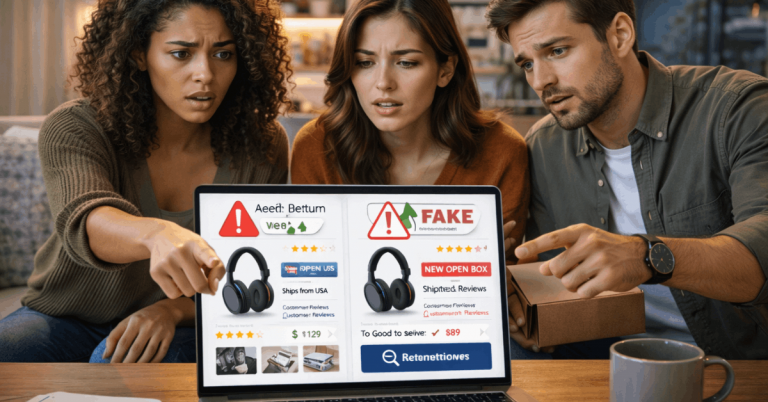
A marketplace scam does not always look like a fake website or a stolen payment card. It can begin with a polished listing, a familiar checkout, and tracking just active enough to keep you waiting.
The problem may surface when the parcel arrives incomplete, cannot be used locally, or never arrives.
This guide explains the quiet warning signs worth noticing before and after payment, so you can protect your money without assuming every international seller is dishonest.
Why Cross-Border Orders Can Hide More Risk
International shopping adds distance between you, the seller, the warehouse, and the final courier. Translation can blur a condition note, while carrier handoffs make delays harder to read and returns can be impractical.

None of this makes overseas listings automatically unsafe; it means the specific order needs closer checking than a product you can inspect in a local shop.
Judge the item, seller, route, and terms together rather than relying on the marketplace name.
A Familiar Checkout Does Not Prove a Reliable Seller
A platform may handle payment, but the seller can still control stock, product selection, packing, dispatch, and replies after something fails.
Some stores copy established pages, reuse photos, or gather ratings from cheap items before listing costly goods.
Check what the shop recently sold and what buyers say about similar products. A seller with many cable reviews has not necessarily proved they can supply a camera lens or specialist part.
Read the Listing as a Contract, Not an Advertisement
Misleading pages often contain the truth in small fields that buyers overlook. The main photo may show a full set while the selected option contains only the base item.
“New” may not explain open-box stock, generic packaging, or a returned unit.
After selecting a version, read the condition, contents, material, measurements, model number, and destination notes. Those details are the seller’s actual commitment, not the large sales image on top.
Photos Can Be Genuine and Still Create the Wrong Expectation
A seller may photograph a sample, premium colour, or larger version while offering a cheaper variation in the dropdown.
For clothing, confirm fibre composition and garment measurements; for electronics, confirm the model, plug, voltage, region support, and included accessories.
Look for labels, ports, seams, and usable parts. Buyer images in ordinary light offer more real context than a perfect photo set.
Tracking Can Create False Confidence
Tracking helps only when it describes the right parcel and a route that makes sense for your address.
A seller may create a label without handing over the item, provide a number that does not match your destination, or point to an old scan from another shipment.
Check the first carrier acceptance event, country in the updates, and dates. A tracking page becomes useful evidence only when its details match your purchase.
The First Physical Scan Matters Most
“Shipment information received” or “label created” usually shows that the carrier received data, not a package. The first meaningful proof is an acceptance, pickup, or facility scan.
If that never appears after the stated handling period, ask the seller through the marketplace for the physical handover date.
Do not keep waiting because they say the item is “on the way” without evidence. An inactive number is a delay signal, not a delivery update.
Keep the Problem Inside the Marketplace
A seller may offer to settle through private chat, ask you to close a dispute before a replacement arrives, or send an external payment link.
Those offers can sound convenient when you want the issue over. They also move the agreement away from the system that can check what happened.
Keep payment, messages, evidence, and refund requests within the order process. A platform record gives you dated proof and protects your claim options if the seller stops responding.
Also Read: What Happens After You Place an International Order
Treat Partial Refunds as a Decision, Not a Quick Exit
A partial refund may be reasonable for a small flaw on an item you can use. It is rarely enough for a missing parcel, wrong model, unsafe product, or something that cannot perform its main job.
Read the offer before accepting it. Check whether it closes the case, prevents a return, or ends buyer protection. Choose the remedy that reflects the actual loss, not what is easiest for the seller to close.
Buyer Protection Has a Deadline
Marketplace protection may help with non-delivery, listing mismatches, and damaged goods, but rules differ by platform, destination, product type, and timing.
Most processes need evidence and a report before the order window closes. Your position weakens when the page changes, photos are missing, or a seller delays you past the deadline.
Read the order terms and calendar rather than relying on chat. The key protection is your ability to act before the clock expires.
Save Proof Before the Page Changes
Screenshot the listing, selected variant, total price, delivery range, return terms, tracking history, and seller messages once a problem appears.
For a damaged or incorrect item, photograph the package, label, inner packing, and product before using, washing, repairing, or discarding anything.
A few dated files are easier to review than a long explanation. Build a simple case record while the facts remain visible.
A Brief Check Before Payment Can Prevent Most Trouble
You do not need to investigate every low-cost item as though it were a major contract. Pause when the purchase is expensive, fragile, fitted, safety-sensitive, or hard to return. Check for missing specifications, unclear condition, weak recent feedback, a strange shipping route, or a request to pay outside the platform. That brief pause turns impulse buying into a measured decision and gives you time to choose another seller when proof is thin.
Three Things to Confirm Before You Order
Read these answers from the current page and order terms, not from a headline or countdown timer. They take little time but expose gaps that matter later. Keep the evidence and your limits in view.
- Match the selected version to written specifications and included parts.
- Check recent reviews for repeated defects, delivery gaps, or copied images.
- Confirm payment, delivery, and return terms stay inside the marketplace.
Act Early and Keep the Case Simple
When something feels wrong, identify the last reliable event, state what does not match, attach the clearest proof, and use the official process before the case deadline.
A calm, specific request is easier for support to review than an argument spread across messages.
Do not let vague reassurance or a small offer make you abandon a valid concern. Keep the record clean and the request clear, then let evidence—not frustration—carry the case forward.